
School Alone Is No Longer Enough
There is a conversation happening quietly in living rooms, at school pickup, and around dinner tables across the country. Parents are not sure how to say it without sounding like they are criticising teachers or dismissing the value of education. But the thought keeps coming back.
Is what my kid is getting in school actually enough?
For most of the twentieth century, the answer was closer to yes. The formula was simple and it worked: study hard, get into a good school, earn your degree, find stable employment, build a decent life. Millions of American families used that formula to move up and give their children better opportunities than they had. Education was, and still is, one of the most reliable engines of social mobility ever created.
But something has shifted. Parents feel it. Employers talk about it openly. Even many educators acknowledge it privately. The world children are being prepared for inside school buildings looks increasingly different from the world waiting for them outside.
This is not an argument against school. It is an argument for being honest about what school does well, what it was never designed to do, and what that means for families who want to give their children a genuine advantage in a world that has changed more in the last twenty years than in the fifty before them.
The Formula That Worked — and Why It Is No Longer Complete
The reason the old formula worked as well as it did for as long as it did is worth understanding, because it explains why the formula is now less reliable — not useless, but incomplete.
For most of the twentieth century, the economy rewarded a fairly predictable set of qualities: technical knowledge in a specific domain, the ability to perform consistently within defined roles, and the kind of disciplined reliability that large organisations depend on. If you acquired the right credentials, demonstrated competence in the relevant area, and showed up consistently, the system had a place for you. The credentials were the signal, and for a long time, the signal was accurate enough.
That accuracy is eroding. Not because credentials have become worthless — a degree from a strong program in a relevant field still matters — but because credentials alone are no longer sufficient proof of the qualities that matter most in a modern workplace. Employers across nearly every industry report the same frustration: they hire people with impressive academic records who struggle when the situation requires them to figure something out rather than execute something already figured out. Who shut down when things go sideways instead of adapting. Who know a great deal but have trouble communicating what they know in ways that actually move things forward.
These are not failures of intelligence. They are failures of a specific kind of preparation — the kind that school, through no fault of its own, has always been less good at providing.
What School Does Exceptionally Well
Before talking about what school cannot do, it is worth being precise about what it does genuinely well — because this conversation gets distorted when people treat it as all-or-nothing.
School provides structured exposure to foundational knowledge across a wide range of domains. Reading, writing, mathematics, science, history — these are not arbitrary requirements. They are cognitive tools, and children who develop them have access to ways of thinking and understanding that children who do not are significantly disadvantaged without. A child who reads well can learn almost anything. A child with strong mathematical reasoning thinks about quantitative problems in ways that others simply cannot. These foundations are real and they matter.
School also provides social development that is difficult to replicate in other settings. Learning to function within a community of peers, to navigate conflict, to take turns, to manage frustration in shared spaces — these are not soft extras. They are foundational to almost everything that comes after.
None of this is in question. The question is what school, even when it is doing all of this well, does not have the time, the structure, or the institutional orientation to provide. Because those gaps are real too, and they are consequential.
The Gaps That Matter Most
Ask any group of successful adults — people who are genuinely good at what they do and who have navigated real complexity in their careers — what skills have mattered most. Do this enough times, across enough industries and backgrounds, and certain themes appear with remarkable consistency.
The ability to communicate ideas clearly and persuasively — not just in writing, but in conversation, in presentations, in the moment when something needs to be explained to someone who does not already understand it. The ability to lead — not in the sense of having authority, but in the sense of being willing to take responsibility when it is not required of you, to move things forward when they are stuck, to help other people do their best work. The ability to problem-solve in genuinely open-ended situations — where the right answer is not known in advance, where multiple approaches might work, and where the quality of your thinking determines the outcome.
And almost universally: resilience. The capacity to keep going when something is not working. To treat setbacks as information rather than verdicts. To try again differently rather than give up or shut down.
Very few of these adults say the most important skill they developed was the ability to memorise and reproduce content accurately on a timed assessment. That is not a criticism of tests. It is an observation about what the demands of adult life actually look like compared to the demands of school life — and how different those two things often are.
The Communication Gap
Communication is worth dwelling on specifically, because the gap between how much it matters and how little it is deliberately developed is larger than almost any other skill.
Think about how much of a child's school day involves producing written responses to defined questions in a structured format. Now think about how much of it involves the kind of communication that actually matters most in adult life: explaining a complex idea to someone who does not understand it, making a case for a decision in real time, navigating a disagreement with another person constructively, presenting a proposal to a group of people with different perspectives and trying to bring them on board.
The gap is significant. Most children graduate having produced thousands of written assignments and having given very few genuine presentations. They have practiced communicating what they know within a structure that someone else defined. They have had almost no practice communicating what they think in situations where the structure does not exist and the stakes are real.
Children who develop genuine communication skills — who learn to explain things clearly, to listen actively, to make a case compellingly, to read a room and adjust accordingly — carry an advantage into adult life that compounds over time. Every professional relationship, every job interview, every client interaction, every negotiation: all of these depend on communication in ways that no academic credential can substitute for.
The research on this is consistent. Communication is consistently ranked among the top qualities employers seek and most struggle to find. It is also consistently underdeveloped in people whose primary educational experience was structured around written academic assessment.
The Leadership Gap
Leadership is one of those words that gets overused to the point of losing meaning. But what it actually refers to, in practical terms, is something quite specific and very learnable: the willingness and ability to take responsibility for an outcome when nobody is requiring you to, to make decisions when the right answer is not obvious, and to help other people function well when they are struggling.
Children develop this through experience. Specifically, through experience of situations where they have genuine ownership of something — where the outcome depends on their decisions, where they cannot simply execute someone else's plan, and where other people are depending on them in some real way.
These experiences are not common in most school settings. School is structured around defined tasks with defined expectations. The teacher has decided what success looks like. The student's job is to achieve it. That is not leadership experience. It is execution experience, and execution experience, while valuable, produces a very different kind of person than leadership experience does.
Children who have had real leadership experience — who have run a project, organised an event, taken charge of a team working toward something that mattered to everyone involved — develop a relationship with responsibility and initiative that is qualitatively different from children who have not. They know what it feels like to be the one who has to figure it out. And that knowledge, once acquired, changes how they approach every situation that follows.
The Resilience Gap
Of all the gaps between school preparation and real-world demands, this one may be the most consequential — and the most uncomfortable to talk about honestly.
School, particularly school that is oriented primarily around grades, tends to produce a very specific relationship with failure: avoidance. When mistakes lower grades, the rational strategy is to minimise risk — to attempt things you are confident about rather than things you are not, to protect your record rather than test your limits. This is not a character flaw in students. It is a completely logical response to the incentive structure they are operating in.
The problem is that the incentive structure of adult life works almost exactly the other way. The opportunities that matter most — the projects worth doing, the roles worth pursuing, the ideas worth building — almost always involve significant uncertainty and a real possibility of failure. People who have been trained, over years, to treat uncertainty as a threat and failure as a verdict are systematically disadvantaged when they encounter situations that require the opposite orientation.
Resilience develops through experience of actual difficulty: trying something that does not work, figuring out what to do differently, and trying again. Children who have had enough of this experience, in supported settings where failure is treated as data rather than disaster, develop a relationship with challenge that is one of the most valuable assets they can carry into adult life. Children who have been primarily sheltered from meaningful difficulty — whose educational experience has been mostly defined problems with known solutions and whose mistakes have been primarily sources of lower grades — arrive at real-world complexity underprepared in a way that grades cannot reveal.
The Confidence Gap
There is a particular kind of confidence that school grades can produce — confidence in academic performance within structured settings. And there is a different kind of confidence that matters at least as much in adult life: confidence in your own ability to figure things out in situations that are not structured, where the path is not marked, and where no one is going to tell you whether you got it right.
That second kind of confidence does not come from being told you are capable. It comes from evidence — from having actually done hard things and seen that you could. From having tried something that did not work and discovered that you could handle that too. From having taken initiative on something and watched it go somewhere.
Children who accumulate that kind of evidence, through real projects and genuine challenges and authentic responsibility, carry into adulthood a quiet self-assurance that is qualitatively different from anything that grades can produce. It is the kind of confidence that makes people willing to raise their hand for the difficult assignment, to volunteer for the role no one else wants, to try the thing that might not work.
That confidence is built outside the grading system, through experiences that school rarely provides enough of.
What Parents Can Do
The goal here is not to create anxiety about school or to suggest that parents need to compensate for some fundamental failure of the educational system. Most schools, most of the time, are doing valuable work and the children in them are genuinely better off for being there.
The goal is to be honest about what school is designed to do and what it is not — and to encourage parents to think deliberately about where the gaps are for their specific child and what kinds of experiences would fill them.
Some questions worth sitting with:
Does your child have regular experience communicating ideas to real audiences? Not submitting written assignments, but actually explaining something, presenting something, making a case for something to people who might disagree. If not, it is worth creating that experience wherever you can.
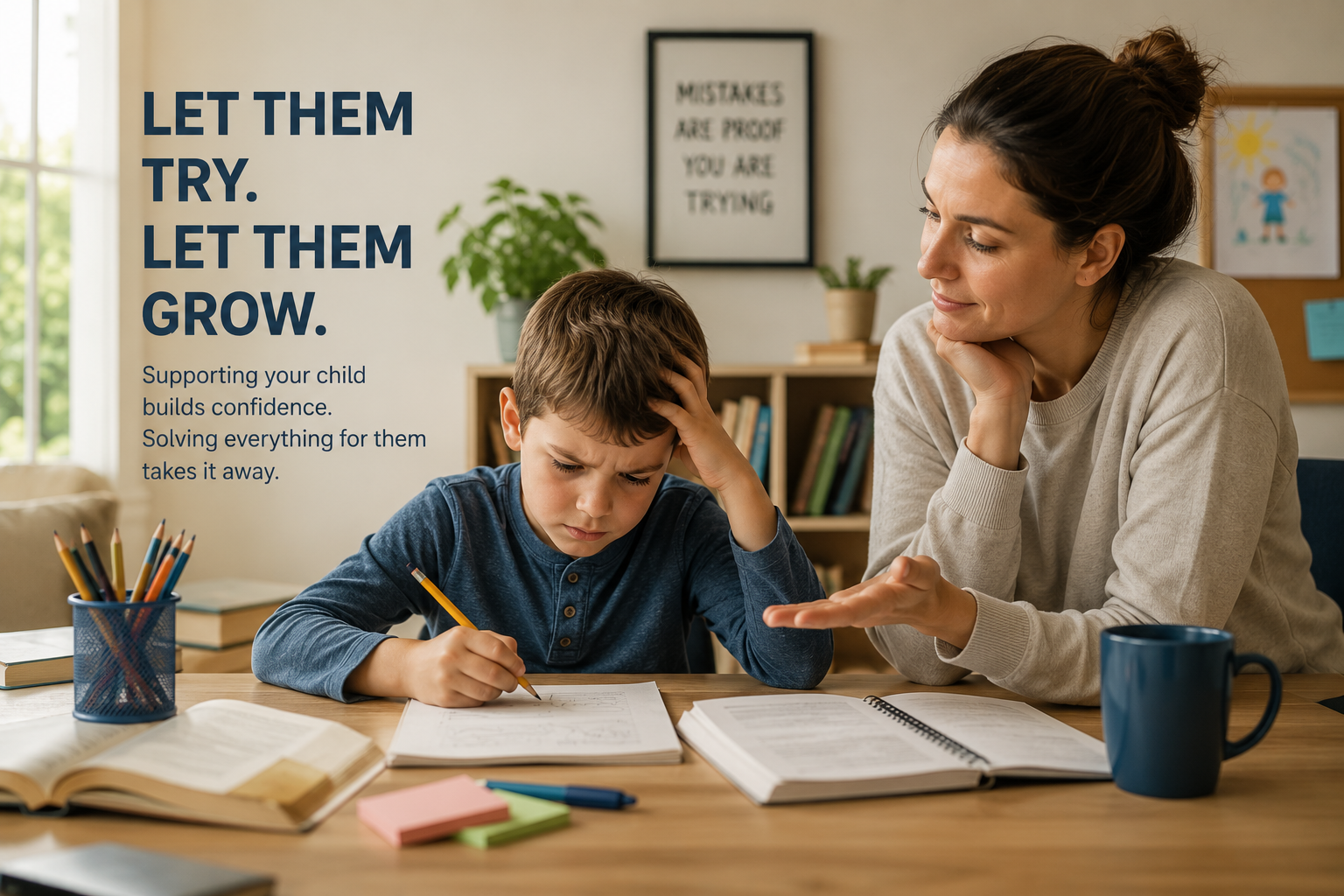
Does your child have experience with genuine failure? Not getting a question wrong on a test, but trying something real that did not work and having to figure out what to do next. If every difficult thing in your child's life gets resolved before they have to sit with it, they are missing the experience that builds resilience.
Does your child have experience taking initiative on something they chose themselves? A project that was not assigned, a problem they identified on their own, a goal they set without being told to. Self-direction develops through practice, and if all of a child's directed effort goes toward school assignments, they get very little practice with it.
Does your child have leadership experience? Situations where they had real ownership of an outcome and other people were counting on them. This does not have to be formal. It can be as simple as letting them plan a family event, run a project with friends, or take genuine responsibility for something that matters.
None of these require elaborate programmes. They require intentional attention from parents who understand why these experiences matter and who create space for them.
Questions Parents Often Ask
Is school still worth prioritising?
Absolutely. Strong academic foundations — in reading, mathematics, science, and structured analytical thinking — remain genuinely important and provide the cognitive basis for almost everything that comes after. Nothing in this article is intended to suggest otherwise. The argument is that school, even when it is working well, has gaps that are worth addressing intentionally. Not instead of school — alongside it.
My child gets good grades. Should I be worried?
Good grades are a good sign, and worth celebrating. The additional question worth asking is what else your child is developing alongside academic performance: whether they are building initiative, communication confidence, the ability to navigate difficulty, and the practical experience of figuring things out without a template. Those things and academic performance are not in competition. But they do not automatically come together, and it is worth checking whether they are.
How do I find the right balance without overwhelming my child?
The experiences that develop these skills do not have to be formal or scheduled. Many of them happen in everyday life when parents are intentional about creating space for them: letting children make real decisions and live with the outcomes, not rescuing them from difficulty before they have had a chance to work through it, giving them genuine responsibility for things that matter, and treating their failures as part of the learning rather than as problems to be fixed. This is less about adding more to a child's schedule and more about changing the orientation toward the experiences they are already having.
Final Thoughts
School is not failing. But it was designed for a world that has changed significantly, and the gap between what it was built to produce and what the modern world most rewards is real and growing.
The children who will navigate that world most effectively are not necessarily those with the highest GPAs. They are those who combine strong academic foundations with the ability to communicate clearly, lead when it is hard, solve problems that do not have textbook answers, recover from setbacks without being destroyed by them, and keep learning long after the formal learning environment is behind them.
Those qualities do not develop through grades. They develop through experience — the right kinds of experience, in the right kinds of environments, with the right kinds of support.
Creating those experiences is one of the most valuable things any parent can do. Not to replace what school provides. To complete it.
You may also find these articles helpful:
most schools still train employees, not entrepreneurs
the kids who will thrive in the AI era
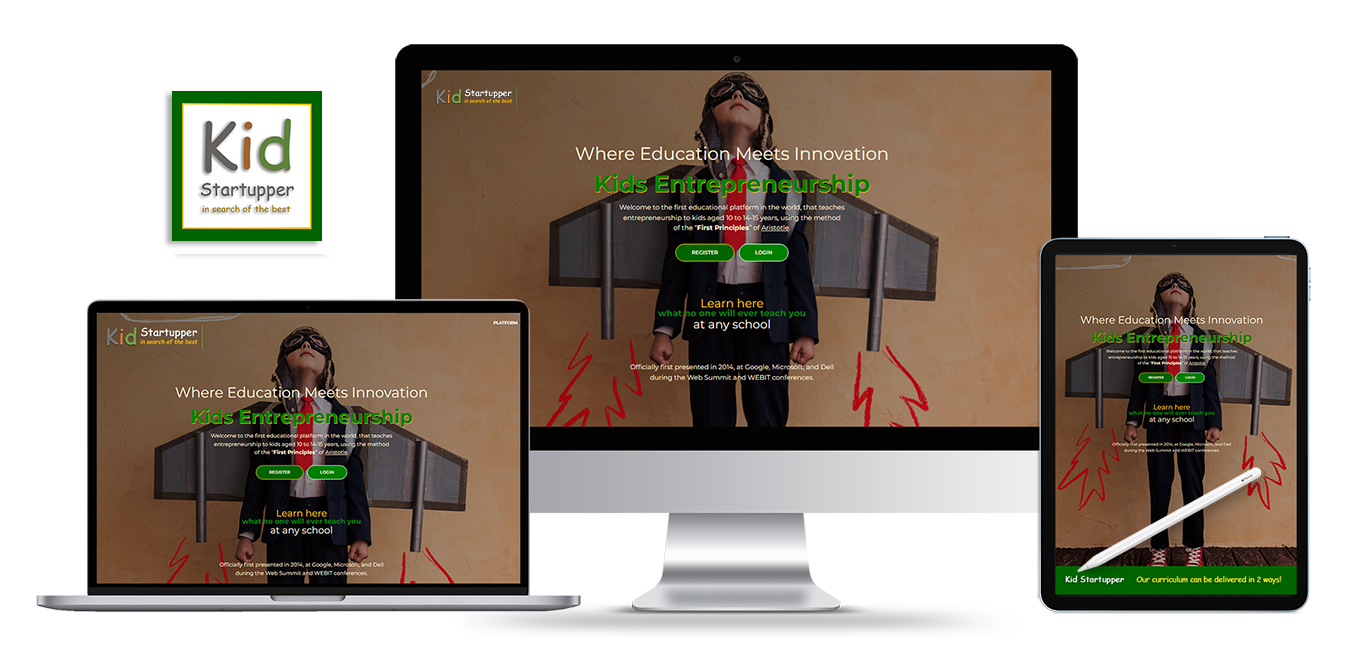
If you want your child to develop communication, leadership, problem-solving and entrepreneurial thinking through structured, project-based learning designed for ages 10 to 15, you can learn more about the programme here:
entrepreneurship lessons for kids from home