
Most Schools Still Train Employees, Not Entrepreneurs
Before anyone gets defensive — this is not a criticism of teachers.
Teachers work incredibly hard. Most of them genuinely care about the children in their classrooms and do remarkable work under real constraints. This is not about them.
This is about the system they work inside. And the honest question that more and more parents are starting to ask: was that system designed for the world our children are actually going to live in?
Because here is the thing. If you look at how most American schools are structured — what they reward, what they punish, what a "good student" looks like inside them — a pretty clear picture emerges. Schools are very good at producing people who can follow instructions reliably, perform consistently on defined tasks, meet deadlines, and work within existing systems. Those are genuinely useful skills. They were the skills an industrial economy needed, and they built a version of the middle class that worked reasonably well for several decades.
But the economy our kids are entering looks very different from that one. And the question worth asking — not to criticise anyone, but because the answer actually matters for our children's futures — is whether we are still primarily preparing kids for a world that is already disappearing.
How We Got Here
To understand why schools look the way they do, it helps to understand where they came from.
The modern American public education system took its essential shape during the late nineteenth and early twentieth centuries — the height of industrial expansion. Factories were growing. Cities were filling up. Large organisations needed large numbers of people who could show up on time, follow procedures, perform predictable tasks consistently, and work within hierarchies without requiring constant supervision or original thinking.
Schools were designed, quite deliberately, to produce those people. The structure of the school day — bells signalling transitions, students moving in groups from one subject to the next, sitting in rows, raising hands before speaking, being graded on the accuracy of their answers to questions with defined correct responses — mirrors the structure of an industrial workplace with remarkable fidelity. That is not a coincidence. It was the point.
And for the world it was designed for, it worked. The problem is that the world has changed enormously while the essential structure of most schools has changed much more slowly. The economy that made industrial-era education such a good fit for life after graduation has been replaced by something genuinely different. And the mismatch between what schools were designed to produce and what that new economy actually rewards is becoming harder to ignore.
What Schools Usually Reward — and What They Don't
Think about what a "good student" looks like inside a typical school. They get their work done on time. They follow the instructions on assignments. They do not disrupt class. They ask clarifying questions rather than challenging questions. They perform well on tests. They make relatively few mistakes.
None of those things are bad. Discipline matters. Responsibility matters. The ability to complete what you started matters. These are genuinely valuable qualities and any child who develops them is better off for it.
But notice what is missing from that list. Curiosity that goes off-script. The willingness to challenge an assumption in front of the class. Taking initiative on something that was not assigned. Proposing a completely different approach to a problem. Trying something that might not work. Recovering from a genuine failure and trying again differently.
These qualities — the ones that appear most consistently in people who build things, start things, and create new value — are not only rarely rewarded in most school environments. They are sometimes actively penalised. A student who questions the premise of an assignment can seem like a problem. A student who goes off in a different direction than the one specified can lose points for not following directions. A student who tries something ambitious and fails gets a lower grade than one who attempts something safe and succeeds.
The system is not trying to suppress entrepreneurial thinking. It is just not designed to develop it. There is a difference. But the effect on children is the same either way.
The Core Difference Between Employee Thinking and Entrepreneurial Thinking
This is not about deciding which one is better. Society needs both, and it needs them in large numbers. The vast majority of people who work for organisations do critically important things that the world depends on. There is absolutely nothing wrong with being a great employee — in fact, being a great employee requires real skill, dedication and intelligence.
But there is a genuine difference in how the two mindsets approach the world, and it is worth being clear about what that difference is.
An employee mindset, at its core, is oriented toward executing within an existing system. You receive a defined role, defined responsibilities, defined metrics of success. Your job is to perform those responsibilities well. The system — what it is trying to accomplish, how it is structured, what its goals are — is mostly given to you. Your contribution is your performance within it.
An entrepreneurial mindset is oriented toward creating systems. You start not with a defined role but with a problem or an opportunity. The structure, the approach, the metrics of success — none of these are given. You have to figure them out. Your contribution is not just your performance but the very definition of what you are trying to do and how.
Both require intelligence. Both require hard work. But they require different kinds of preparation. And the preparation most schools provide — however good it is at what it does — is much better suited to the first than to the second.
Why This Matters More Now Than It Did Twenty Years Ago
The reason this conversation is becoming more urgent is not that entrepreneurship is some new idea. People have always started businesses. What has changed is the barrier to entry.
Twenty years ago, starting a business of any kind required significant capital, significant connections, and significant infrastructure. You needed a location, inventory, employees, a bank loan. The resources required meant that entrepreneurship was a realistic option for a relatively small slice of the population — people with access to money, networks, and risk tolerance that most families did not have.
That reality has changed dramatically. A teenager today, with a laptop and an internet connection, can reach a global audience, build a product, sell a service, create educational content, build a following, and generate real income. The infrastructure that used to cost hundreds of thousands of dollars is now either free or costs almost nothing. The gatekeepers who used to control access to markets have largely lost that control.
This means that initiative — the disposition to actually start something rather than wait for someone to hand you an opportunity — is more economically valuable than it has ever been. And it means that children who develop that disposition, alongside the creative and problem-solving skills that make initiative productive, are entering a world that has created opportunities for them that simply did not exist for previous generations.
The question is whether the education they are receiving is helping them recognise and take advantage of those opportunities, or training them to wait for a system that tells them what to do.
The Relationship Between Schools and Mistakes
One of the clearest differences between how schools approach learning and how entrepreneurial environments approach it shows up in the role of mistakes.
In school, mistakes are primarily negative events. They lower grades. They indicate that something went wrong. The entire grading system is built around the premise that fewer mistakes mean better performance. Students learn this quickly, and the rational response is to minimise risk — to attempt things you are confident you can do correctly rather than things you are not sure about.
Over years, this shapes a specific relationship with failure. Children who have been trained primarily in environments where mistakes mean lower grades tend to develop what researchers call a "fixed mindset" about their abilities — a belief that difficulty is evidence of inadequacy rather than a normal part of the learning process. When things get hard, the instinct that develops is not to try harder or differently, but to protect yourself from further evidence of failure.
Entrepreneurial environments work on an entirely different logic. In a startup or a creative project, mistakes are not primarily evidence that something went wrong. They are information about what to try next. A product that customers do not want tells you something about what they actually need. A marketing approach that does not work tells you something about how to reach people more effectively. A business model that fails tells you something about the assumptions that were wrong.
The most successful people in innovation-driven fields almost universally describe their failures as among the most valuable experiences of their careers. Not because failure is good, but because what you learn from it — if you are oriented toward learning rather than protection — is genuinely irreplaceable.
Children who develop a healthy relationship with failure — who understand it as a normal part of building something rather than a verdict on their worth — are significantly better prepared for the kind of world that rewards initiative and creativity. That relationship rarely develops in environments where mistakes primarily mean lower grades.
The Problem-Solving Gap
Ask most parents what they want their children to be good at, and problem-solving will appear near the top of almost every list. It is one of those qualities that everyone agrees matters enormously — in career, in relationships, in life generally.
Now ask yourself how many hours of a typical school year are spent on genuine, open-ended problem-solving — situations where the right answer is not already known, where multiple approaches might work, where the student has to figure out what the problem actually is before they can start working on a solution.
For most students, the honest answer is not many. Most school problems are defined problems with known solutions. The student's job is to reproduce the correct path to the correct answer. That is a useful exercise — it builds procedural competence and reinforces foundational knowledge. But it is not problem-solving in the sense that actually prepares children for the challenges they will face as adults.
Real problems — the kind that matter professionally and personally — tend to be poorly defined, have multiple possible approaches, involve incomplete information, and produce outcomes that depend heavily on judgment calls that no textbook can make for you. Children who have spent years solving defined problems with known answers are often surprisingly underprepared for this kind of challenge. They know how to find the right answer when one exists. They have much less practice with situations where there is no right answer, only better and worse ones.
Developing genuine problem-solving ability requires genuine problems — situations where the student has real ownership of the challenge, where the path is not already marked, and where the quality of their thinking actually determines the outcome. These situations are not common inside the typical school experience. Creating them — inside school or outside it — is one of the most valuable investments any parent can make in a child's future.
Why Creativity Has Become an Economic Skill
For most of the twentieth century, creativity was considered a nice quality — valuable in artists, writers and designers, but not particularly central to economic success in most fields. The economy rewarded reliability, technical competence, and the ability to execute within defined systems. Those are not primarily creative qualities.
That calculation is changing, and it is changing because of AI. As artificial intelligence becomes more capable of handling routine cognitive work — drafting documents, processing information, analysing data, executing defined procedures — the work that remains distinctively human is increasingly the work that requires genuine creative engagement: figuring out what question to ask, generating approaches that have not been tried, making judgment calls in ambiguous situations, and communicating ideas in ways that actually move other people.
These are not soft skills. They are becoming economically hard skills — the capabilities that employers across industries report as most difficult to find and most valuable when they do. And they develop through creative practice, not through the kind of structured, defined-answer work that dominates most school experiences.
Children who are regularly engaged in genuine creative work — designing something, building something, writing something that requires original thought, solving something that does not have a textbook answer — are developing one of the most economically relevant skill sets available to them. The question is whether the adults in their lives recognise that and create enough space for it.
What Parents Can Actually Do
The goal here is not to persuade parents to pull their children out of school or to abandon academic preparation. Strong academic foundations genuinely matter. Reading well, thinking mathematically, understanding science, knowing history — these are not outdated. They are the cognitive tools that make everything else possible.
What parents can do is think deliberately about what is happening in their children's lives outside of structured academic work — and whether those experiences are developing the qualities that school is less good at producing.
Some specific things worth paying attention to:
Does your child have experience taking initiative on something that was not assigned? Projects they chose themselves, businesses they started informally, problems they identified and tried to solve on their own — these experiences develop a specific relationship with self-direction that is hard to build any other way.
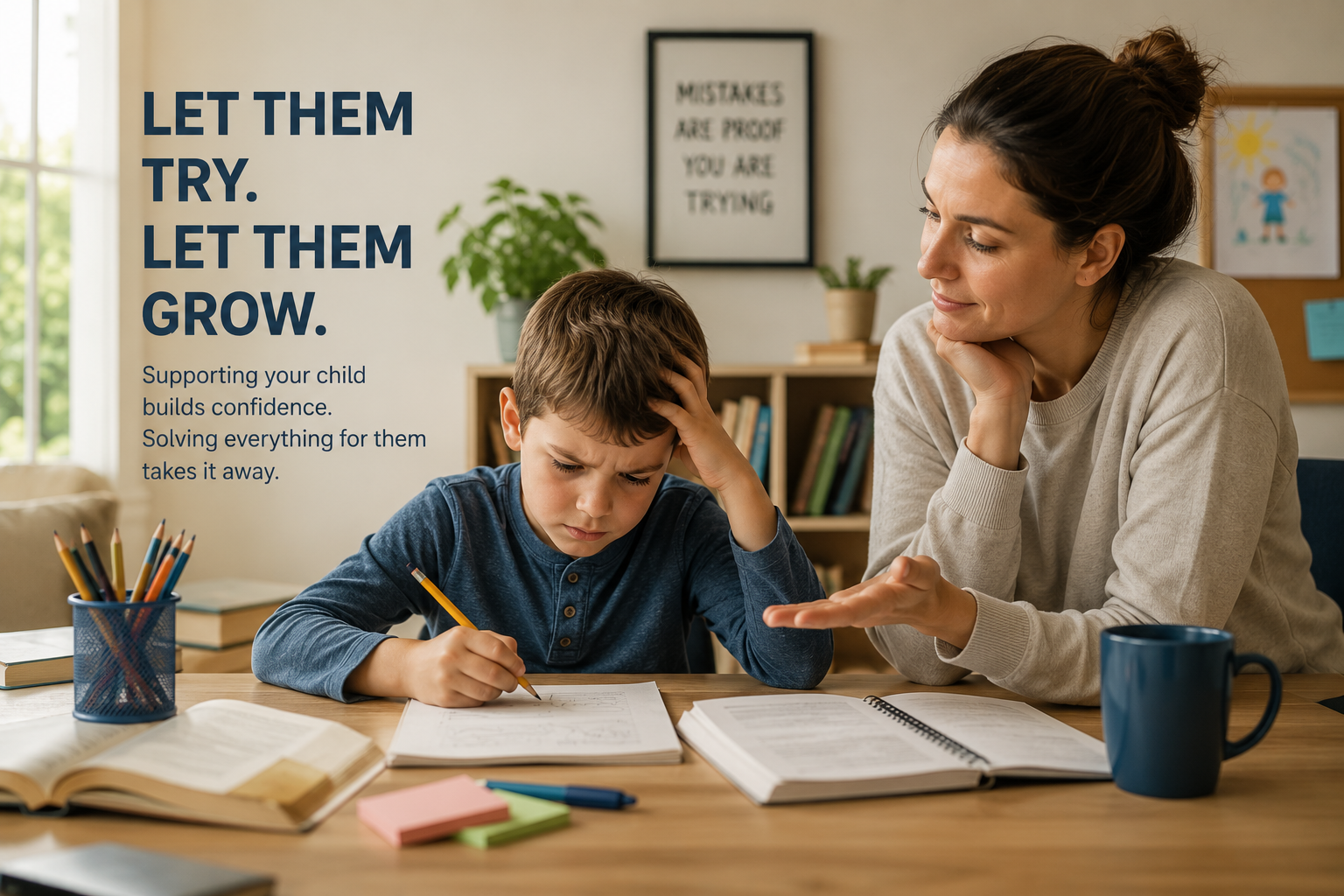
Does your child have experience with genuine failure? Not just making a mistake on a test, but trying something that genuinely did not work and having to figure out what to do next. This is where resilience actually develops — not from being told to be resilient, but from having been through something hard and come out the other side.
Does your child have experience explaining their ideas to other people? Not presenting a class project according to a rubric, but actually trying to persuade someone of something, or teach someone something, or make someone understand a problem they have identified. Communication that has real stakes is different from communication that is being graded, and both matter.
Does your child have experience with genuine collaboration? Working on something where the outcome depends on how well multiple people with different ideas and different strengths can function as a team — not the assigned group work of school, but real shared ownership of something that matters to everyone involved.
None of these require expensive programmes or elaborate planning. But they do require intentional attention from parents who understand why they matter.
Questions Parents Often Ask
Does every child need to become an entrepreneur?
No — and this is an important clarification. The goal of entrepreneurial education is not to produce a generation of business founders. Most children will spend significant parts of their careers working within organisations, and that is completely fine. What entrepreneurial thinking develops — initiative, creative problem-solving, comfort with uncertainty, the ability to create structure rather than just operate within it — makes people better at virtually every professional role, not just at running their own businesses. Employers across every industry consistently report that these are among the qualities they value most and find hardest to hire for.
My child's school already does some project-based learning. Is that enough?
Project-based learning, done well, is genuinely valuable and significantly better than pure lecture-and-test instruction. The question worth asking is whether the projects involve genuine open-endedness — real ambiguity about what the right approach is, real ownership of the problem by the student, real consequences that depend on the quality of their thinking. Some project-based learning meets that bar. Some is essentially structured activity with a creative surface. The distinction matters, and it is worth understanding which one your child is experiencing.
What if my child is not particularly entrepreneurial by nature?
Entrepreneurial thinking is not a personality type. Research consistently shows that the qualities most associated with it — initiative, creative problem-solving, resilience, comfort with uncertainty — are developed through experience, not inherited as fixed traits. Introverted children, cautious children, children who do not naturally seek the spotlight — all of them can develop these capacities, given the right experiences. The path looks different for different children, but the destination is accessible to all of them.
Final Thoughts
The school system most American children move through was built for a world that rewarded compliance, consistency, and the accurate execution of defined tasks. That world has not disappeared — but it has shrunk significantly, and it is continuing to shrink as technology takes over more and more of the work that those qualities were needed for.
The world that is expanding — the one that is creating the most opportunity, the most economic value, and the most interesting work — rewards something different. It rewards people who can identify a problem worth solving, generate creative approaches to it, persist through the failures that are part of any real attempt to build something, and communicate their ideas compellingly enough to bring other people along.
Those qualities do not develop automatically, and they are not reliably developed by the educational experience that most children have. They develop through specific kinds of experience — real initiative, real creativity, real collaboration, real failure and recovery — that parents can create or encourage, whether or not the school system provides them.
Not every child will start a company. But every child will be better off for having learned to think like someone who could.
You may also find these articles helpful:
the kids who will thrive in the AI era
problem solving activities for kids
If you want your child to develop initiative, creative problem-solving and entrepreneurial thinking through structured, project-based learning designed for ages 10 to 15, you can learn more about the programme here:
entrepreneurship lessons for kids from home