
The Kids Who Will Thrive in the AI Era
In 2023, the World Economic Forum published its Future of Jobs Report — one of the most widely cited analyses of how artificial intelligence is expected to reshape the global workforce over the coming decade. Its findings were not subtle. Analytical thinking, creative thinking, resilience, motivation and self-awareness ranked among the skills most likely to grow in value. Repetitive cognitive tasks — data processing, routine information handling, standardised decision-making — ranked among those most likely to be automated away.
The report was written for business leaders and policymakers. But its implications for anyone raising a child today are impossible to ignore.
For most of the twentieth century, educational success and professional preparation were largely synonymous with the ability to absorb, retain and reproduce information. Students who could memorise well, follow structured instruction reliably and perform consistently on standardised assessments were well served by the systems built around them. Those systems were designed for a world where information was scarce, access to expertise was limited, and the skills required for most professional roles were relatively stable across a working lifetime.
None of those conditions still apply.
Information is now abundant to the point of overwhelming. Access to expertise — through AI tools that can answer complex questions, summarise bodies of research, generate code, analyse data and produce written content — is available to anyone with a smartphone. And the skills required for professional relevance are shifting faster than most educational curricula can track.
This does not mean academic education has become irrelevant. It has not. But it does mean that academic education alone — particularly the kind focused primarily on information retention and procedural compliance — is increasingly insufficient preparation for the world children are actually growing up into.
Understanding which children are likely to thrive in that world, and why, is one of the most practically important questions any parent can ask.
What the Research Actually Shows
The research on this question has been building for years, and it converges on a consistent picture. The skills that predict long-term success and adaptability in rapidly changing environments are not primarily the skills that traditional academic assessment measures well.
A landmark study by the National Bureau of Economic Research, tracking outcomes across decades, found that non-cognitive skills — persistence, self-regulation, curiosity, the ability to work with others — predicted adult outcomes at least as strongly as academic test scores, and in many domains more strongly. Separate research from McKinsey Global Institute, examining labour market trends across twenty-six countries, identified creativity, critical thinking, communication and emotional intelligence as the capabilities most likely to increase in value as automation advances.
What these studies describe is not a set of vague personality traits. They describe specific, developable capacities that can be deliberately cultivated — or neglected — depending on the experiences children have during their formative years.
The children who are building these capacities now, in their homes and schools and extracurricular activities, are not necessarily the highest academic performers. They are the children who are learning to take initiative, to persist through difficulty, to communicate ideas clearly, to collaborate with people who think differently, and to approach problems with the genuine expectation that they can figure something out.
These are learnable skills. The question is whether the environments children grow up in are creating the conditions for them to develop.
Why Memorisation Alone Is No Longer Enough
To be precise about what is changing: the issue is not that knowledge has become unimportant. Deep, structured knowledge — in mathematics, science, language, history — remains genuinely valuable and provides the cognitive foundation without which creative and critical thinking cannot function effectively. No serious researcher or educator argues otherwise.
What has changed is the relative value of knowledge that exists only in the form of stored and retrievable facts, disconnected from the ability to use, apply, question or build upon it.
When a student could answer "what is the capital of France?" and a book was the only alternative, that retrieval had real value. When the same answer is available in three seconds from any device, the retrieval itself has no remaining value. What has value is the ability to understand why Paris became France's political and cultural centre, how that shapes French national identity, what parallels and contrasts exist with other European capitals, and what implications that history has for how France operates today. That kind of thinking cannot be outsourced to a search engine.
The same logic applies across domains. AI tools can generate a first draft of almost any written document. What they cannot do is determine what actually needs to be said, ensure it is grounded in genuine understanding, adapt it to the specific human context it needs to reach, or take responsibility for its accuracy and impact. Those capacities — judgment, understanding, communication, accountability — remain irreducibly human.
Children who are developing those capacities alongside their academic knowledge are building something that will compound in value as they grow. Children who are developing academic knowledge without them are building something that will increasingly find itself in competition with machines that are faster, cheaper and tireless.
The Adaptability Gap
One of the clearest patterns visible in workplaces navigating technological change is what researchers have begun calling the adaptability gap: the difference in outcomes between people who can adjust to new tools, new processes and new demands, and those who cannot.
This gap does not correlate strongly with intelligence or with prior academic achievement. It correlates strongly with a cluster of dispositions that are developed — or not — long before anyone enters the workforce: comfort with uncertainty, willingness to try things that might not work, the ability to learn from failure rather than be defined by it, and the capacity to keep going when the path forward is not clearly marked.
These are, in essence, the qualities of a child who has had enough genuine experience of navigating difficulty — who has been allowed to try things, encounter obstacles, figure out what to do next, and discover that the experience of not knowing is the beginning of learning rather than evidence of inadequacy.
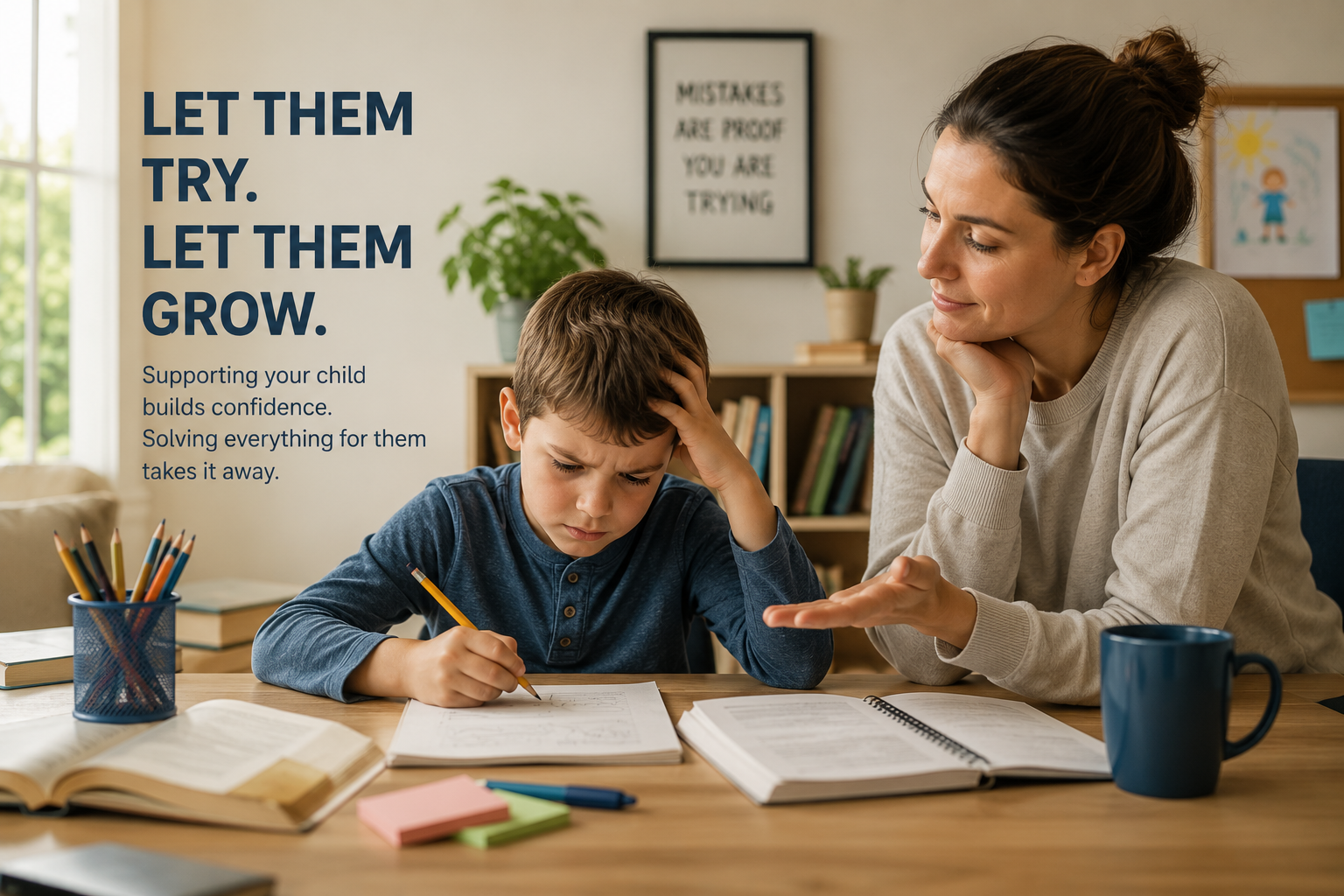
Children who grow up in environments where every difficulty is quickly resolved by an adult, where mistakes are primarily experienced as failures rather than information, and where the path through any challenge is always already cleared and marked, tend to arrive at unfamiliar situations — professional, personal, technological — with fewer internal resources for handling them. Not because they are less capable, but because they have had less practice.
The adaptability gap is, in large part, a practice gap.
The Skills That Will Differentiate
Based on converging evidence from labour market research, educational psychology and technology forecasting, the skills most likely to differentiate children who thrive in the AI era from those who struggle can be grouped into several interconnected areas.
Creative and critical thinking. The ability to generate ideas that are genuinely new, to evaluate existing ideas with honest rigour, to connect concepts across different domains, and to approach problems without assuming that the conventional solution is necessarily the right one. AI can produce content at scale; it cannot yet reliably produce the kind of original, contextually nuanced thinking that comes from a mind that has been trained to genuinely question and genuinely create. Children who develop this capacity — through project-based learning, genuine creative work, and consistent exposure to questions that do not have single correct answers — are building something that compounds in value over time.
Communication. Not just the ability to write grammatically or speak clearly, but the ability to understand what needs to be communicated, to whom, in what form, and why. This requires genuine understanding of the audience, the subject matter, and the relationship between them. It requires empathy, judgment and the ability to translate complex thinking into language that someone else can actually receive. These are among the capacities most difficult to automate, and most clearly valued in every professional context that involves other humans — which is most of them.
Collaboration and emotional intelligence. The ability to work effectively with people who think, feel and work differently. To navigate disagreement without it becoming personal. To understand what another person needs and respond to it. To contribute meaningfully to a shared effort while supporting others to do the same. Research consistently shows that teams with high emotional intelligence significantly outperform teams without it, even when the less emotionally intelligent team has higher average technical skill. These capacities develop through real experience of genuine collaboration — not assigned group work, but authentic shared ownership of something that matters to everyone involved.
Entrepreneurial thinking. Not the ability to start a company — though that too — but the more fundamental disposition of looking at the world as a place where things can be improved, and believing you are capable of contributing to that improvement. This means spotting problems worth solving, generating and testing possible approaches, persisting through the inevitable failures, and taking enough initiative to actually try. Children who develop this orientation approach their adult lives as participants rather than spectators — as people who create opportunities rather than waiting for them to appear.
Learning agility. The capacity to acquire new knowledge and skills efficiently, to transfer understanding from one domain to another, and to remain genuinely curious rather than defaulting to what is already known. In a world where the specific skills most in demand shift meaningfully over the course of a working lifetime, the ability to keep learning effectively is not supplementary — it is central. Children who develop this capacity, who have learned how to learn rather than merely what to learn, carry an advantage that grows rather than depreciates over time.
What This Means for How Children Spend Their Time
The practical implication of this analysis is not that parents should pull their children out of school, abandon academic learning, or replace structured education with unstructured play. None of those conclusions follow from the evidence.
What the evidence does suggest is that the activities and experiences through which children spend their time outside formal academic instruction matter more than most parents currently treat them as mattering.
A child who spends several hours each week in genuinely creative work — building something, designing something, writing something that requires real thought and real choices — is developing capacities that classroom instruction rarely reaches. A child who regularly engages in collaborative projects with real shared stakes is developing the social and emotional intelligence that research consistently identifies as a differentiating factor in long-term outcomes. A child who is regularly asked to take initiative, to identify a problem and figure out how to address it, to make decisions and live with the consequences, is developing the self-direction and resilience that makes adaptability possible.
These experiences do not need to be formally structured. They do not require expensive programmes. But they do require deliberate attention — from parents who understand why they matter and create space for them accordingly.
The Risk of Optimising for the Wrong Outcomes
There is a particular risk worth naming explicitly, because it is widespread and genuinely consequential.
Many parents, understandably focused on the metrics most clearly available to them — grades, test scores, rankings — optimise their children's time and energy almost entirely toward those metrics. The result is children who perform well on the measures that existing systems reward, while developing relatively little in the dimensions those measures do not capture.
This is not a criticism of academic achievement, which remains genuinely important. It is an observation about what gets crowded out when academic performance becomes the only priority. Unstructured time for genuine creative exploration. Real responsibility for outcomes that matter. The experience of navigating difficulty without adult rescue. Collaboration that requires authentic negotiation rather than divided tasks. These experiences tend to be sacrificed in the optimisation for grades — and they are precisely the experiences through which the skills most valued in an AI-era economy are developed.
The children most at risk in this regard are not those who are performing poorly academically. They are those who are performing well academically while developing little beyond what academic assessment measures. The grades are real. But the preparation they represent may be increasingly incomplete.
Why Entrepreneurial Education Matters Now
Entrepreneurial education — structured, project-based learning that asks children to identify real problems, develop and test responses to them, collaborate with others, communicate their thinking and take genuine responsibility for outcomes — addresses precisely the gap that traditional academic instruction tends to leave.
It is not a replacement for academic learning. It is a complement to it, and one that the research suggests has significant developmental value for children across the full range of academic ability levels.
Children who engage in genuine entrepreneurial learning develop initiative — the disposition to begin things without waiting for permission. They develop resilience — the practical experience of things not working and figuring out what to do next. They develop communication skills in real contexts, where the quality of the communication actually affects whether the project succeeds. They develop collaboration skills through authentic shared ownership, not the artificial cooperation of assigned group tasks.
Perhaps most importantly, they develop a relationship with their own capability — a gradually accumulating body of evidence that they can figure things out, build things, contribute something real. That relationship, established in childhood, is one of the most reliable predictors of how people approach uncertainty and challenge throughout their adult lives.
You may also find these articles helpful:
emotional intelligence for kids
problem solving activities for kids
Questions Parents Often Ask
Does this mean academic performance no longer matters?
It does not. Strong academic foundations — in mathematics, literacy, science, and structured analytical thinking — remain genuinely important, and remain the basis on which most professional development is built. What the evidence suggests is that academic performance alone is increasingly insufficient preparation for a world reshaped by AI, and that the skills not captured by academic assessment deserve far more deliberate cultivation than they currently receive in most children's lives.
How do we know which specific jobs will be affected by AI?
We do not, and predictions about specific job categories have a poor historical track record. What the evidence does support is a direction: roles centred on repetitive cognitive tasks face greater automation pressure; roles centred on creativity, judgment, complex human interaction and adaptability face less. Preparing children for the direction — rather than betting on specific destinations — is the most defensible approach available.
My child does well at school. Should I be concerned?
Academic success is genuinely valuable and worth celebrating. The question worth asking alongside it is what else your child is developing — whether they are building initiative, creative confidence, the ability to navigate difficulty, and the social and emotional skills that research identifies as equally important predictors of long-term outcomes. If those dimensions are developing well alongside academic performance, there is much to feel positive about. If academic performance is the only area of focused development, it may be worth creating more space for the others.
Is there evidence that entrepreneurial education actually produces better outcomes for children?
Yes. A growing body of research — including longitudinal studies tracking children who participated in project-based and entrepreneurial learning programmes compared to those who did not — consistently shows improvements in critical thinking, communication, self-efficacy, and what researchers call "agency": the belief that one can affect outcomes through one's own actions. These improvements appear across socioeconomic backgrounds and academic ability levels, suggesting that entrepreneurial education benefits children broadly rather than only those already advantaged.
Final Thoughts
The children who will thrive in the AI era are not necessarily those who will have learned the most facts, scored the highest on standardised tests, or been most compliant with the structures of traditional education. They are those who will have developed the capacities that AI cannot replicate: genuine creativity, complex communication, emotional intelligence, the ability to collaborate, the resilience to persist through difficulty, and the entrepreneurial disposition to look at a problem and believe they can do something about it.
Those capacities do not develop automatically. They develop through specific kinds of experiences — through genuine creative work, authentic collaboration, real responsibility, and the practice of navigating difficulty with support rather than having it removed. Creating those experiences is, in the current moment, one of the most consequential investments any parent can make in their child's future.
The question is not whether the world is changing. It is. The question is whether the children in our care are developing the capacities to meet it.
If you want your child to develop the creative thinking, communication and entrepreneurial skills most likely to matter in an AI-shaped future — through structured, project-based learning designed for ages 10 to 15 — you can learn more about the programme here: