
Emotional Intelligence for Kids (Why It Matters More Than IQ)
A few years ago I had a student — eleven years old, sharp, articulate, one of the quickest thinkers I had ever worked with. In group projects she was always the first to understand what needed to be done. Her written work was exceptional. Her ideas were original.
But there was a pattern I kept noticing.
Whenever something did not go her way — a group decision that went against her idea, a comment from a classmate she found unfair, feedback on a project she had worked hard on — she would shut down completely. Not dramatically. Quietly. She would go still, stop contributing, and spend the rest of the session somewhere behind her eyes, unreachable.
It took me several weeks to understand what was happening. She was not lacking confidence. She was not anxious about being wrong. She simply had no framework for processing the emotional experience of disappointment. Nobody had ever taught her one. So when disappointment arrived — as it inevitably does — she had nothing to work with except absence.
I have thought about that student many times since. Because she is not unusual. In fact, she represents something I see consistently in children who are academically strong but emotionally underprepared: a gap between intellectual capability and emotional capacity that nobody has thought to address.
Emotional intelligence is not a soft topic. It is not secondary to academic ability. And it is not something children either have or do not have. It is a set of skills — recognisable, teachable, practicable — that shapes almost everything that matters in a child's life: relationships, resilience, communication, the ability to work with others and the ability to recover when things go wrong.
After twenty years working with children aged 10 to 15, I am convinced that emotional intelligence is one of the most important things we can help children develop — and one of the least deliberately taught.
What Emotional Intelligence Actually Is
The term gets used often enough that it has started to lose meaning. So it is worth being precise.
Emotional intelligence is the ability to recognise emotions — your own and other people's — understand what they mean, and respond to them in ways that are constructive rather than destructive. It is not about being calm all the time. Emotionally intelligent children still feel frustration, disappointment, jealousy and anger. What develops, gradually and through practice, is the capacity to work with those feelings rather than being entirely controlled by them.
In practice, emotional intelligence includes several distinct but connected abilities:
- recognising what you are feeling and being able to name it accurately
- understanding what triggered the feeling and why
- managing the emotional response in a way that serves you rather than undermines you
- reading other people's emotional states with reasonable accuracy
- communicating feelings in ways that others can hear and respond to
- navigating relationships and conflict with care and effectiveness
None of these abilities are innate. They develop — unevenly, over years — through experience, modelling and guidance. And they develop best when the adults around a child take them seriously enough to create space for them.
Why This Matters More Now Than It Used To
The world children are growing up in places unprecedented emotional demands on them. Social media creates constant comparison with carefully curated versions of other people's lives. Academic pressure begins earlier and intensifies faster. The pace of change — in technology, in social norms, in what the future looks like — generates a background level of uncertainty that previous generations simply did not face at this age.
Against this backdrop, emotional fragility is not a minor inconvenience. It is a genuine obstacle.
I have watched children who were academically capable fall apart in collaborative settings because they could not manage the emotional friction of disagreement. I have seen children who had genuine creative potential give up on ideas the moment someone questioned them, because they had no framework for separating feedback on the work from rejection of themselves. I have seen children who could solve complex problems in isolation become completely ineffective in groups, because they could not read or respond to the emotional dynamics around them.
These are not failures of intelligence. They are failures of emotional preparation.
And they are increasingly costly. Because almost nothing significant in adult life — professionally, personally, socially — is accomplished by a person working entirely alone in emotionally neutral conditions. The ability to collaborate, to persist through difficulty, to communicate under pressure, to recover from failure and try again: all of these depend on emotional intelligence at least as much as they depend on any technical skill.
A Story That Stayed With Me
Several years ago I worked with a twelve-year-old boy whose parents described him, accurately, as intensely creative. He generated ideas constantly. In the early stages of a project, he was electric — full of enthusiasm, making connections that surprised everyone around him.
But there was a point in every project where his engagement collapsed. It always happened at the same moment: when the idea met reality and reality pushed back.
The first time a design did not work the way he had imagined, he would declare the entire project worthless. The first time a group member questioned his approach, he would withdraw and refuse to engage. The first time something required patient iteration rather than inspired inspiration, he was gone — physically present but emotionally checked out.
His parents had tried several things. They had praised his creativity more. They had reduced pressure. They had explained, repeatedly, that failure was part of the process. Nothing shifted.
What eventually helped was not a conversation about failure. It was building his emotional vocabulary for what he was actually experiencing in those moments. Because when I asked him what happened inside when a project hit an obstacle, he could not describe it beyond "I just don't want to do it anymore." He had no language for the frustration, the deflation, the gap between expectation and reality.
We started there. Not with resilience as a concept but with the specific feelings that arose at specific moments — naming them, locating them, distinguishing one from another. Over time, having language for what he was experiencing gave him just enough space between the feeling and the reaction to do something different.
By the end of the year, he was still the most creative person in the room. But he had also become someone who could stay in a project when it got difficult. That combination — creativity plus emotional persistence — made him genuinely formidable in ways that creativity alone never could.
Why Some Children Struggle More Than Others
It is important to say clearly: children who struggle emotionally are not weak, or difficult, or lacking in something fundamental. They are almost always simply underprepared — they have not yet developed the tools for what they are being asked to navigate.
Some of the most common patterns I observe, and what typically underlies them:
The child who overreacts to small things. Usually this is not about the specific incident. It is about accumulated emotional load — stress, overstimulation, or a series of smaller things that were never fully processed. The small thing is the last one, not the only one. These children often need help building the habit of regular emotional discharge, so that feelings do not accumulate to the point where any trigger becomes overwhelming.
The child who shuts down under criticism. This is almost always connected to a belief, learned somewhere, that being wrong is dangerous. The emotional shutdown is protective — if I disengage, I cannot be hurt by what comes next. These children need repeated, consistent experience of feedback being genuinely useful rather than threatening. The shift happens slowly, through accumulation of evidence that criticism is not the same as rejection.
The child who cannot tolerate other people's emotions. Some children become almost physically uncomfortable when someone around them is upset. They try to fix it immediately, dismiss it, or remove themselves. This often comes from their own discomfort with unresolved emotions — having never learned to sit with difficult feelings themselves, they find it unbearable to witness in others. Learning emotional regulation personally tends to naturally increase tolerance of emotion in others.
The child who does not seem to feel much. These children are sometimes described as emotionally flat or disconnected. In my experience, they are almost never actually unfeeling — they have simply learned, very effectively, not to show it. The emotions are there; the access is blocked. These children need the most patient, consistent, low-pressure emotional environment before they will take the risk of genuine expression.
None of these patterns are fixed. All of them shift with the right conditions and enough time.
How Parents Can Build Emotional Intelligence at Home
1. Replace Dismissal With Acknowledgement
This is the single most powerful shift a parent can make, and it costs nothing except attention.
Most adults, when faced with a child's emotional upset, instinctively try to make it stop. "You're fine." "It's not that big a deal." "Stop crying." These responses are not cruel — they come from discomfort with distress and a genuine wish to help. But what they communicate to the child is: your emotional experience is wrong, excessive, or inconvenient. Learn to hide it.
The alternative is acknowledgement before anything else. Not agreement. Not endorsement of whatever the child did. Simply recognition that what they are feeling is real and understandable.
"That sounds genuinely frustrating."
"I can see you're really upset."
"That must have felt unfair."
These responses do not solve anything. They do something more important: they teach the child that emotions are safe to have and name. That foundation — emotional safety — is the prerequisite for everything else.
2. Build Emotional Vocabulary Deliberately
Children who can name emotions precisely have a measurably easier time managing them. This is not a coincidence. Naming an emotion requires some degree of separation from it — you have to step back from the feeling enough to observe it. That small step is the beginning of regulation.
Most children have a very limited emotional vocabulary. Happy. Sad. Angry. Fine. The reality is far more textured: there is frustrated and there is disappointed, there is anxious and there is embarrassed, there is jealous and there is lonely, and each of these calls for a different response.
You can build this vocabulary simply by using precise emotional language yourself and asking precise questions. Not "How are you feeling?" but "You seem like you might be frustrated right now — is that what's happening, or is it something else?" The specificity matters. It models that emotions have names, that those names are worth knowing, and that identifying them accurately is a skill worth developing.
3. Treat Your Own Emotions Visibly
Children learn emotional patterns primarily through observation. Whatever emotional habits exist in a home — how stress is expressed, how conflict is handled, how mistakes are received, how difficult feelings are processed — children absorb and replicate them.
This is both humbling and empowering. It means that one of the most effective things a parent can do for a child's emotional intelligence is to model their own, out loud, in real time.
Not perfectly. Not with constant emotional clarity. But visibly enough that children can see the process: noticing a feeling, naming it, making a decision about how to respond.
"I'm feeling irritated right now, so I'm going to take five minutes before we continue this conversation."
"That was a difficult meeting and I'm still feeling the stress of it. Let me just decompress for a bit."
"I handled that situation badly. I was frustrated and I took it out on the wrong person. That wasn't fair."
Each of these moments teaches something a lecture about emotional intelligence never could.
4. Let Difficult Emotions Be Present Without Rushing to Fix Them
One of the most counterintuitive things I have learned from working with emotionally intelligent children is that they tend to come from families where difficult emotions were allowed to exist, not families where everything was always fine.
Children who develop strong emotional regulation are not children who never experienced emotional difficulty. They are children who experienced it enough times, in a supported environment, that they developed confidence in their own ability to get through it.
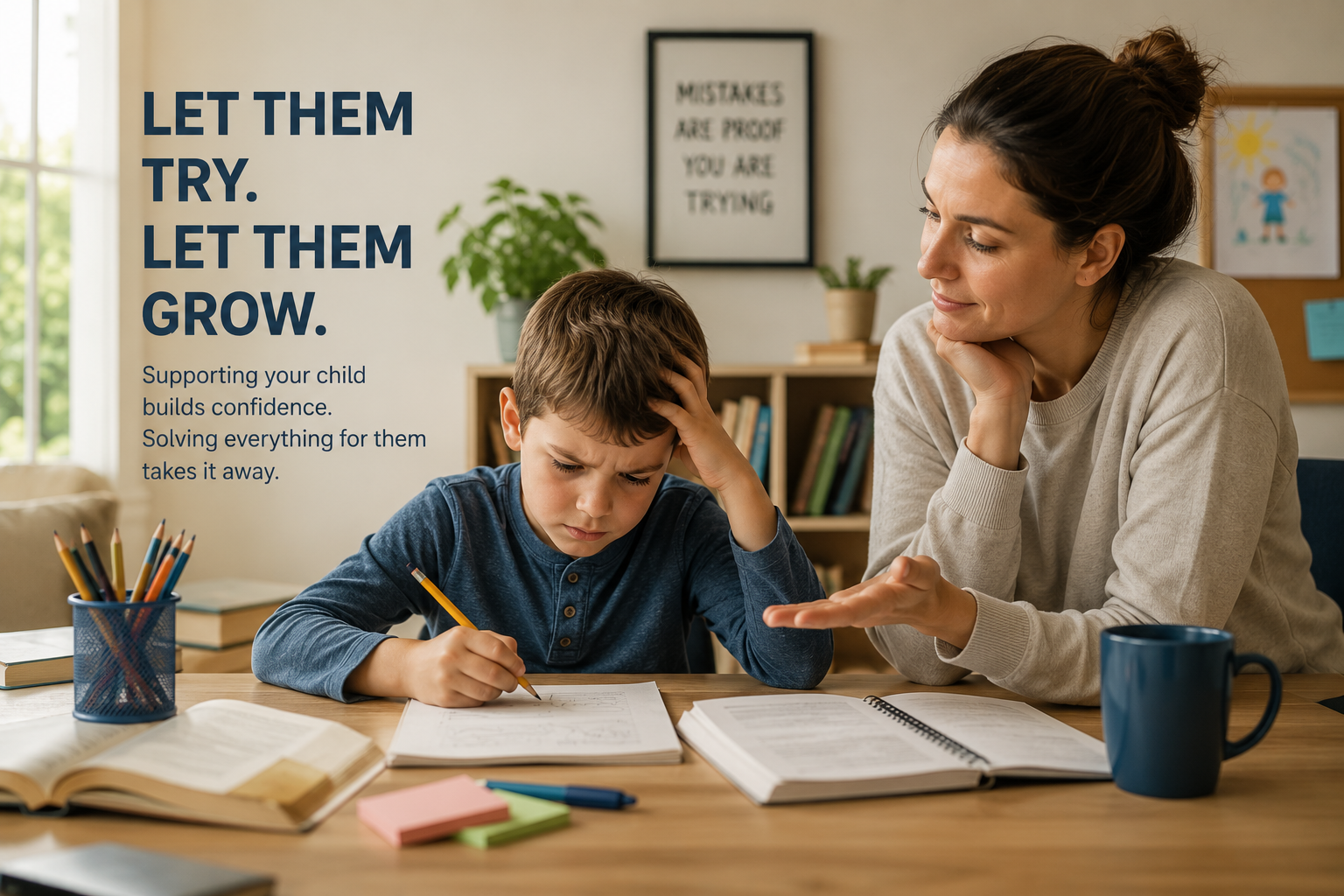
The instinct to immediately fix a child's distress — to make the bad feeling stop as quickly as possible — deprives children of exactly this experience. It teaches them that difficult feelings are emergencies to be resolved, not experiences to be navigated. Children who learn this become adults who cannot tolerate their own discomfort, which is a significant limitation in a world that involves a great deal of it.
Sitting with a child in a difficult emotional moment — present, calm, neither dismissing the feeling nor being overwhelmed by it — is one of the most powerful things you can do. It communicates: this is hard, and you can get through it, and I'm here while you do.
5. Debrief Emotional Experiences After the Fact
In the middle of a strong emotion, very little learning is possible. The brain is in a different mode — reactive, not reflective. Trying to have a productive conversation about emotional intelligence while a child is in the grip of a difficult feeling is almost always counterproductive.
The learning happens afterwards, when the child has returned to equilibrium and can think about what happened. A short, non-judgmental conversation at that point — "Can we talk about what happened earlier? I'm curious what that felt like for you" — is far more valuable than any intervention in the moment.
The questions that tend to open things up:
- What were you feeling right before that happened?
- What was the moment when it became really difficult?
- Is there anything you wish you had done differently?
- What might help if that situation happens again?
These questions are not a post-mortem or a lesson. They are an invitation to reflection. Repeated consistently, they build the habit of emotional review — a child who learns to look back on their own emotional experiences with curiosity rather than shame becomes someone who grows from them.
6. Develop Empathy Through Perspective-Taking
Empathy does not develop automatically. It develops through the repeated practice of taking someone else's perspective, which is a genuinely difficult cognitive and emotional task that needs to be actively encouraged.
After any social situation — a conflict with a friend, a group activity, a moment at school — ask your child to think about what the experience was like from the other person's side. Not as a correction ("You need to think about how they felt") but as genuine curiosity ("I wonder what that situation was like for her — what do you think?").
This question, asked consistently and without judgment, builds something remarkable over time. Children who practice perspective-taking become genuinely better at reading social situations, at navigating conflict without escalation, and at the kind of collaborative work that increasingly defines everything that matters in adult life.
7. Create Space for Emotional Expression Without Judgment
The most important predictor of whether a child will bring their emotional life to you, rather than hiding it, is whether doing so has felt safe in the past. Children test this constantly and quietly, bringing small things to see how they are received before deciding whether to trust you with larger ones.
A child who is listened to without dismissal, correction or immediate problem-solving when they bring something small, will bring bigger things. A child who is told they are overreacting, or who finds their concerns minimised, learns to manage their emotional life privately — which usually means managing it badly, because they have not yet developed the internal tools to do it alone.
The practical implication is simple: when a child brings you something emotional, your first job is to receive it. Everything else — advice, perspective, problem-solving — comes later, if at all.
Emotional Intelligence and Entrepreneurial Thinking
In the work I do with children through entrepreneurship education, emotional intelligence is not a separate topic — it is present in almost every moment of the work.
Children who struggle emotionally find collaborative projects almost impossible. They cannot share ownership of an idea. They cannot hear feedback on their work without hearing rejection of themselves. They cannot stay engaged through the inevitable frustrations of turning an idea into something real. They cannot work effectively in groups where people think differently from them.
Children who have developed even basic emotional intelligence handle all of these situations differently. They can separate the idea from their identity. They can disagree without damaging the relationship. They can stay in a difficult problem instead of abandoning it. They can hear "this part doesn't work" and respond with curiosity rather than defensiveness.
These are not small differences. They determine almost everything about what a child can accomplish when the work gets genuinely challenging — which real work always does, eventually.
You can also explore related topics in these guides:
Questions Parents Often Ask
Can emotional intelligence really be taught, or is it something children either have or don't?
It absolutely develops. Temperament affects how naturally some of these skills come, but no child is born with emotional intelligence fully formed — it is built through experience, modelling and practice over many years. I have watched children who were genuinely emotionally underprepared at ten become thoughtful, emotionally capable young people by thirteen or fourteen. The development is not linear, but it is real and it responds to the right conditions.
My child is very sensitive — is that a problem?
Not inherently. Sensitivity means a child feels things more intensely, not that they are broken or need to be fixed. In fact, children who feel emotions deeply often develop into the most empathetic and perceptive adults — once they have learned to work with that sensitivity rather than being overwhelmed by it. The goal is not to reduce the sensitivity but to build the skills to manage it. Those two things often turn out to be completely compatible.
What if I find it hard to talk about emotions myself?
Then the honest thing to say to your child is exactly that. "I'm not very good at talking about feelings — it didn't happen much when I was growing up. But I'm trying to learn." Children respond remarkably well to this kind of honesty. It normalises the difficulty of emotional learning and shows them that it is something worth working at, even when it is hard. You do not need to be emotionally fluent to be emotionally present. Presence is most of what is needed.
How do I know if my child's emotional struggles are typical development or something that needs professional support?
The questions worth asking are: Is this pattern persistent across many different situations? Is it getting more intense rather than gradually easier? Is it significantly interfering with the child's relationships, learning or daily functioning? If the answers are yes, it is worth speaking with a professional who specialises in child development. Emotional intelligence development happens on a wide spectrum and most struggles are entirely typical — but some children benefit significantly from additional support, and there is no value in waiting when that is the case.
Final Thoughts
Emotional intelligence for children is not a nice extra. It is not something to return to once the academic priorities are handled. It is, in many ways, the foundation that makes everything else possible — the resilience that keeps a child engaged when things get difficult, the empathy that makes relationships work, the self-awareness that allows genuine learning from experience.
It develops in small moments. A feeling named accurately in an ordinary conversation. A mistake received calmly instead of catastrophised. A child allowed to sit in disappointment long enough to discover they can get through it. A parent who says "I'm finding this hard too" instead of pretending otherwise.
None of this requires special resources or particular expertise. It requires attention, patience, and the willingness to take a child's inner life seriously — not just their performance.
Start this week with one thing: the next time your child brings you something difficult, resist the urge to fix it. Just listen. Ask one question. See where it goes.
That is where emotional intelligence begins to grow.
If you want your child to develop emotional awareness, communication and creative thinking through structured, project-based learning designed for ages 10 to 15, you can learn more about the programme here:
entrepreneurship lessons for kids from home