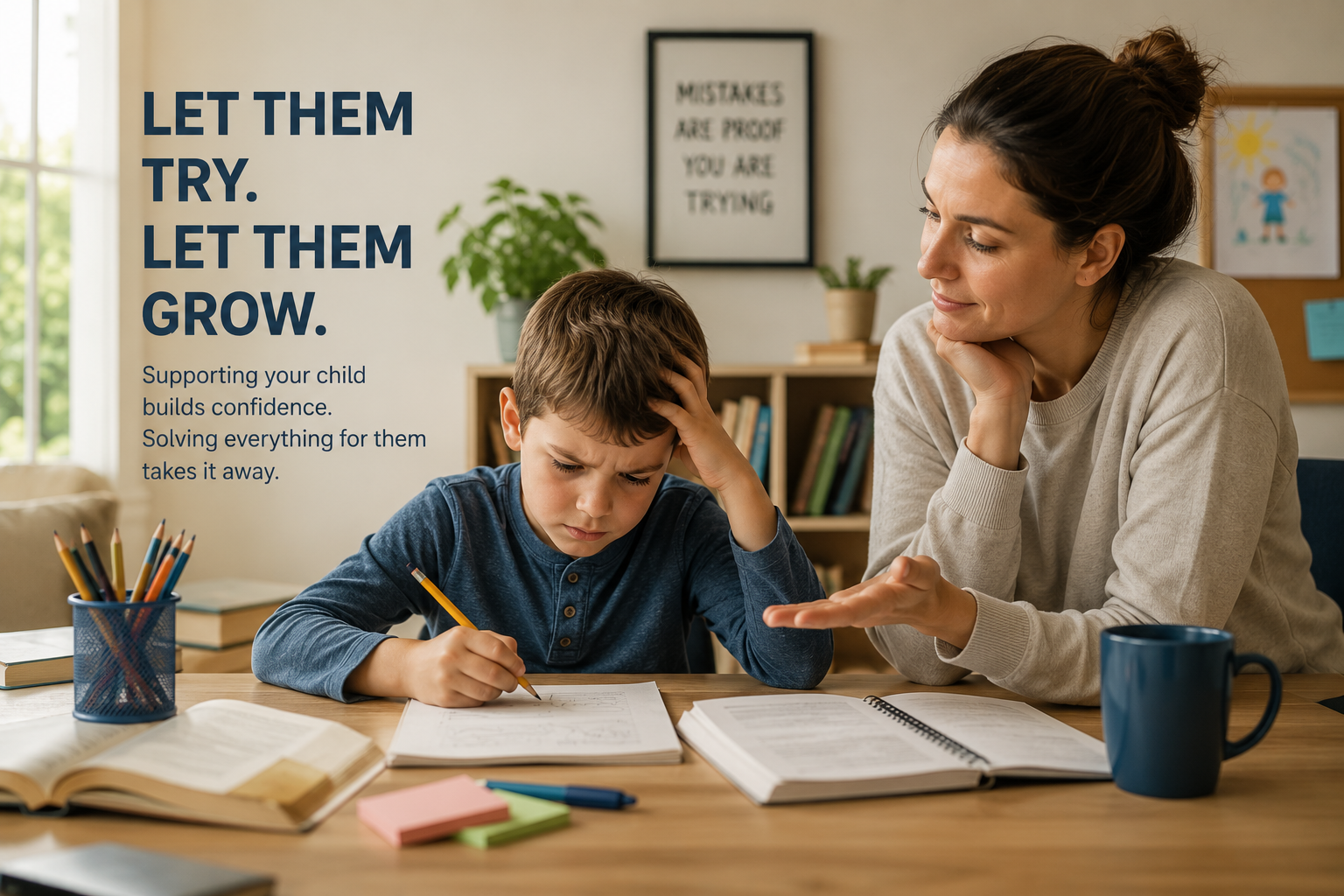

The Problem With Rewarding Kids Only for Results
I want to start with a confession.
When I first started working with children on entrepreneurship projects, I made a mistake that I see almost every parent make. A student would finish a presentation, and if it went well — if the idea was strong and the delivery was confident — I would respond to the outcome. "Great job. Excellent result. Well done."
And if it went poorly, I would either soften the feedback to protect them, or focus on what went wrong with the output.
It took me longer than I would like to admit to see what I was actually teaching them. Not how to get better. How to need approval. How to associate their value with their performance. How to feel fine when things worked and threatened when they did not.
I was, without meaning to, raising children who were good at succeeding and terrified of everything else.
The shift that changed my entire approach happened during a session with a twelve-year-old girl who had worked harder on a project than anyone else in the room. She had prepared for weeks. She had revised her idea three times. She had stayed late asking questions, pushing her thinking, refusing to settle for the first version of anything. And then she presented — and it did not land the way she hoped. The feedback was honest. The audience was kind, but unconvinced.
She looked at me afterwards expecting, I think, that I was going to tell her she had failed.
Instead I told her it was one of the best pieces of work I had seen all year. Not the result. The work. The preparation, the persistence, the willingness to keep revising when it would have been easier to stop.
She looked genuinely confused. She had been trained, very effectively by many years of school and well-meaning adults, to evaluate herself entirely by outcomes. The idea that the process could be excellent even when the result fell short was, to her, a new concept.
That conversation changed how I think about what we are actually measuring when we evaluate children — and what the things we choose to celebrate are quietly teaching them about themselves.
What Children Actually Learn When We Only Praise Results
Children are paying attention to us much more carefully than we realise. Not to what we say about values and growth and character. To what we actually respond to. What makes our faces light up. What earns the extra hug, the special mention, the celebration at dinner.
When results are consistently what get celebrated — the grade, the win, the award, the achievement — children draw an entirely logical conclusion: their value is located in their performance. Being successful earns love and attention. Being exceptional earns recognition. Being the best earns approval.
This sounds like motivation. In the short term, it often functions as motivation. But underneath it, something else is developing: a growing fear of any situation where the result is uncertain. Because if your value lives in your performance, then any situation where you might not perform well is a situation where your value is at risk. And that is not a comfortable place to live.
I have worked with children who were, by every conventional measure, exceptional students. Perfect grades. Multiple awards. Teachers who described them as the brightest they had taught in years. And when these children came into our sessions — where the problems were open-ended, where there was no correct answer, where trying something and having it not work was a completely normal part of the process — some of them shut down entirely. Not because they lacked ability. Because they had never developed a relationship with difficulty that did not feel like a threat to who they were.
That pattern does not fix itself. It tends to get worse as the stakes get higher.
Why This Matters More as Children Get Older
The environments children operate in when they are young are, relatively speaking, forgiving. A bad grade can be improved. A lost competition has another round. The consequences of most childhood failures are manageable, temporary, and surrounded by adults who care about the child's wellbeing.
Adult life does not work that way.
The challenges that matter most in adult life — building something new, leading a team through difficulty, making a career change, starting a business, navigating a significant relationship, recovering from a professional setback — almost never offer the clean feedback loop of a school test. They are messy, ambiguous, slow to resolve, and full of moments where the right path is not obvious and the outcome is not guaranteed.
People who have spent their formative years learning to need a clear right answer and avoid situations where failure is possible are genuinely underprepared for this. Not because they are not intelligent. Because they have been practicing the wrong relationship with difficulty for twenty years.
The children who handle adult complexity best are almost never those who were most consistently successful as students. They are those who had enough experience of trying difficult things, not always succeeding, and discovering that they could figure out what to do next. That experience — accumulated over years, in safe enough environments to be genuinely educational — is what builds the kind of resilience that holds up under real pressure.
The Perfectionism Trap
One of the most specific ways this plays out is perfectionism — and I want to be precise about what I mean, because perfectionism is often misunderstood as a high standard, when it is actually something much more limiting.
A high standard means caring deeply about quality and working hard to achieve it. That is genuinely valuable.
Perfectionism means avoiding any situation where you might not achieve the standard — because the gap between your standard and your current ability has become unbearable rather than simply something to work on. Perfectionists do not have high standards. They have a terror of falling short of them, which is a completely different thing and produces the opposite behaviour: not more ambitious attempts, but fewer, safer ones.
I have watched extremely capable children decline to attempt things that were clearly within their reach because the possibility of not doing them perfectly was more than they were willing to risk. The opportunity cost of that over a lifetime is enormous. Every project not attempted, every creative risk not taken, every leadership role declined because the outcome could not be guaranteed — these add up. Slowly, quietly, the life a child builds becomes smaller than the life they were capable of.
And it started, very often, with adults who only celebrated when things went well.
What Entrepreneurs Understand That Most Children Are Never Taught
The reason I built KidStartupper around entrepreneurial thinking is not that I expect every child to start a company. Most will not, and that is completely fine. The reason is that entrepreneurial contexts are one of the few environments where the true relationship between failure and growth becomes impossible to ignore.
Every entrepreneur who has built something meaningful has a version of the same story: things did not work the way they expected. Multiple times. The first approach failed. The second needed to be revised. The third revealed a problem they had not anticipated. And through all of that, they kept going — not because they were not disappointed or frustrated, but because they had learned to treat each failure as information rather than as verdict.
That orientation — failure as feedback, difficulty as part of the process — is one of the most valuable things any young person can develop. It is also one that almost no traditional educational environment deliberately builds. Schools are organised around correct answers and successful performance. The experience of trying something, having it not work, understanding why, and trying again more intelligently is not what most children spend their school years practising.
In our programme, it is exactly what they practise. Projects fail. Ideas get challenged. Approaches that seemed solid turn out to have problems. And children learn, gradually and through real experience rather than reassuring words, that none of that means they are not capable. It means they are in the middle of something real.
The Difference Between Pressure and Motivation
One concern I hear from parents when this conversation comes up is that focusing on effort rather than results will lower standards. That children will stop trying hard if they are not clearly evaluated on outcomes.
In my experience, the opposite tends to be true — but the reason why is worth understanding.
Pressure and motivation feel similar from the outside. Both can produce effort. Both can produce results. The difference is what happens over time and what happens when things get hard.
Pressure — the sense that your worth depends on your performance — can drive short-term output. But it also creates anxiety, risk-aversion, and a relationship with challenge that becomes more limiting as the challenges get harder. Children who are primarily motivated by pressure tend to perform well in structured, predictable environments and struggle significantly when things become genuinely uncertain.
Genuine motivation — the internal drive that comes from caring about what you are doing and believing that your effort actually shapes your development — produces something more durable. Children who are motivated this way keep going when things get hard because they are not primarily trying to protect an image. They are genuinely invested in getting better. And "getting better" is a goal that failure can contribute to, while "looking successful" is a goal that failure directly threatens.
Creating that genuine motivation is not about removing expectations or pretending that outcomes do not matter. It is about expanding what you celebrate to include the things that actually produce outcomes — the preparation, the persistence, the willingness to try again, the courage to attempt something where success is not guaranteed.
Practical Things Worth Celebrating
None of this requires stopping the celebration of genuine achievement. Results matter. Excellent work deserves recognition. A child who earns a real success should feel the satisfaction of that.
What it requires is widening the lens — making sure that the things that actually produce results over time are also consistently noticed and valued. In my work with children, the qualities I find myself celebrating most often are not the ones that show up most clearly on report cards.
I celebrate when a child tries something they were clearly scared of and does it anyway — regardless of how it turns out. That took courage, and courage is rarer and more valuable than ability.
I celebrate when a child who failed at something last week shows up this week and tries again differently. That is the orientation that makes everything else possible.
I celebrate when a child asks a genuinely good question rather than waiting for an answer — because good questions are what drive real learning.
I celebrate when a child takes responsibility for something that went wrong rather than looking for someone else to blame — because that is what self-awareness looks like in practice.
These are not consolation prizes for children who did not achieve the outcome. They are recognitions of the qualities that, compounded over years, determine what kind of adult a child becomes. They deserve to be treated that way.
Questions Parents Often Ask
Should I stop praising good grades?
No. Good grades reflect real work and real learning, and they deserve recognition. What I am describing is not replacing that recognition but adding to it — making sure that the effort, preparation and persistence that produced the grade are also explicitly acknowledged. "You worked really hard on this and it showed" is not less meaningful than "you got an A." In many cases, it is more meaningful, because it locates the achievement in something the child can actually control and repeat.
How do I respond when my child fails at something important to them?
Start by sitting with the disappointment rather than rushing to fix it. Children need to feel that their difficult emotions are acceptable and do not need to be immediately resolved. Once that space has been given, the most useful questions are forward-looking: What did you learn? What would you do differently? What is the next thing to try? These questions communicate, without saying it directly, that failure is a stage in a process — not the end of one.
What if my child takes this as permission to put in less effort?
This concern almost never materialises in practice, and when it does, it is usually a sign that something else is going on. Children who are genuinely engaged in what they are doing do not need external pressure to try hard — they are already motivated. Children who are only trying because they fear the consequences of not succeeding will sometimes pull back when that fear is reduced. But that pull-back reveals a problem that was already there: they were never genuinely motivated, only pressured. Addressing the underlying disengagement is far more productive than maintaining the pressure.
Final Thoughts
The girl I mentioned at the beginning of this article came back for another programme six months later. She had spent the intervening months working on a small project of her own — something she had thought of after our sessions, without anyone asking her to. It had not fully worked out, but she had learned a significant amount from why it had not.
She told me about it with a kind of matter-of-fact openness that I found remarkable. No apology. No deflection. No framing it as a failure. Just: here is what I tried, here is what I found out, here is what I am going to do differently.
That is exactly the orientation I want every child who goes through our programme to develop. Not the absence of standards, not indifference to results, but a fundamentally healthy relationship with difficulty — one where a setback is information rather than judgment, and where trying again is the obvious next step rather than something to be feared.
That relationship does not develop from being told results are not important. It develops from having adults in your life who genuinely value — and consistently celebrate — the things that matter most: courage, persistence, honesty about what went wrong, and the willingness to keep going anyway.
If you would like your child to experience a learning environment built entirely around developing these qualities — through real projects, genuine challenges, and the kind of structured entrepreneurial thinking that builds resilience alongside capability — I invite you to try KidStartupper. The first seven days are free, and what you see in that time will tell you everything you need to know.
start your child's free trial here
You may also find these articles helpful:
why smart kids often struggle in the real world
why kids should learn how to make decisions
school alone is no longer enough