
How to Teach Kids Empathy (And Why It Matters More Than Ever)
In 2023, researchers at Harvard's Making Caring Common project asked more than 10,000 young people to rank their top priorities: high achievement, happiness or caring for others. Nearly 80 percent placed personal achievement or happiness first. Caring for others came last.
The researchers were not surprised. But they were concerned — and so were the teachers, coaches and parents who read the findings. Because what that data points to is not a generation of selfish children. It points to a generation that has not been systematically taught one of the most fundamental human skills: the ability to genuinely understand how another person feels.
Empathy is not a personality trait. It is not something children either have or lack from birth. It is a learnable, practicable skill — one that develops through specific kinds of experiences and conversations, and one that has measurable effects on almost every part of a child's life: their friendships, their ability to collaborate, their communication, their resilience, and eventually, their effectiveness as adults in a world that still depends, more than ever, on human connection.
This guide is for parents who want to understand what empathy actually involves, why it is harder for children to develop in the current environment, and what specific things can be done at home to help it grow.
What Empathy Actually Is — and What It Isn't
Empathy is frequently confused with sympathy, with kindness, or with simply being agreeable. These are related but distinct things.
Sympathy is feeling something about another person's situation. Empathy is feeling something with them — taking their perspective seriously enough to understand what the experience is like from inside it, not just from the outside looking in.
Kindness is a behavior. Empathy is a cognitive and emotional capacity that makes genuine kindness possible. A child can be polite without understanding how another person feels. An empathetic child understands the feeling — and that understanding shapes how they respond.
In practice, empathy involves several distinct but connected abilities:
- recognising that other people have feelings, perspectives and inner experiences that are different from your own
- being able to take another person's perspective seriously — not just intellectually but emotionally
- reading social and emotional cues accurately enough to understand what someone else is actually experiencing
- responding to that understanding in a way that shows care and awareness
- listening with genuine attention, not just waiting to respond
None of these come automatically. All of them develop through practice, experience and — crucially — guidance from adults who take them seriously.
Why This Is Harder to Develop Now Than It Used To Be
It would be easy to assume that children today are simply less empathetic than previous generations. The evidence is more nuanced than that — but it does point to something worth understanding.
A widely cited University of Michigan study found that empathy levels among college students dropped significantly between 1979 and 2009 — with the steepest decline occurring after 2000. The researchers pointed to a number of possible explanations, including increased individualism, changing family structures and the rise of digital communication.
The specific challenge of digital communication is worth dwelling on. Empathy develops most readily through face-to-face interaction, where children must read body language, tone of voice, facial expression and emotional atmosphere in real time. These cues are absent or heavily filtered in digital communication. A child who spends large portions of their social life interacting through screens is practicing a fundamentally different set of social skills — ones that do not require the same depth of emotional reading.
This does not mean that screen time is inherently damaging to empathy. It means that the development of empathy requires deliberate cultivation through real human interaction — and that this cultivation needs to be more intentional than it did in environments where children naturally spent more time in face-to-face social situations.
The good news is that empathy responds strongly to the right conditions. Children who are given regular, guided opportunities to reflect on other people's experiences show measurable increases in empathetic understanding over time. This is not a slow or uncertain process — it is relatively responsive, and it begins with surprisingly simple habits.
What We See in Collaborative Learning Settings
In project-based learning environments where children work together over extended periods, empathy shows up as one of the clearest differentiators between groups that function well and groups that struggle.
Groups with children who have developed even basic perspective-taking skills handle disagreement differently. They are more likely to pause before reacting when someone else's idea conflicts with their own. They are more likely to ask questions rather than dismiss. They are more likely to notice when a group member is struggling and do something about it.
Groups where empathy is less developed show predictable patterns: one or two children dominate while others disengage; feedback is taken personally and defensively; disagreements become personal rather than productive; children who are quieter or less confident stop contributing entirely because the environment does not feel safe enough.
The difference is not intelligence. It is not even effort. It is the presence or absence of a specific set of social and emotional skills — with empathy at the centre of them.
What is striking is how quickly these dynamics shift when children are given explicit frameworks for thinking about other people's experiences. Not long lectures. Not abstract lessons about kindness. Specific, concrete questions: What do you think they were feeling? How might this situation look from their side? What would you need if you were in their position?
These questions, asked consistently in real situations, change behavior in ways that instruction alone never does.
Why Some Children Struggle More Than Others
Children who struggle with empathy are not fundamentally different from those who develop it more easily. They are almost always simply less practiced — and sometimes, the environments they have grown up in have made certain empathy-inhibiting habits more likely to form.
Children who are highly competitive. Competition is not inherently a problem — it can drive effort and improvement. But children who have been raised primarily in competitive environments sometimes develop a habit of evaluating situations in terms of winning and losing rather than in terms of how people are experiencing them. The shift required is not to reduce competitiveness but to expand the frame: other people's experiences matter too, and understanding them is not weakness — it is intelligence.
Children who are highly impulsive. Empathy requires a pause — a moment of reflection between perception and reaction. Children who are temperamentally impulsive tend to skip that pause, which means they respond before they have fully processed what the other person is experiencing. For these children, the practice of slowing down is itself an empathy intervention.
Children who struggle to read social cues. Some children find it genuinely difficult to pick up on the emotional signals that others send — facial expressions, tone of voice, body language. For these children, developing empathy benefits significantly from explicit teaching: naming emotions, explaining why people might feel what they feel, walking through social situations step by step rather than assuming the child will absorb the information intuitively.
Children who have experienced emotional dismissal. Children who have grown up having their own emotions regularly dismissed, minimised or punished often struggle to extend understanding to others. This is not hypocrisy — it is a natural consequence of never having had their own emotional experience validated. Building empathy in these children usually begins with building emotional safety for them first.
How Parents Can Build Empathy at Home
1. Make Perspective-Taking a Regular Habit, Not a Special Lesson
The most effective empathy development does not happen in dedicated conversations about empathy. It happens in the ordinary moments of family life, when a situation naturally raises the question of how someone else is experiencing things.
After a conflict between siblings: "Before we sort out who was right, I want to know — what do you think your brother was feeling?"
After a difficult moment at school: "How do you think your teacher saw that situation?"
After watching something together: "Why do you think that character reacted the way they did?"
These questions are not rhetorical. They are invitations to genuine reflection. The goal is not to get the "right" answer but to build the habit of asking the question — because children who habitually ask how someone else is experiencing something develop empathy as a natural reflex rather than a conscious effort.
2. Take Your Child's Emotional Experience Seriously Before You Take Anyone Else's
This point is frequently underestimated. Children who feel that their own emotions are genuinely heard and understood are significantly more capable of understanding other people's emotions. This is not coincidence — emotional understanding starts with the self.
A child whose frustration is routinely dismissed as overreaction learns that emotions are not worth paying attention to. That lesson applies universally: it affects how they relate to their own emotional experience and how they relate to other people's.
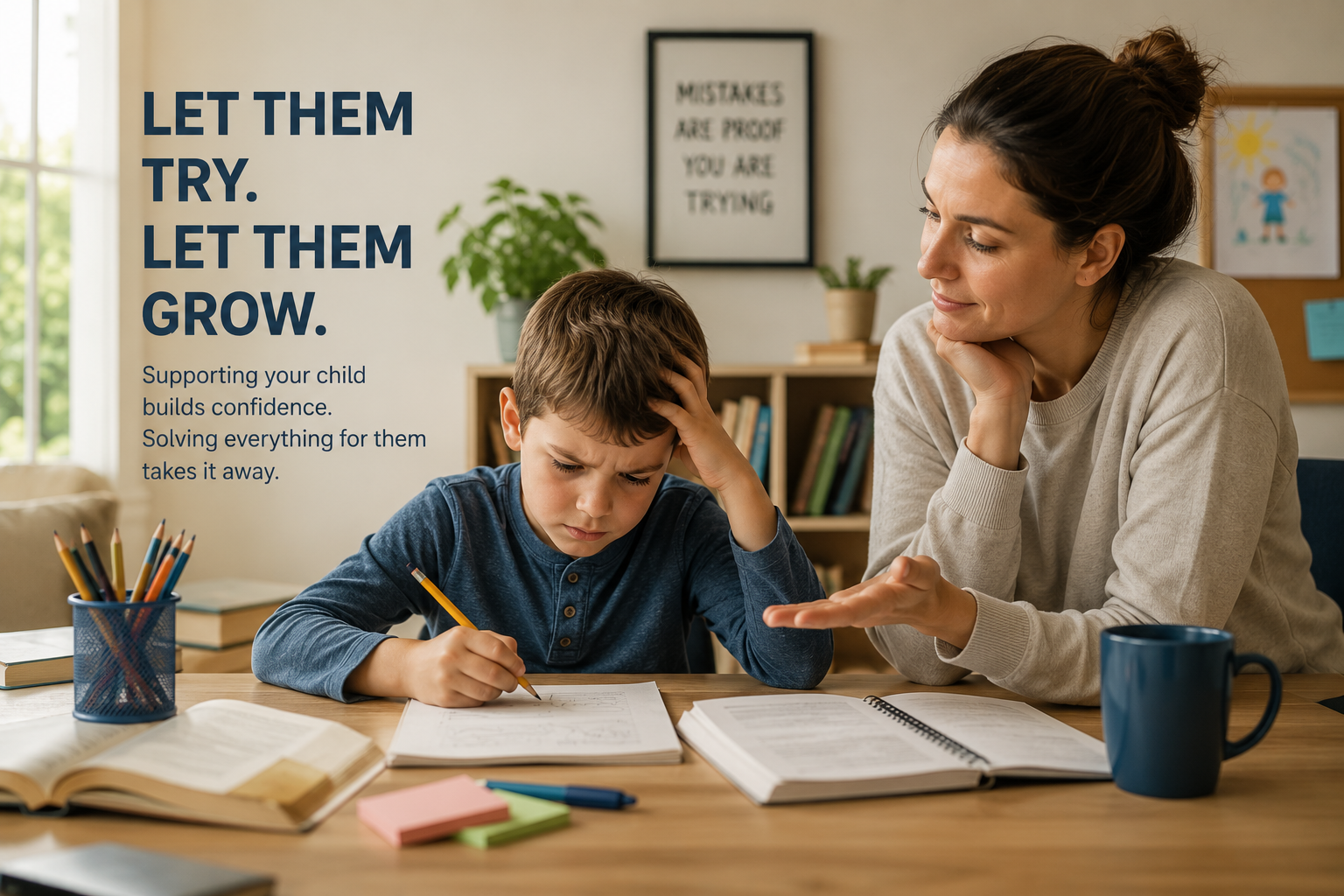
The practice is straightforward, though not always easy: when your child brings you something emotional, receive it fully before redirecting. Not "you'll be fine" but "that sounds really difficult." Not "stop crying" but "you seem really upset — can you tell me what happened?" The difference in the child's experience is significant. Over time, children who feel consistently heard develop a natural sensitivity to the emotional experiences of others.
3. Model What You Want to See — Specifically and Visibly
Children are exceptional observers. They notice far more about adult emotional behavior than adults typically realize — not what adults say about how to treat people, but what adults actually do when relationships become difficult.
Modeling empathy means making it visible in real situations, not just narrating it abstractly. It means apologizing genuinely when you have handled something badly. It means showing patience with someone who is struggling, out loud and in front of your child. It means demonstrating what it looks like to listen to someone you disagree with rather than waiting for them to finish so you can respond.
"I could see that conversation was hard for them, so I wanted to make sure they felt heard before we moved on."
"I got frustrated and said something I didn't mean. I need to go apologize properly."
"I don't agree with what they said, but I can understand why they feel that way given what they've been through."
Each of these moments teaches something that no discussion about empathy can replicate.
4. Use Stories as Empathy Practice
Fiction is one of the oldest and most effective tools for developing empathy. Stories invite readers into the inner lives of characters whose experiences may be radically different from their own — and in doing so, they practice exactly the cognitive and emotional movement that empathy requires.
The key is not passive reading but active discussion. After a book, a film, or even a TV episode:
- Why do you think the character made that choice?
- What were they feeling that we might not have seen directly?
- Was there a moment where you understood something about them that another character didn't?
- If you were in their situation, with their history, would you have reacted differently?
These conversations work particularly well with characters who make choices children initially find difficult to understand or sympathize with. The goal is not to endorse those choices but to develop the habit of genuinely trying to understand what drives them.
5. Create Genuine Opportunities for Real Interaction
Empathy grows most readily through face-to-face interaction in real situations where other people's emotional states are present and require response. This cannot be fully replicated digitally.
This does not mean eliminating screens — it means being deliberate about ensuring that a meaningful portion of a child's social life involves real human presence. Group activities, team projects, shared experiences with mixed-age groups, volunteering, community involvement — all of these create conditions where empathy develops organically, because the social and emotional complexity of real interaction demands it.
Pay particular attention to situations where your child is working with people who are different from them — different backgrounds, different ages, different communication styles. These are the situations where empathy is most tested and most developed, because they require effort that homogeneous groups do not.
6. Teach Listening as a Specific Skill
Genuine listening — the kind that empathy requires — is not passive. It is an active practice that most children have never been explicitly taught.
Real listening means taking in what someone has said completely enough to understand it from their perspective, not just from your own. It means resisting the impulse to formulate your response while the other person is still speaking. It means noticing not just the words but the feeling behind them.
You can practice this at home with a simple exercise: after someone has shared something, the listener must summarise what they heard — not to agree or disagree, but simply to demonstrate that they actually received it. "What I'm hearing is that you felt... is that right?" This habit, practised consistently, changes the quality of a child's listening in ways that transfer to every relationship.
7. Avoid Shaming Emotions — Your Child's or Anyone Else's
Emotional shaming — through ridicule, dismissal or punishment of emotional reactions — consistently undermines empathy development. Children who are taught that certain feelings are unacceptable, embarrassing or weak learn to suppress emotional awareness in themselves. That suppression tends to extend outward: children who cannot tolerate their own emotional experience rarely develop sensitivity to other people's.
This does not mean accepting all behavior that stems from emotion. It means maintaining a clear distinction between the emotion and the behavior: the emotion is always valid; the behavior may not be. "I understand you were angry — that's completely understandable. How you expressed it is the part we need to talk about."
Empathy and the Future of Work
As automation increasingly handles technical and repetitive tasks, the abilities that are hardest to replicate — and therefore most valuable — are precisely the human ones. Reading emotional states. Building trust. Understanding what another person needs. Navigating conflict without escalation. These are all expressions of empathy, and they appear consistently at the top of lists of skills that employers across industries report as most difficult to find and most important to have.
A child who develops strong empathy is not only better prepared for the social and relational aspects of adult life. They are better prepared for the professional world that is emerging — one that increasingly rewards the distinctly human abilities that no algorithm can currently replicate.
You may also find these articles helpful:
emotional intelligence for kids
Questions Parents Often Ask
Can empathy actually be taught, or is it simply part of a child's personality?
The research is clear: empathy responds significantly to the right experiences and guidance. While temperament affects how naturally empathetic behaviours come to a child, no child is born with full empathetic capacity, and no child is permanently incapable of developing it. Studies consistently show that children who receive regular, explicit support for perspective-taking and emotional understanding develop measurably stronger empathy over time. Personality sets the starting point; environment and guidance determine how far it develops from there.
My child seems self-centred — is that permanent?
Almost certainly not. Self-centeredness in children is developmentally expected — particularly before the age of around ten, when the cognitive capacity for genuine perspective-taking is still actively forming. What looks like selfishness is often simply incomplete development of a skill that has not yet been sufficiently practiced. Consistent, low-pressure opportunities to reflect on other people's experiences, combined with modelling from adults, typically produce noticeable changes within months rather than years.
Does teaching empathy make children too soft or less competitive?
No — and this is one of the most persistent misconceptions about empathy worth addressing directly. Empathy does not reduce competitiveness or ambition. What it does is give children access to a much more sophisticated and effective set of social tools. Empathetic children are generally better at collaboration, more effective in conflict situations, more trusted by peers, and more capable of the kind of leadership that actually works. These are competitive advantages, not disadvantages.
How do I know if my child's empathy is developing?
Look for small, specific shifts rather than dramatic changes. Does your child ever spontaneously consider how someone else might have experienced a situation — without being asked? Do they show interest in why people behave the way they do, rather than only whether the behavior was right or wrong? Are there moments where they adjust their own behavior in response to someone else's emotional state? These quiet observations, accumulating over time, are more reliable indicators of genuine empathy development than any single dramatic demonstration of it.
Final Thoughts
Teaching empathy is not about raising children who prioritise other people's needs above their own, or who never assert themselves, or who mistake kindness for passivity. It is about helping children develop one of the most sophisticated and valuable human capacities there is: the ability to genuinely understand what another person is experiencing, and to let that understanding shape how they engage with the world.
That capacity does not develop from lectures about being kind. It develops from small, repeated moments of practice: a question asked after a conflict, a conversation about a character in a book, a parent who models what real listening looks like, a child who is allowed to sit with a difficult situation long enough to wonder what it felt like for someone else.
None of this requires special resources. It requires attention, consistency, and the willingness to treat other people's inner lives — including your child's — as something genuinely worth understanding.
If you want your child to develop empathy, communication and collaborative thinking through structured, project-based learning designed for ages 10 to 15, you can learn more about the programme here: