
Why Some Kids Don't Love Reading but Love Creating Things
Many parents eventually notice a curious pattern.
Their child struggles to sit down and read a textbook, but can spend hours building something.
It might be LEGO structures, drawing new characters, designing game ideas, coding small projects, or inventing games with friends.
When parents see this, they often worry.
"Why doesn't my child like studying?"
But the reality may be something very different.
Children Do Not All Learn the Same Way
Some children learn best through reading and traditional studying.
Others learn best by doing, experimenting, and creating.
For example, a child may struggle to read about how bridges work in a science book.
But if that same child is given simple materials and asked to build a bridge with blocks or cardboard, they may quickly understand the concept.
This style of learning is often called experiential learning or project-based learning.
Instead of absorbing information passively, children learn by interacting with ideas.
A Real-Life Example Many Parents Recognize
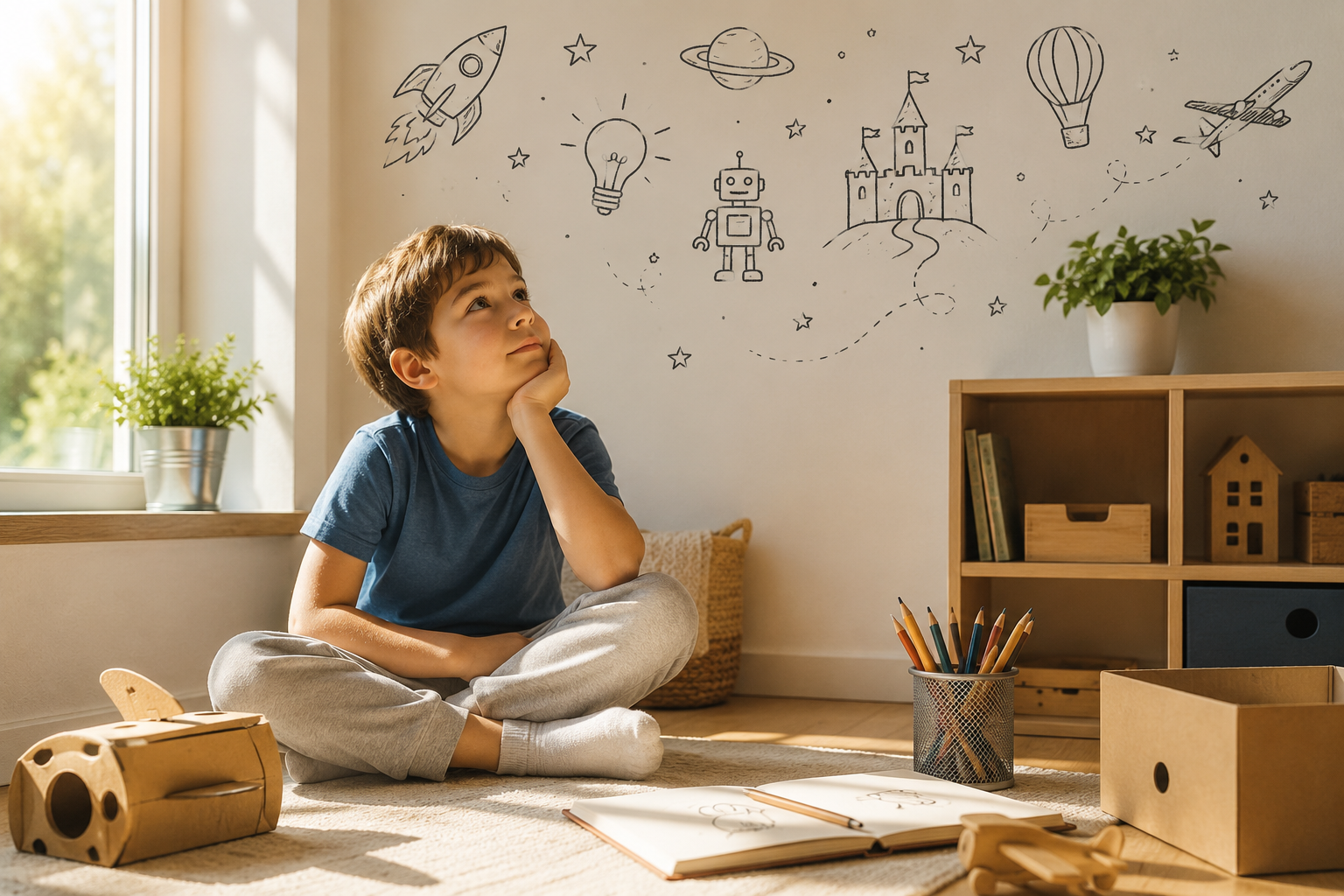
Imagine a child who spends hours designing game ideas.
They sketch characters, imagine levels, and invent rules.
From the outside it might look like simple play.
But in reality the child is practicing complex thinking skills:
- creativity
- problem solving
- systems thinking
- design thinking
The child is learning — just not in the traditional way.
When Creativity Becomes a Powerful Learning Tool
Children who enjoy building and creating often develop important abilities naturally.
For example:
- They experiment with ideas
- They test solutions
- They improve their designs
- They think about how things work
This type of thinking is extremely valuable in today's world.
In fact, many educators believe that creativity and problem solving will be among the most important skills of the future.
The Role of Parents
Parents can support this type of learning in simple ways.
Instead of focusing only on traditional studying, they can encourage creative exploration.
For example, when a child has an idea, parents can ask questions like:
- "How would that idea work?"
- "What would you need to build it?"
- "What could make it even better?"
These conversations help children organize their thinking and develop confidence in their ideas.
When Creativity Turns Into Real Projects
Children learn the most when their ideas turn into real projects.
A simple idea can evolve into something meaningful.
For example:
- a small game concept
- a creative design project
- a mini business idea
- a collaborative activity with friends
Through these experiences children begin to understand how ideas become real creations.
Learning Through Creative Experiences
Many parents today are looking for educational environments that allow children to learn through creativity and exploration.
If you want your child to explore creativity, innovation, and entrepreneurial thinking through interactive learning, you can learn more about the KidStartupper learning platform.
The platform helps students ages 10–15 explore ideas, develop projects, and experience how creativity can turn into real-world innovation.
Every Child Has a Unique Way of Learning
The most important thing parents should remember is that children do not all learn in the same way.
Some love reading.
Others love creating.
And sometimes creativity is the doorway through which a child discovers their greatest strengths.