
The Missing Skill in Many Homeschool Programs (And How Parents Can Fix It)
Homeschooling gives families something incredibly valuable: freedom.
Freedom to learn at your own pace. Freedom to explore subjects deeply. Freedom to design an education that fits your child instead of forcing every student into the same system.
Across the United States, millions of parents have embraced homeschooling for exactly these reasons.
But after a few years, many homeschool parents begin asking an important question:
“My child is learning a lot… but are they learning how the real world actually works?”
The Difference Between Knowledge and Real-World Skills
Most homeschool students study subjects such as:
- math
- science
- reading and writing
- history
- coding or STEM
These subjects build a strong academic foundation.
However, real-world success often depends on something slightly different:
the ability to take an idea and turn it into something real.
This is the skill behind innovation, entrepreneurship, and creative problem solving.
A Real Example Many Homeschool Families Recognize
Imagine a homeschool student who loves technology.
They learn coding. They build small games. They experiment with robotics kits.
All of this is fantastic learning.
But eventually a new question appears:
“Now what?”
The student can build things — but they may not yet know how to:
- turn an idea into a project
- create something useful for others
- present their idea
- improve it based on feedback
This step — moving from learning skills to creating value — is often missing in many education programs.
Why Project-Based Learning Changes Everything
Children understand ideas far better when they apply them.
For example, instead of simply learning about business concepts, a homeschool student might try to:
- invent a simple product
- design a digital project
- create a small service for neighbors
- build a creative online idea
During this process they learn:
- problem solving
- initiative
- communication
- creative thinking
These are the exact abilities that many educators now describe as future skills.
A Small Story That Explains It Well
A homeschooling parent once described something interesting about their 12-year-old daughter.
She loved drawing and design.
One day she started creating custom notebook covers for friends.
At first it was just for fun.
But soon she began thinking about questions like:
- What designs do people like?
- How long does it take to make each one?
- Should I charge something small?
Without realizing it, she was learning entrepreneurial thinking.
And it all started from a simple creative project.
Why Simulation-Based Learning Is So Powerful
In many professions, simulation is one of the best learning tools.
Pilots train in flight simulators before flying real planes.
Doctors practice procedures in simulated environments.
The same principle works for entrepreneurship education.
When children experience a safe simulation of real-world processes, they understand ideas much faster.
A Platform Designed for Young Creators
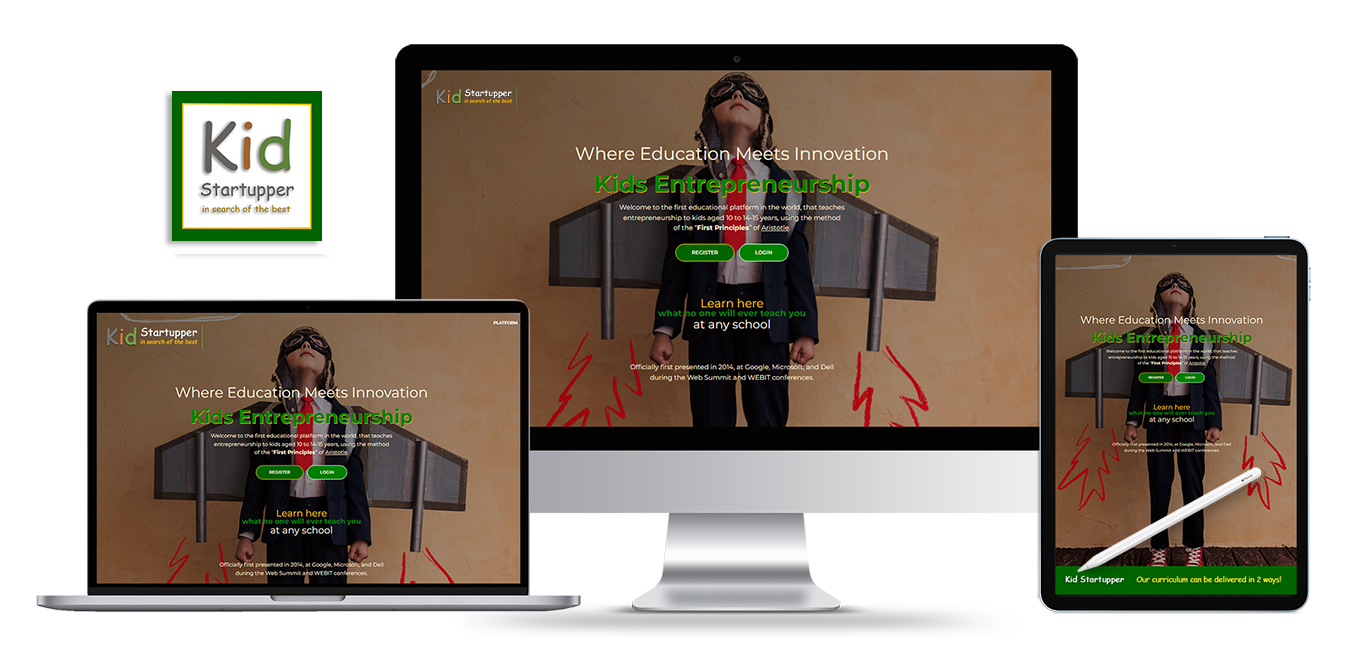
One platform designed specifically for this type of learning is the KidStartupper entrepreneurship learning platform.
KidStartupper works like a safe startup simulator for students aged 10–15.
Inside the platform, students can:
- create their entrepreneurial profile
- develop business ideas
- build project pages
- connect with other young creators
- learn how innovation and startups work
Instead of only reading about entrepreneurship, students experience it step by step.
Why Homeschooling and Entrepreneurship Fit Together
Homeschooling already encourages independence and curiosity.
Entrepreneurship learning adds something powerful to that environment:
the mindset of creating solutions.
Children begin asking questions such as:
- What problem could I solve?
- What idea could help people?
- How could I build something useful?
These questions are the beginning of innovation.
Preparing Kids for an Unpredictable Future
The future economy will reward people who can adapt, create, and solve problems.
Technical skills matter.
Academic knowledge matters.
But the ability to turn ideas into real projects may become one of the most valuable skills of all.
And for many homeschool families, entrepreneurship education may be the missing piece that connects learning with the real world.