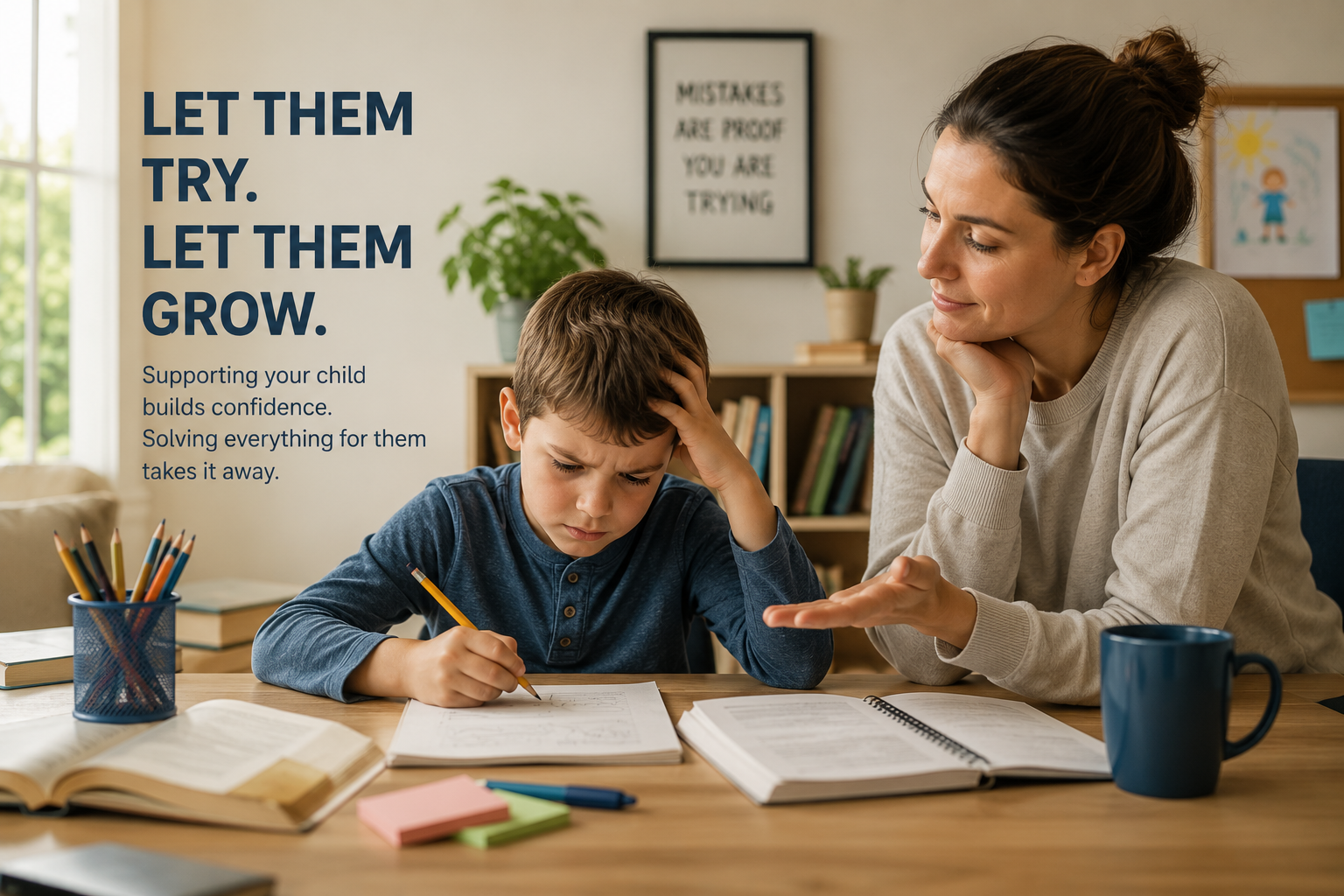

My Child Is Smart but Unmotivated — What Parents Often Miss
Many parents have said the same sentence at some point.
"My child is smart, but they just don't seem motivated."
Teachers sometimes say it as well.
"Your child has potential, but they are not applying themselves."
For parents, this can feel confusing and frustrating.
If a child is intelligent, why wouldn't they want to use that ability?
The answer is often more complex than it appears.
Intelligence Does Not Automatically Create Motivation
Being intelligent does not mean a child will automatically feel motivated by school tasks.
In fact, many bright children lose motivation when they feel that what they are doing lacks meaning or challenge.
Imagine a child who learns concepts quickly.
If classroom work feels repetitive or predictable, that child may simply disengage.
Not because they cannot do the work — but because it doesn't feel interesting.
A Common Example Parents See
Consider a student who finishes assignments quickly but then becomes distracted.
The child might start drawing, thinking about a game idea, or talking with friends.
From the outside it may look like a lack of discipline.
But internally the child may simply be searching for something that feels more stimulating.
Curiosity Is a Powerful Source of Motivation
Children are naturally curious.
When they encounter something that sparks their curiosity, motivation appears almost automatically.
Think about how focused a child can become when working on something they care about.
A child who seems "unmotivated" during homework might spend hours designing a game, building something with LEGO, or learning a new skill online.
In those moments, motivation is not a problem.
The Missing Ingredient: Ownership
Many traditional school tasks are assigned externally.
The student completes them because they are required.
But motivation grows much stronger when children feel ownership over what they are doing.
For example, imagine a child who creates their own small project.
Maybe they design a simple game for friends, invent a creative activity, or work on a small idea they care about.
Suddenly the effort feels meaningful.
The child becomes invested in the outcome.
A Real-Life Scenario
Imagine a child who enjoys drawing and storytelling.
Instead of simply practicing drawing exercises, the child decides to create a short comic book.
Now the process becomes exciting.
The child must think about:
- characters
- storylines
- visual design
- how others will react to the story
Without realizing it, the child is practicing creativity, planning, and persistence.
How Parents Can Support Motivation
Parents can encourage motivation by shifting the focus from performance to exploration.
Instead of asking only about grades, they can ask questions like:
- "What are you curious about lately?"
- "What kind of project would you like to try?"
- "What idea would you like to build?"
These conversations invite children to take ownership of their learning.
Learning Through Projects
Many children regain motivation when they are given opportunities to explore ideas through projects.
Projects allow children to experiment, test ideas, and see results.
If you want your child to explore creativity, innovation, and entrepreneurial thinking through guided activities, you can learn more about the KidStartupper learning platform.
The platform helps children ages 10–15 develop ideas, build projects, and experience how creativity can lead to real-world innovation.
Motivation Often Comes From Meaning
Children rarely become motivated simply because adults tell them they should be.
Motivation grows when children feel that what they are doing matters.
When they see that their ideas can turn into real outcomes, something changes.
They begin to engage with energy and curiosity.
And sometimes the key to unlocking motivation is not pushing harder — but helping children discover something worth building.