
7 Ways to Build Confidence in Kids Through Creativity and Projects
Confidence is one of the most important qualities children can develop as they grow.
Children who believe in their abilities are more willing to try new things, share their ideas, solve problems, and overcome challenges.
However, confidence does not appear automatically. It develops gradually through experiences that allow children to explore their abilities and see the results of their efforts.
One of the most powerful ways to help children build confidence is through creativity and small projects. When children create something of their own, they begin to understand that their ideas have value.
Here are seven practical ways parents can help children build confidence through creativity and hands-on experiences at home.
1. Encourage Children to Share Their Ideas
Many children have interesting ideas but hesitate to express them. Sometimes they worry that their ideas might be wrong or that others will not like them.
Parents can create a safe environment where children feel comfortable sharing their thoughts.
You can ask simple questions such as:
- What new idea did you think about today?
- If you could invent something, what would it be?
- How would you improve something at school or at home?
When children feel that their ideas are valued, they begin to develop confidence in their thinking.
2. Let Children Create Small Projects
Confidence grows when children see that they can transform ideas into real results.
Encourage your child to work on small creative projects.
For example, a project could be:
- designing a simple board game
- creating a small craft
- writing a short story
- designing a poster for a new invention
- creating a small digital project
Completing even a small project gives children a powerful sense of accomplishment.
3. Allow Children to Make Decisions
Confidence grows when children learn that their decisions matter.
Instead of always deciding everything for them, give children opportunities to make small choices.
For example:
- let them choose the topic of a project
- let them decide how they want to solve a problem
- let them choose how they will present their idea
When children participate in decisions, they begin to trust their own judgment.
4. Focus on Effort Rather Than Perfection
Many children lose confidence when they feel that they must do everything perfectly.
Parents can help by focusing on effort and progress instead of perfection.
For example, instead of saying:
"This must be perfect."
you can say:
"I like how much effort you put into this."
This teaches children that improvement and learning are more important than immediate success.
5. Encourage Problem-Solving
Confidence grows when children learn that they can solve challenges.
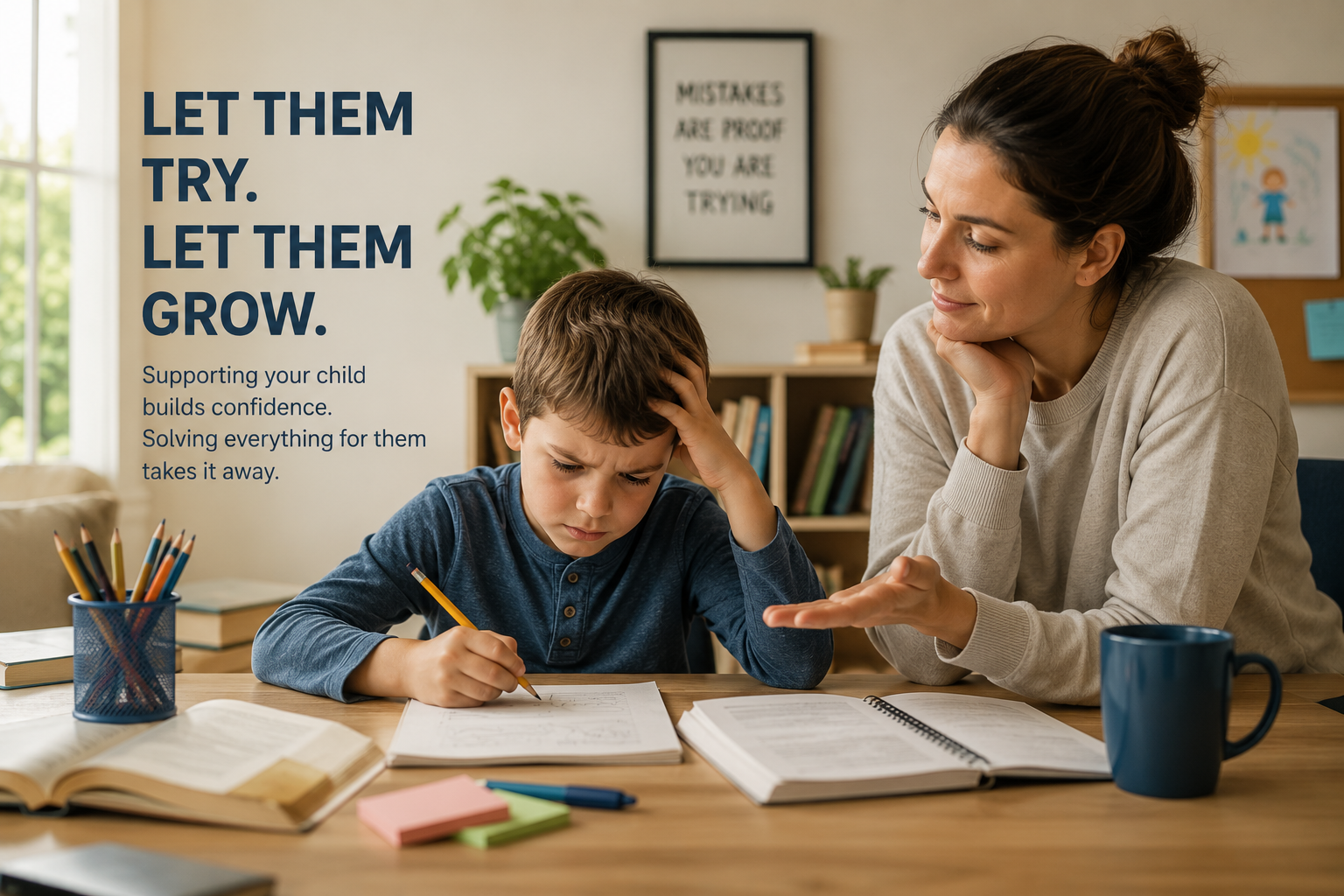
When your child faces a difficulty, try guiding them instead of immediately giving the answer.
You can ask:
- What do you think could work?
- What could you try first?
- What might be another solution?
Helping children think through problems strengthens their independence and confidence.
6. Allow Children to Present Their Ideas
Presenting ideas is a powerful confidence-building experience.
Encourage your child to explain their projects or ideas to the family.
They can talk about:
- what their idea is
- how it works
- why they created it
This helps children develop communication skills and pride in their creations.
7. Celebrate Small Achievements
Confidence develops step by step.
Celebrating small achievements helps children recognize their progress.
This does not require big rewards. Sometimes simple recognition is enough.
You might say:
- "You worked really hard on that idea."
- "I like the creativity you showed."
- "You improved this a lot."
These small moments reinforce a child’s belief in their abilities.
Why Creativity Helps Build Confidence
Creative activities allow children to explore their abilities without fear of failure.
When children create something of their own, they experience a powerful realization:
their ideas can become real.
This realization is one of the strongest foundations for confidence.
It also helps children develop other important skills such as:
- problem solving
- initiative
- communication
- independent thinking
A Structured Way to Help Children Build Confidence
Many parents look for structured learning environments where children can explore creativity, ideas, and projects in a guided way.
If you want your child to develop creativity, entrepreneurial thinking, and confidence through interactive learning, you can learn more about the KidStartupper learning program.
The platform helps children explore their ideas, develop projects, and gradually build the confidence to present their own creations.
Confidence Is Built Through Experience
Confidence does not come only from praise or encouragement. It comes from experience.
When children are given opportunities to create, experiment, and solve problems, they begin to trust their abilities.
And often, the first step toward confidence begins with something very simple:
a child having an idea and believing they can bring it to life.