Most children finish school having never built anything.
Yours will finish with a business, a plan, and a pitch they delivered out loud.
Here is exactly what your child learns, year by year — and more importantly, exactly what they build while they learn it.
Reading your e-books on a tablet?
Log in directly from your tablet browser — no app to install, nothing to download. Everything is ready for you.
- All 286 pages of e-book content, instantly available
- Quizzes and lesson progress sync automatically
- iPad, Android tablet, Kindle Fire — any browser works
- Same secure login as your desktop account
Not enrolled yet? Start the free 7-day Founder Sprint →
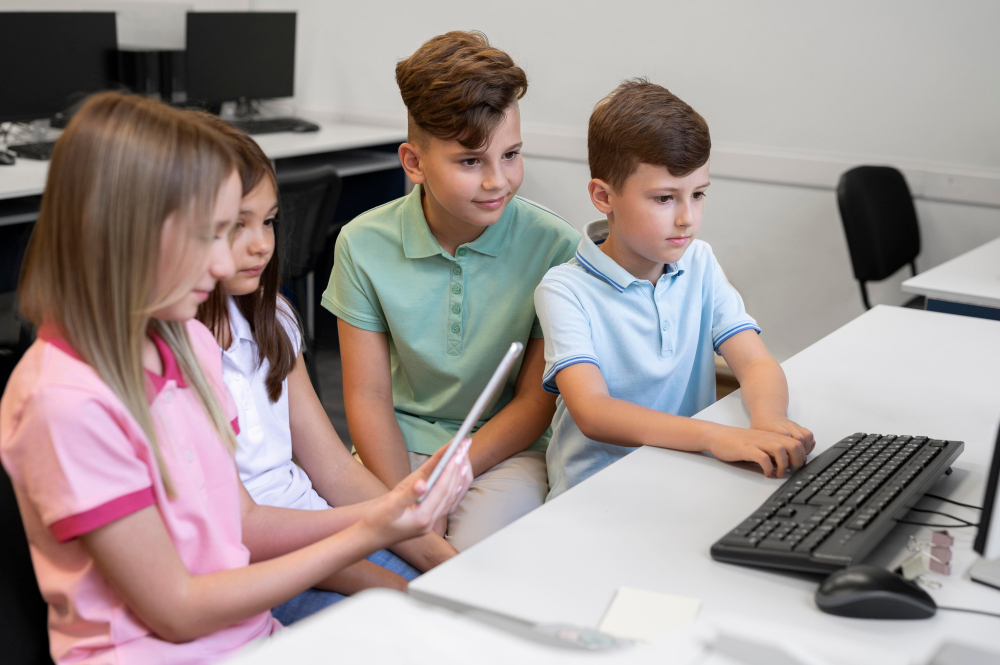
One year at a time. Each one builds on the last.
Your child starts between 10 and 13, and completes the core programme by 15.

Who am I, and what could I build?
Before a child can build a business, they have to believe they are the kind of person who builds things. Year 1 is about that shift.
- What entrepreneurship actually is — beyond the word
- Exploring career fields and discovering what genuinely interests them
- Building a professional identity for the first time
- How social networks and digital tools support real business
- Finding collaborators and working with peers on shared projects
Their founder profile and their first real professional network — connections with young entrepreneurs in other countries.

The year an idea becomes something real
This is where most children surprise their parents. They name it. They brand it. They publish it. And then they keep coming back to improve it.
- Turning what they love into something people would pay for
- Products versus services — and choosing what to offer
- The Business Model Canvas — the same tool real startups use
- Finding a market, understanding competition, setting a price
- Marketing, promotion, and reaching actual customers
A live business page inside the platform — named, branded, published, and managed by them. Plus a completed Business Model Canvas.

Aristotle, venture capital, and standing up to pitch
The most demanding year — and the one that changes how a child sees themselves. They finish with a complete business plan, which is more than most adults ever produce.
- Managing a business — customers, team, values, security
- Aristotle's First Principles method — the thinking behind Tesla and Netflix
- How startups work — Facebook, Instagram, TikTok as case studies
- Angel investors, venture capital, and what pitching actually means
- Writing a complete business plan, start to finish
A full written business plan — and a pitch they stand up and deliver, answering questions about their own business.
In Year 3, your child learns a way of thinking that is 2,400 years old — and still gives people an unfair advantage.
Aristotle called it First Principles: strip a problem back to what is fundamentally true, then rebuild the answer from there instead of copying what everyone else does.
It is why Tesla could build a battery pack for a fraction of what the industry said was possible. Why Netflix reimagined how film reaches an audience. Why the iPhone did not look like any phone before it.
Children are naturally better at this than adults. They have not yet accumulated the assumptions that make grown-up thinking predictable. We teach the method before those assumptions arrive — and it transfers to maths, science, debate, and every problem they will meet after school.
Same curriculum. Two different journeys.
Choose the one that fits your family — both give full access to the platform, e-books, quizzes and the AI mentor.
At home
Your child follows video-based lessons independently, at their own pace. No classroom needed. You stay in control — they build something real.
- Video lessons for every chapter
- Andrew, the AI mentor, available 24/7
- All e-books, quizzes and presentations
- One dedicated account per student
- Certificate on completion
- Parental supervision and consent required
Through school
Delivered by your child's teacher in the classroom, fully supported by us. The school route unlocks two additional years the home programme cannot offer.
- Everything in the home programme
- Taught live by a trained educator
- Group work and peer collaboration in class
- Entry to the annual school Hackathon
- Years 4 and 5 — school exclusive
- Ask your school to get started
Years 4 and 5 — where the programme goes further than any home course can
These two years need group work, teacher facilitation and structured classroom time. They exist only inside partner schools — and they cannot be purchased for home study at any price.
E-Commerce
Building and running an online store. Marketplaces like Amazon, eBay and Etsy. Branding and unique selling propositions. Digital marketing and email campaigns. Handling orders, shipping and customer service. Staying safe online and recognising scams. Scaling and building customer loyalty.
Green Entrepreneurship
Building businesses for a planet under pressure. Understanding real environmental problems. The triple bottom line: environmental, social and economic. Developing and testing eco-friendly business ideas. Green branding without greenwashing. Measuring genuine environmental impact.
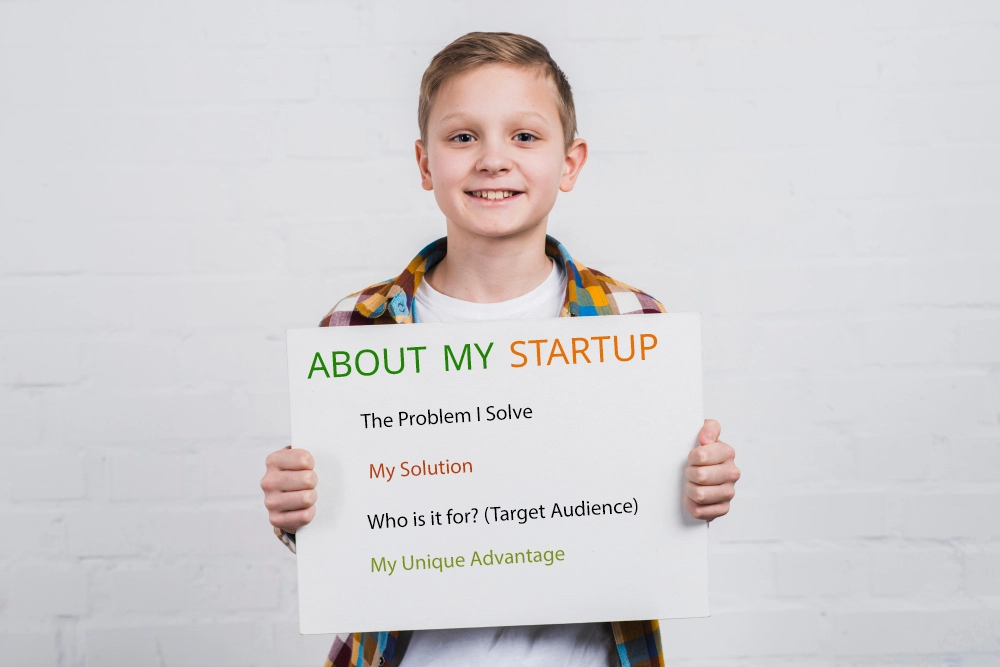
What your child walks away with
Not a certificate in a drawer. Six capabilities they will use for the rest of their life.
They spot problems others walk past
Entrepreneurship starts with noticing what is broken. Your child learns to see opportunity where most people see inconvenience.
They can build, not just execute
From idea to launch, they have done the whole journey once already. The second time is never as frightening as the first.
They reason from first principles
The single most transferable thinking skill in the programme. It works on business, on maths, on any problem nobody has solved yet.
They build networks, not just friendships
Finding collaborators, approaching people, working with peers they have never met in person. A skill most adults still struggle with.
They can pitch without freezing
Standing up, explaining an idea clearly, and defending it under questions. It shows up in every interview and presentation they will ever give.
They believe they can build something
This is the one that matters most, and the hardest to teach any other way. They believe it because they already did it.
The conversations at your dinner table change.
Somewhere in the first few months, most parents tell us the same thing: their child stops asking whether something will be on the test, and starts asking “what if we did it this way instead?”
They arrive at dinner with an idea. They argue about a business name. They want to show you a page they redesigned. The mindset shift happens before the knowledge does — and it is the part you notice first.
What parents ask about the curriculum
Answered directly.
None at all. The curriculum is written for complete beginners aged 10 to 15. No business knowledge, no tech skills, no special background. Everything is explained from the beginning, in language written specifically for this age group, with Andrew the AI mentor available whenever they get stuck.
The programme is designed around roughly one session per week across an academic year. At home your child works at their own pace — some do a lesson a week, others do three in a burst and then pause. There is no deadline pressure and access continues through holidays.
Enrolment opens at 10 and we recommend starting by 13 so your child can complete the full three-year programme by 15. Starting at 10 or 11 gives them the most time to develop — and these are exactly the years when the entrepreneurial mindset takes root most easily.
Each year stands on its own and delivers real outcomes, but they are designed to build on each other. To advance to the next cycle, your child must first complete the previous one. Most families continue because by the end of Year 1 the child has already built something they care about.
No. Years 4 and 5 require group work, teacher facilitation and structured classroom time that cannot be replicated at home. They are available only through partner schools. If your child wants to go further than the home programme allows, speak to their school about becoming a partner — we offer schools a free 30-day pilot.
It is a real business concept, built and published inside the platform — with a name, branding, a live page, a business model canvas and a full plan. Whether they take it beyond the platform into the real world is entirely up to your family. Some do. What matters educationally is that they went through the whole process for themselves.
Yes. GDPR and COPPA compliant, parental consent required, no advertising, and no student data shared with third parties. Students connect only with other verified students inside the platform's controlled community — never with strangers. Full detail on our safety page.
Then this is one of the most powerful combinations there is. Your child already has the technical skills to build things — what they usually never learn is how a creation becomes a product, and a product becomes a business. Read more about Kid Startupper and educational robotics →
The window is ages 10 to 15. It closes faster than you think.
The entrepreneurial mindset is not built in a seminar or a summer week. It is built slowly, through experience, during exactly these years. Start the free trial and see what your child does with it.
No credit card · GDPR & COPPA compliant · Cancel any time · Or ask us a question first
Who guides them through it? Meet Andrew, the AI companion →
How will I know they're progressing? See progress tracking →
What do they receive at the end? See the certificate of completion →
Curious about the method? Read about Aristotle's First Principles →
Want it in your child's school? Show your school the programme →