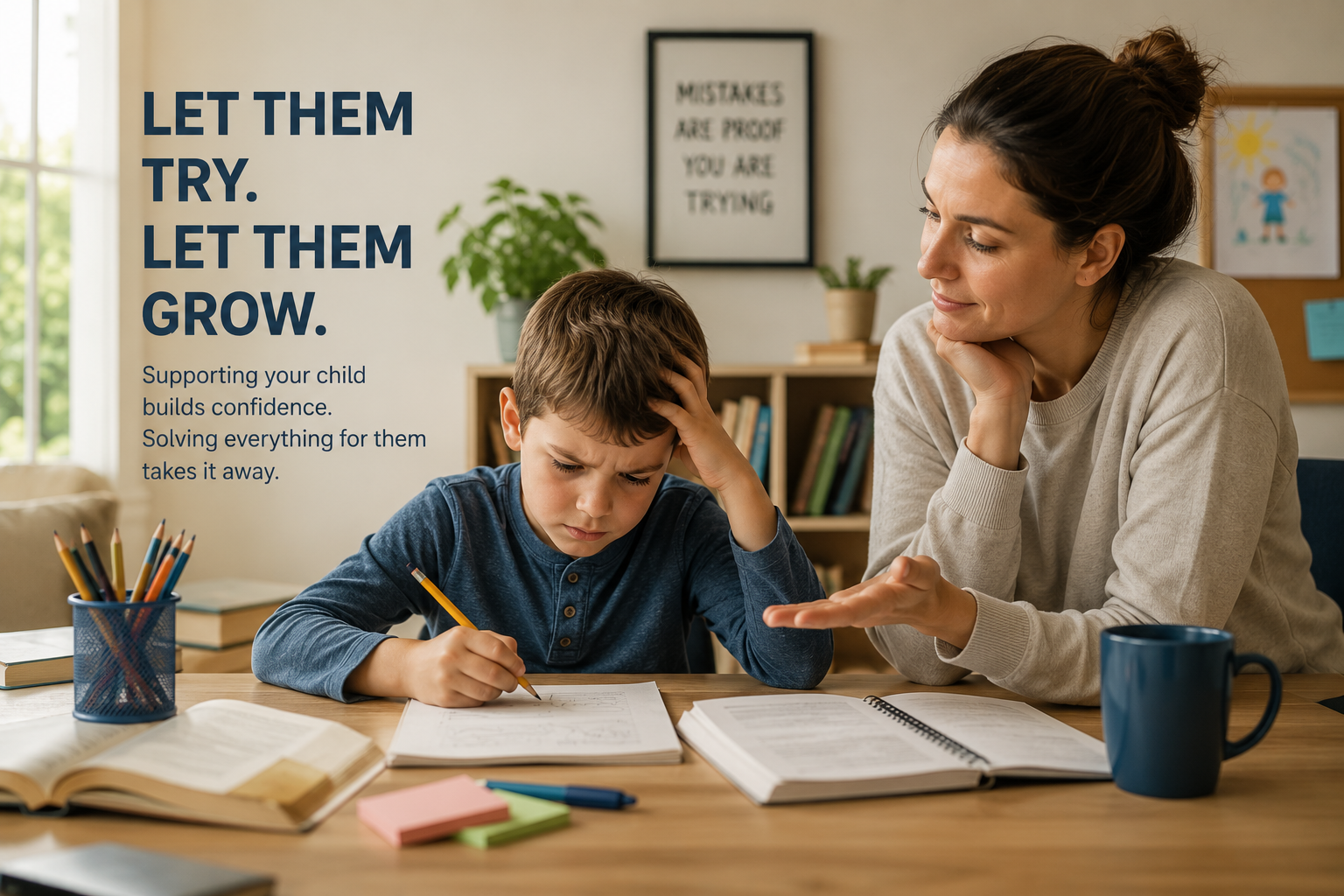

5 Mistakes That Can Block Creativity in Kids Ages 10–15
Most parents want their children to grow up curious, creative, and confident in their ideas.
Creativity is one of the most valuable skills children can develop. It helps them solve problems, come up with new ideas, and think independently.
However, creativity doesn't develop automatically. It grows when children are given the opportunity to explore, experiment, and think for themselves.
Over the years, many educators have noticed that certain everyday habits—often done with good intentions—can unintentionally limit a child's creative thinking.
Below are five common mistakes that can block creativity in children between the ages of 10 and 15, along with examples parents may recognize from everyday life.
1. Giving Immediate Solutions
When children face a problem, many parents instinctively try to help by offering a quick solution.
While this comes from a desire to support them, it can sometimes prevent children from learning how to think through challenges on their own.
For example, imagine a child working on a small project for school. They are trying to build a model using cardboard boxes, but the structure keeps collapsing.
A parent might immediately step in and say:
"Just tape this part here and it will stand."
Although this solves the problem quickly, the child misses the opportunity to experiment and figure it out.
A better approach might be to ask guiding questions:
- What do you think is causing it to fall?
- How else could we make it stronger?
- What would happen if we tried a different shape?
These questions encourage the child to think creatively rather than simply follow instructions.
2. Treating Mistakes as Failures
Many children grow up believing that mistakes should be avoided.
However, creativity and innovation almost always involve trial and error.
Consider a child who decides to design a simple board game for their friends.
The first version might not work well. Maybe the rules are confusing, or the game ends too quickly.
If the child sees this as failure, they might stop trying.
But if they view it as part of the process, they might adjust the rules, test the game again, and gradually improve it.
Many successful innovations began exactly this way: through repeated experimentation.
3. Focusing Only on the "Correct Answer"
School systems often emphasize correct answers and structured solutions.
While this is important for learning certain subjects, creativity requires a different mindset.
For example, a child might draw a picture that looks unusual or different from what adults expect.
If the response they receive is:
"That's not what it's supposed to look like."
they may begin to doubt their own ideas.
Instead, parents can encourage exploration by asking:
- What inspired you to draw this?
- What story does this picture tell?
- What would happen next in this scene?
This type of conversation encourages imagination rather than limiting it.
4. Overscheduling Children's Time
Many children today have extremely busy schedules.
Between school, sports, tutoring, and other activities, they often have very little free time.
While structured activities are valuable, creativity often emerges during unstructured moments.
When children have free time, they may start building something, inventing a game, or imagining new ideas.
For instance, a child might begin constructing a small "city" out of cardboard boxes in their room.
What begins as play can quickly turn into an exercise in design, storytelling, and problem-solving.
These spontaneous creative moments are extremely important for developing innovative thinking.
5. Dismissing Children's Ideas Too Quickly
Children sometimes share ideas that seem unrealistic or overly ambitious.
A child might say:
"What if we created a game that helps kids learn math while playing?"
An adult might instinctively respond with skepticism.
However, these ideas are often the starting point of creative thinking.
Instead of dismissing the idea, parents can encourage exploration by asking:
- How would that game work?
- What would players have to do?
- How could we test your idea?
This simple shift in conversation can help children develop confidence in their ideas.
When Ideas Turn Into Projects
Children develop creativity most effectively when they have opportunities to transform ideas into real projects.
Through projects, they learn how to organize ideas, experiment with solutions, and present their thoughts to others.
If you want your child to explore creativity and entrepreneurial thinking through interactive learning experiences, you can learn more about the KidStartupper learning platform.
The platform helps children ages 10–15 develop ideas, create projects, and explore innovation in a structured and engaging environment.
Creativity Is a Skill That Can Be Developed
Every child has imagination.
The difference is whether their environment encourages them to use it.
When children feel free to experiment, ask questions, and test ideas, they begin to develop the confidence to think independently.
And sometimes, the ideas that start as small experiments in childhood can grow into meaningful innovations later in life.