
Why Homeschooling Is the Perfect Opportunity to Teach Kids Entrepreneurship
Over the past decade, homeschooling has grown rapidly across the United States.
More and more families are choosing alternative learning paths for their children. Some want greater flexibility. Others want a more personalized education. Many parents simply want their children to learn skills that go beyond traditional classroom instruction.
And this is where homeschooling offers a unique advantage.
Unlike traditional schools, homeschooling gives families the freedom to explore learning experiences that prepare children for the real world — not just exams.
One of the most powerful of those experiences is entrepreneurship education.
Entrepreneurship Is Not Just About Business
When parents hear the word “entrepreneurship,” they often imagine adults starting companies or launching startups.
But entrepreneurship education for kids is something very different.
It focuses on helping children develop important life skills such as:
- creative thinking
- problem solving
- initiative
- communication
- confidence
- collaboration
These are the same skills that innovators, inventors, engineers, and creators use in every field.
In fact, many educators now believe that entrepreneurial thinking may become one of the most important skill sets for the future.
Why Homeschooling Creates the Perfect Environment
Traditional classrooms often have limited time and strict curricula. Teachers must follow specific programs and prepare students for standardized tests.
Homeschooling, on the other hand, allows parents to create learning experiences that are more flexible and project-based.
This environment is ideal for entrepreneurship learning.
Children can explore ideas, experiment with projects, and learn by doing.
Instead of memorizing information, they begin asking powerful questions:
“What problem could I solve?”
“What idea could help people?”
“How could I create something useful?”
A Simple Example of Entrepreneurial Learning
Imagine a 12-year-old student who loves drawing.
During a homeschooling project, the child decides to create custom notebook covers for friends and family.
What begins as a simple creative activity quickly becomes a learning experience.
The child starts thinking about questions such as:
- What designs do people like?
- How long does it take to create each one?
- Should I charge something small for them?
- How could I show my designs to others?
Without realizing it, the student is learning how ideas turn into value.
This is entrepreneurship in its most educational form.
Learning Through Projects
One of the biggest advantages of entrepreneurship education is that it encourages project-based learning.
Instead of simply reading about ideas, children actively build things.
For example, homeschool students might:
- design a simple product
- create a digital project
- organize a small event
- invent a new game
- build a creative service for neighbors
Through these activities, children begin developing important real-world abilities.
The Role of Simulation in Learning
One of the most effective ways children learn complex ideas is through simulation.
Just like flight simulators help pilots practice flying before entering a real airplane, educational simulators help students experience real-world processes in a safe environment.
This approach allows children to explore ideas, make decisions, and learn from experimentation.
Instead of learning only theory, they experience how innovation and entrepreneurship actually work.
A Digital Environment Where Kids Can Build Ideas
Today, educational platforms are making this type of learning possible even from home.
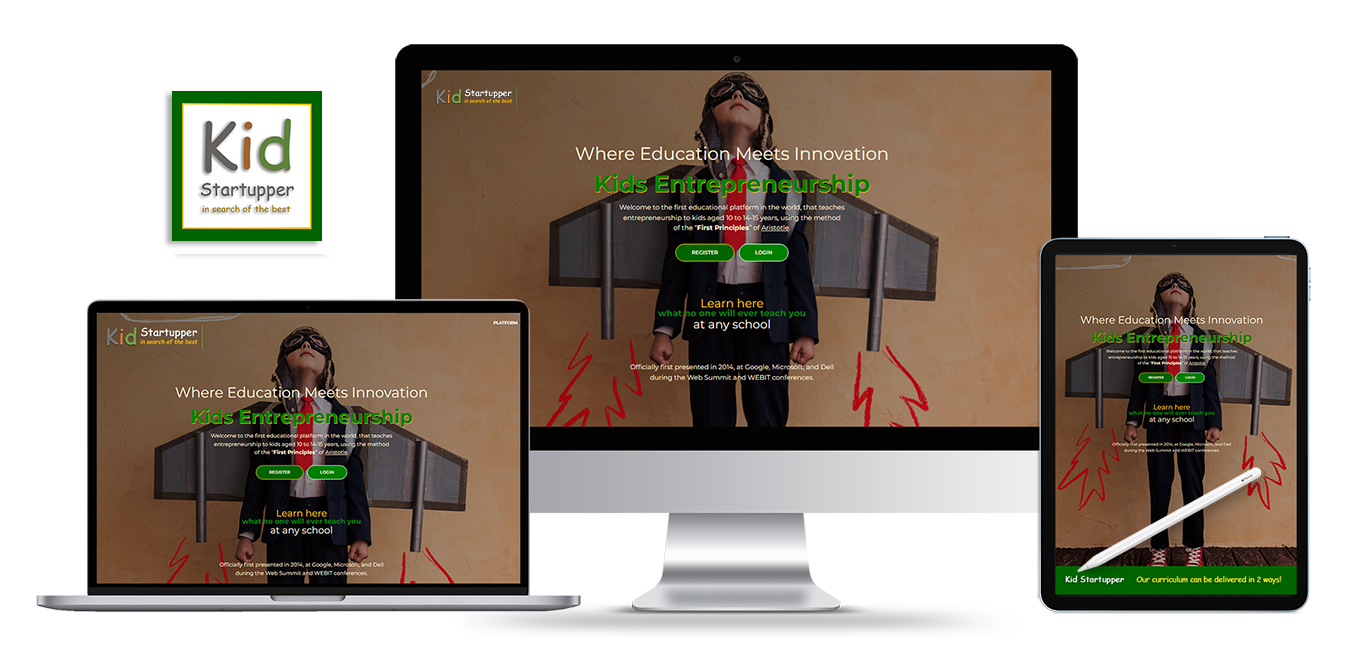
One example is the KidStartupper entrepreneurship learning platform.
KidStartupper introduces students aged 10-15 to the world of entrepreneurship through an interactive environment designed specifically for young learners.
Students can:
- create their first entrepreneurial profile
- develop business ideas
- connect with other young creators
- build their own project pages
- learn about startups, innovation, and pitching
The platform works almost like a safe simulation of the real entrepreneurial world.
Instead of simply learning about business concepts, children experience the process step by step.
Why This Matters for the Future
The future will reward people who can think creatively, solve problems, and turn ideas into solutions.
Technology will continue to change industries.
New careers will appear that we cannot yet imagine.
Children who learn how to create ideas, experiment with projects, and communicate their thinking will have a strong advantage.
Homeschooling as a Launchpad for Creativity
Homeschooling offers families something incredibly valuable: freedom.
Freedom to explore.
Freedom to experiment.
Freedom to learn through creativity rather than memorization.
When combined with entrepreneurship education, this freedom becomes a powerful tool.
Children begin to see themselves not just as students, but as creators.
The Beginning of Bigger Ideas
Every innovation begins with a simple idea.
A question.
A curiosity.
A small project.
When children have the opportunity to explore those ideas early, they develop confidence and initiative that can shape their future.
And sometimes, the first step toward innovation begins with something very simple:
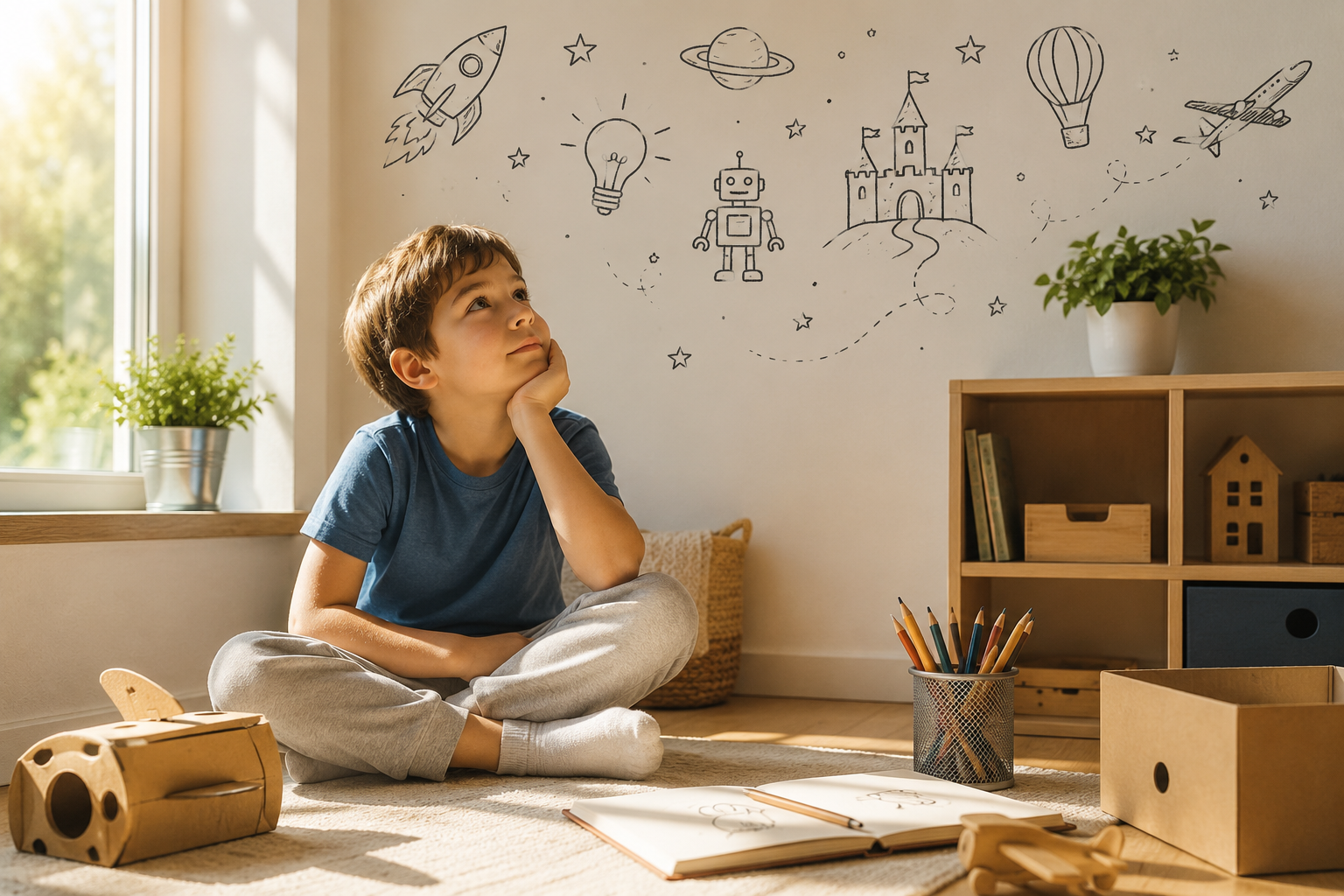
A child exploring an idea.