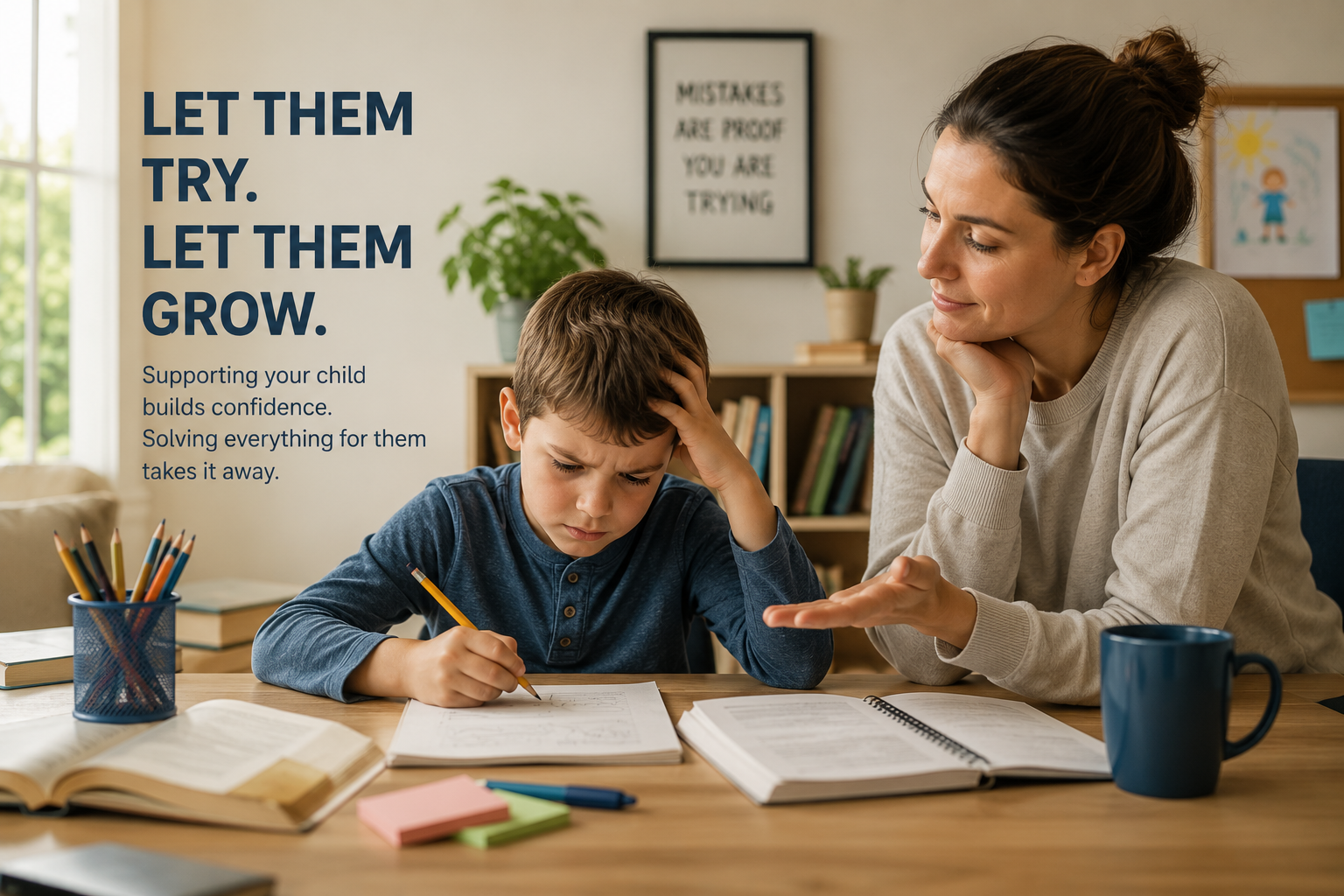

My Child Has No Motivation – What Can Parents Do?
Many parents become concerned when their child seems uninterested in school, homework, or learning activities.
They may hear phrases such as:
- "I don't want to do it."
- "It's boring."
- "What's the point?"
This situation can be frustrating for parents who want their children to succeed and develop good habits.
However, a lack of motivation in children is more common than many parents realize. In most cases, it does not mean that a child is lazy or incapable.
Instead, it often means the child has not yet found something that truly captures their interest or gives them a sense of purpose.
Why Some Children Seem Unmotivated
Before trying to solve the problem, it is important to understand why motivation might be missing.
1. They don't see the purpose
Children often struggle with motivation when they don't understand why they are doing something.
If an activity feels like a meaningless obligation, it is natural for them to lose interest.
2. They haven't discovered their interests yet
Every child is different. Some children quickly discover activities they enjoy, while others need time to explore different experiences.
Until they find something that excites them, motivation can be difficult to develop.
3. They are afraid of failing
Some children avoid trying because they worry about making mistakes.
This fear of failure can appear as a lack of motivation, even though the real issue is anxiety about not succeeding.
4. They feel too much pressure
Excessive expectations can sometimes reduce motivation rather than increase it.
Children may stop trying when they feel constant pressure to perform perfectly.
How Parents Can Help Children Develop Motivation
The good news is that motivation can be developed. Parents play a very important role in helping children discover curiosity and initiative.
1. Help children explore different interests
Expose children to different types of activities.
These could include:
- creative projects
- technology and coding
- building or crafting
- writing stories
- problem-solving activities
Sometimes motivation appears when a child discovers something that truly excites them.
2. Encourage small projects
Projects give children a sense of purpose and ownership.
Instead of focusing only on homework, encourage your child to create something.
Examples of simple projects include:
- designing a board game
- creating a comic story
- inventing a small product
- building something useful
When children work on their own ideas, they often become much more engaged.
3. Give children choices
Motivation grows when children feel they have control over their decisions.
Instead of forcing a specific activity, offer two or three options.
Allowing children to choose helps them feel responsible for their own progress.
4. Focus on progress rather than perfection
Many children lose motivation if they feel they must do everything perfectly.
Encourage effort and improvement rather than flawless results.
For example, you might say:
"I like how much effort you put into this."
This helps children develop resilience and persistence.
5. Celebrate small achievements
Motivation grows when children recognize their progress.
Small achievements deserve recognition, even if the project is simple.
Encouragement builds confidence and encourages children to keep trying.
When Motivation Appears Through Creativity
Many children discover motivation when they are given opportunities to create and explore ideas.
When a child develops an idea and turns it into a project, learning becomes much more meaningful.
Creative experiences help children develop:
- initiative
- problem-solving skills
- confidence
- curiosity
These skills are essential for success in the modern world.
A Structured Way to Help Children Discover Motivation
Many parents look for learning environments where children can explore ideas, creativity, and innovation.
If you want your child to develop creative thinking and entrepreneurial skills through interactive learning, you can learn more about the KidStartupper learning program.
The platform encourages children to explore ideas, develop projects, and discover their potential through guided learning experiences.
Motivation Often Begins With Curiosity
Children are naturally curious.
When they are given the right environment to explore ideas and create projects, motivation often appears naturally.
Instead of pushing children toward specific outcomes, helping them discover their interests may be the most powerful way to inspire motivation.