
15 Real-Life Skills Kids Should Learn Before Age 15 (And How to Actually Teach Them)
Most parents want their children to do well in school. But if you ask those same parents what they truly want for their child's future, the answers go much deeper than grades.
They want their children to handle difficult situations with confidence. To communicate clearly. To bounce back when things go wrong. To spot an opportunity and actually do something with it.
These are not skills that come from a textbook. They come from experience, practice and guidance — ideally starting well before the age of fifteen, when children are still curious, open and developing the habits that will define them as adults.
After working with hundreds of children aged 10 to 15 through structured entrepreneurship education, I have seen firsthand which skills make the real difference. Not just in projects and presentations, but in how children approach life.
Here are fifteen real-life skills that every child should begin developing before age fifteen — along with practical ways to help them do it.
1. Problem Solving
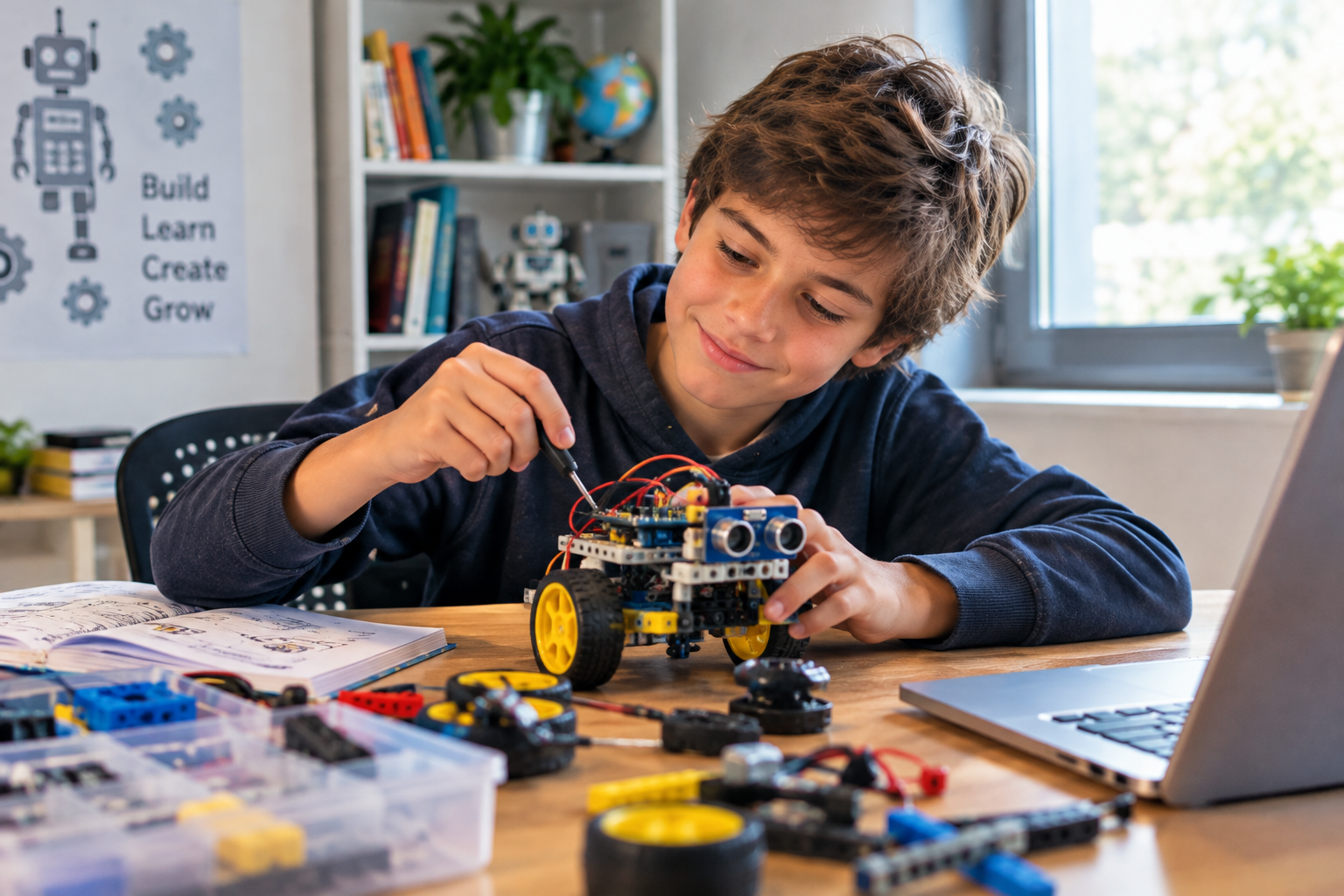
Problem solving is the foundation of almost every other skill on this list. A child who knows how to break down a challenge, explore options and try different approaches is prepared for nearly any situation life throws at them.
The most common mistake parents make is solving problems for their children instead of with them. When a child forgets their homework, the instinct is to jump in and fix it. A more powerful approach is to pause and ask: "What do you think we could do here?"
In practice, you can build this skill by giving children real, low-stakes problems to solve at home. Ask them to plan a family outing on a small budget. Let them figure out how to reorganize their room. The problem itself matters less than the habit of thinking it through independently.
Children who learn problem solving early stop seeing obstacles as reasons to give up. They start seeing them as puzzles worth solving.
2. Communication
The ability to express ideas clearly — in writing, in conversation and in front of others — is one of the most underrated life skills a child can develop.
Many children have brilliant ideas but struggle to articulate them. They know what they mean but cannot find the words. This gap between thinking and expressing holds back otherwise capable children throughout school and into their careers.
Communication develops through practice in real situations. Encourage your child to explain how their day went, not just say "fine." Ask them to present a project to the family. If they enjoy games, ask them to teach a younger sibling the rules. Each of these moments builds the skill of translating thoughts into clear language.
Strong communicators do not just succeed academically. They build better relationships, resolve conflicts more easily and earn trust in group settings.
3. Creative Thinking
Creativity is not a talent. It is a habit of mind that can be practiced and strengthened like a muscle.
Creative thinking means being able to look at something familiar and ask: could this be different? Could it be better? What if we tried it another way? These questions lead to innovation, and they begin forming in childhood.
One of the most effective exercises I use with students is the "10 Uses" challenge: choose a simple object — a paperclip, a cardboard box, a pencil — and ask a child to list ten different uses for it. The first three come easily. The next seven require real creative effort. That effort is where the skill develops.
You can explore more activities like this in our guide on creative thinking activities for kids ages 10 to 15.
4. Financial Awareness
Money is one of the most important topics in adult life and one of the least taught in formal education. Children who grow up without any financial understanding often struggle with it well into adulthood.
Financial awareness at a young age does not mean teaching economics. It means helping children understand that money is a resource that requires decisions. Earning, saving, spending and giving all involve choices.
A simple starting point: give a child a small weekly budget and let them manage it. Not to buy whatever they want, but to practice making decisions. Ask them at the end of the week: was that worth it? Would you choose differently next time? These conversations build awareness that no classroom lesson can replace.
Children who learn to think about money thoughtfully early on are far better prepared for the financial realities of adult life.
5. Persistence and Resilience
One of the most telling things I observe when working with children on projects is what happens when something does not work the first time. Some children immediately look for help or give up. Others pause, think, and try again. That difference — persistence — is one of the strongest predictors of long-term success.
Resilience does not mean pretending failure does not hurt. It means developing the capacity to recover from it. This skill is built through experience, not through being protected from difficulty.
Let your child struggle with something slightly above their comfort level. A challenging puzzle. A project with no clear answer. A situation where they have to figure out the next step on their own. Your role as a parent is not to remove the difficulty but to stay present and encouraging while they work through it.
Children who develop persistence do not quit when things get hard. They get better at getting better.
6. Organisation and Time Management
Many children reach adulthood without ever learning how to manage their time. They hand in work late, feel constantly rushed and struggle to balance competing demands. These habits begin — or fail to begin — during the school years.
Organisation is not about being rigid. It is about developing awareness of what needs to happen and when. A simple homework planner, a weekly schedule posted on the wall or a habit of preparing school materials the night before are all small practices that build this awareness over time.
Time management develops when children are given genuine responsibility over their own schedules. Rather than reminding a child seven times to start their homework, try setting an agreement once and letting the natural consequences unfold. The discomfort of being unprepared is often the most effective teacher.
7. Curiosity and the Habit of Learning
Curious children become lifelong learners. They do not wait to be taught — they look things up, ask questions and pursue ideas that interest them. This habit is one of the most valuable a child can develop, because it means their education does not stop when school ends.
Curiosity is easier to preserve than to rebuild. It comes naturally to young children and can fade if it is consistently met with discouragement, impatience or a focus only on correct answers.
The most powerful thing a parent can do is model curiosity themselves. Say "I don't know — let's find out" instead of changing the subject. Explore questions together. Show that not knowing something is the beginning of learning, not something to be embarrassed about.
8. Empathy
Empathy — the ability to understand how another person feels — is the skill that makes all other social skills possible. It is the foundation of teamwork, leadership, conflict resolution and meaningful relationships.
Children develop empathy when they are encouraged to consider perspectives other than their own. After a disagreement with a friend, ask: what do you think they were feeling? Why might they have reacted that way? These questions shift a child from being purely reactive to genuinely reflective.
In group projects and collaborative activities, empathy makes children better listeners and more effective contributors. In leadership roles, it makes them the kind of person others want to follow.
9. Decision Making
Every day, adults make dozens of decisions. Children who have never been given real decisions to make arrive at adulthood unprepared for that responsibility.
Good decision making is not about always choosing correctly. It is about learning to gather information, weigh options, consider consequences and commit to a direction. This process can and should begin in childhood with age-appropriate choices.
Give children meaningful decisions to practice with: how to spend a free afternoon, how to approach a school project, how to resolve a disagreement with a sibling. Discuss the outcomes afterwards — not to judge, but to reflect. Over time, this builds judgment and confidence that transfers to larger decisions.
10. Collaboration
The ability to work effectively with others is essential in almost every professional and personal context. Yet many children reach adulthood having only ever worked alone or in groups where someone else took the lead.
Genuine collaboration requires listening, compromising, contributing and sometimes stepping back. These behaviours do not come naturally to everyone and they require practice in real situations — not just group assignments where one person does most of the work.
Encourage team activities where children must genuinely depend on each other. Sports, creative projects, building challenges and community activities all create these conditions. Pay attention not just to what was produced but to how the group worked together.
11. Self-Awareness and Reflection
Self-aware children understand their strengths, acknowledge their weaknesses and can honestly evaluate how they are doing. This skill underpins everything from academic improvement to emotional health.
Reflection is a habit that must be deliberately practised. After completing a project or activity, ask your child three simple questions: What went well? What would you do differently? What did you learn? This short conversation, repeated consistently, builds remarkable depth of self-understanding over time.
Children who develop self-awareness are less likely to blame others when things go wrong and more likely to take constructive action when they need to improve.
12. Initiative
Initiative means beginning something without being told to. It is the opposite of waiting — waiting for instructions, waiting for permission, waiting for someone else to go first.
Children who develop initiative bring energy and ownership to whatever they are involved in. They do not sit quietly with an idea — they do something with it.
The best way to cultivate initiative is to create space for it. Leave open time with no structured activity and observe what your child chooses to do. Celebrate when they start something independently, even if it is small. Avoid over-scheduling every hour — children who are always told what to do next rarely develop the habit of deciding for themselves.
13. Critical Thinking
We live in an era of extraordinary access to information — and extraordinary amounts of misleading, incomplete or inaccurate information. Children who cannot evaluate what they read and hear are vulnerable in ways that previous generations were not.
Critical thinking means asking: Is this true? How do we know? Who is saying it and why? What evidence supports this? These questions do not come naturally — they are developed through practice and modelling.
Discuss news stories, advertisements and social media content with your child. Not to tell them what to think, but to demonstrate the habit of asking questions before accepting something as fact. This skill is one of the most protective a child can have in the modern world.
14. Adaptability
Plans change. Situations shift. People who can adjust, recalibrate and continue forward are far better equipped for adult life than those who rely on everything going according to plan.
Adaptability develops when children experience change and learn to manage it rather than being shielded from it. Travel, new environments, changed routines and unexpected challenges all create opportunities to practice this skill — if parents frame them as such rather than as problems to be avoided.
Ask your child: the plan changed — what do we do now? Help them see that flexibility is a strength, not a compromise.
15. Entrepreneurial Thinking
Entrepreneurial thinking is not about starting a business. It is about combining all of the skills on this list — creativity, persistence, communication, problem solving, initiative — and applying them to turning an idea into something real.
A child who thinks entrepreneurially looks at the world and asks: what could be improved here? What need is not being met? What could I create or do that would make things better? These questions lead not just to potential businesses, but to an active, engaged approach to life.
Children who develop entrepreneurial thinking become adults who create opportunities rather than waiting for them.
If you want your child to explore these skills through structured, project-based lessons designed specifically for ages 10 to 15, you can learn more about the programme here:
entrepreneurship lessons for kids from home
Final Thoughts
Academic results matter. But they are not the whole picture.
The children who thrive as adults — who build meaningful careers, navigate change with confidence and create things worth creating — are those who developed real-life skills alongside their academic knowledge.
The good news is that these skills do not require special resources or expensive programmes. They require presence, practice and a willingness to let children experience real challenges in a supported environment.
Start with one skill from this list. Create one opportunity this week for your child to practice it. That single decision, repeated over time, makes a genuine difference.