
20 Problem Solving Activities for Kids (Parents Can Try at Home)
One of the most valuable abilities children can develop while growing up is the ability to solve problems effectively and creatively in everyday situations.
Life constantly presents challenges, both small and large. Sometimes children must figure out how to finish a school assignment, resolve a disagreement with a friend, or complete a creative project using limited materials. At other times, the challenges may involve working with others, organizing tasks, or thinking of new ideas to overcome obstacles.
Children who develop strong problem solving skills early in life often grow into more confident, independent and adaptable individuals who are able to handle unexpected situations with calmness and creativity.
However, problem solving is not a skill that children automatically learn just by growing older.
Like many other important life skills, it develops gradually through experience, experimentation and practice.
The good news is that parents can help children strengthen these abilities through simple and engaging activities at home that encourage curiosity, exploration and creative thinking.
By giving children opportunities to test ideas, make mistakes and try again, parents create an environment where learning becomes exciting rather than stressful.
Below are twenty problem solving activities that parents can easily try at home. These activities encourage children to think creatively, analyze situations, test different solutions and build confidence in their ability to overcome challenges.
1. The Broken Toy Challenge
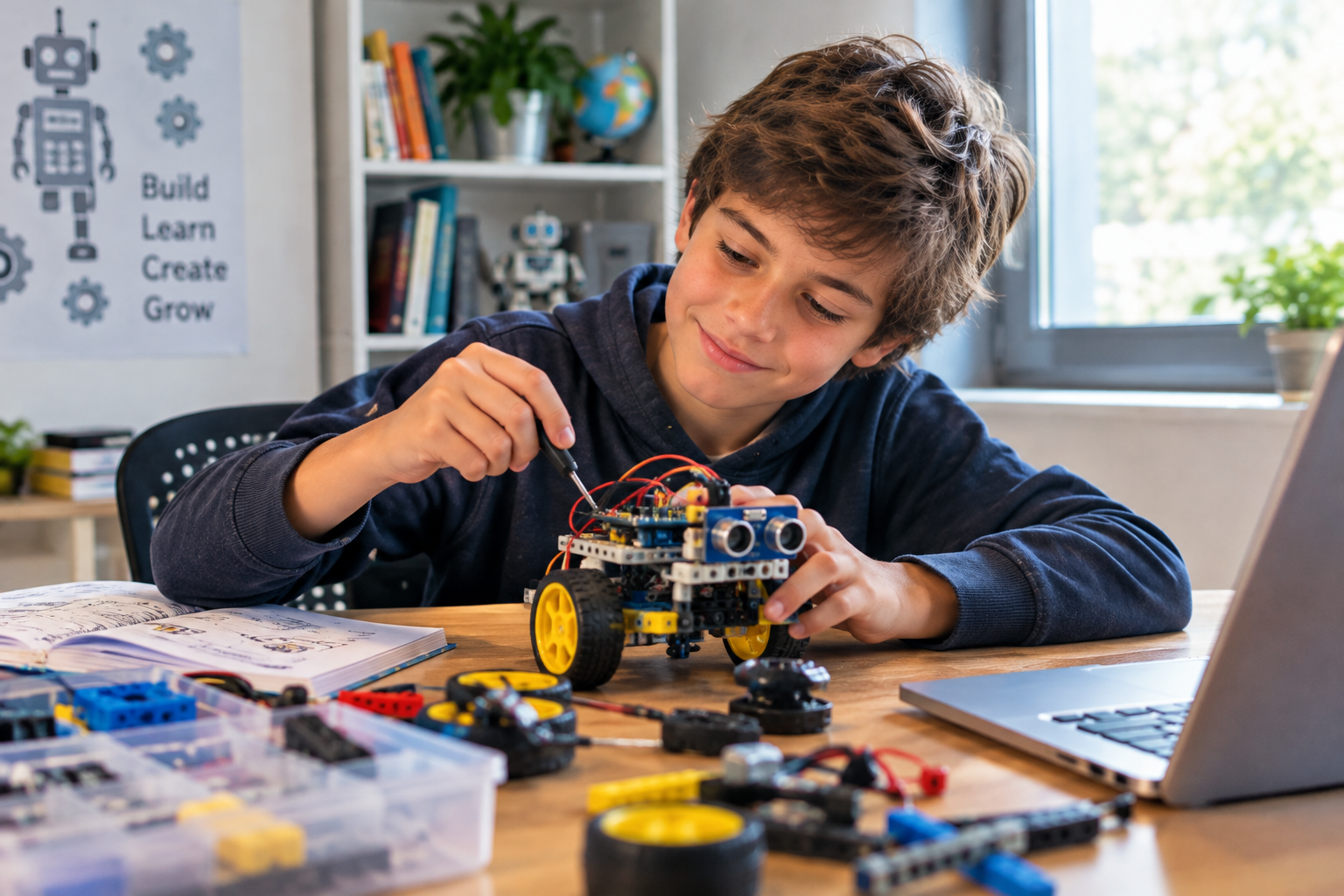
Give your child a toy that no longer works properly or has a missing piece.
Instead of throwing it away immediately, ask your child to think about possible ways to repair it or redesign it so that it can be used again in a different way.
Children may experiment with tape, cardboard, glue, paper clips or other simple materials available around the house in order to rebuild the toy or transform it into something new.
This activity encourages creative thinking while also teaching children that many problems can be approached from different angles and often have more than one possible solution.
2. Build a Bridge Challenge
Provide children with a small collection of simple materials such as:
- paper
- books
- cardboard
- tape
Then challenge them to build a bridge that can support a small object such as a toy car, a book or a glass of water.
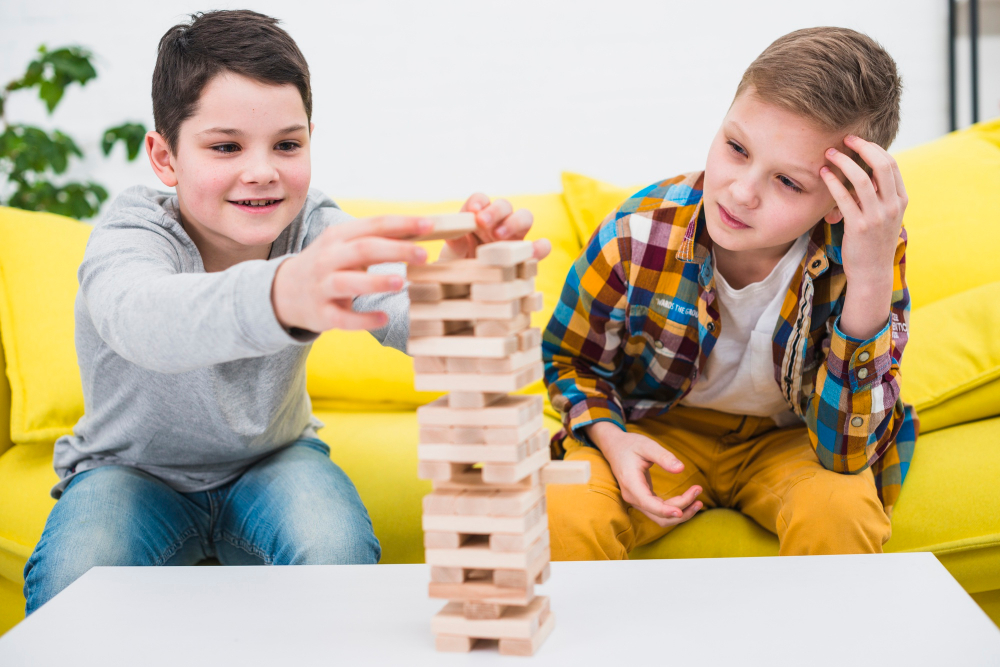
Children quickly realize that building something stable requires planning, testing and adjusting their ideas as they go.
Through trial and error they begin to understand concepts such as balance, structure and design while strengthening their persistence when their first ideas do not work.
3. The “What Would You Do?” Game
This activity involves presenting children with everyday situations that require thoughtful decision making.
For example, you might ask:
“What would you do if you lost your backpack at school?”
Encourage your child to think through the situation step by step and explain how they would solve the problem.
By discussing different possibilities and outcomes, children develop analytical thinking and learn that good solutions often come from carefully thinking through the situation rather than reacting immediately.
4. Puzzle Challenges
Puzzles are one of the most classic and effective tools for helping children develop logical thinking and patience.
Whether the puzzle involves pictures, shapes, numbers or patterns, children must carefully observe the pieces and test different possibilities until they find the correct combination.
This process teaches children that persistence and careful thinking often lead to successful outcomes.
5. Create a New Board Game
Ask your child to invent a completely new board game from scratch.
They must decide:
- the rules
- the goal
- the challenges
This activity encourages children to think about how systems work and how rules influence behavior.
Designing a game also requires creativity, planning and the ability to test ideas and improve them through experimentation.
6. The Mystery Object Game
Place an everyday object inside a box or bag where it cannot be seen.
Children can ask questions that can be answered with “yes” or “no” in order to gather clues and identify what the object might be.
This activity encourages strategic thinking, curiosity and the ability to gather information before jumping to conclusions.
7. Cooking Together
Cooking provides countless opportunities for children to practice problem solving in a practical and enjoyable way.
For example, if a recipe requires an ingredient that is missing, children can think about possible substitutes or alternative solutions.
They also learn to follow steps, measure quantities and adapt when something does not go exactly as planned.
8. The Invention Challenge
Ask your child to invent something that solves a simple everyday problem.
For example:
“Create something that helps organize toys or books more easily.”
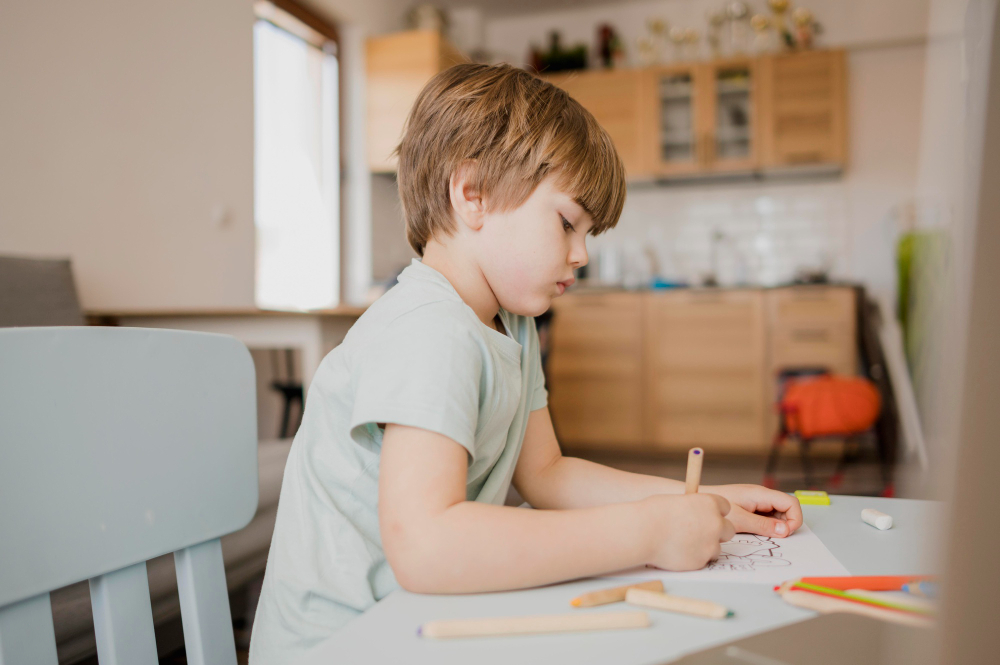
Encourage children to draw their invention, describe how it works and explain why it would help people.
This activity promotes creativity and innovation while helping children think about how ideas can become real solutions.
9. Map Your Neighborhood
Ask your child to draw a simple map of the neighborhood including streets, parks and important locations.
Then challenge them to identify the shortest or safest route to reach a specific place such as a park, a friend's house or a local store.
This activity helps develop spatial reasoning, planning skills and awareness of how environments are organized.
10. Lego Engineering
Building structures with Lego or similar construction toys requires children to think about design, balance and structure.
As children experiment with different building techniques they learn that some designs are stronger and more stable than others.
When structures collapse or do not work as expected, children must analyze what went wrong and adjust their approach.
11. The Budget Game
Give your child an imaginary budget and ask them to plan how they would spend it to achieve a goal.
For example:
“You have $20 to organize a birthday party for a friend.”
Children must decide how to divide the money between decorations, food, games and other items.
This activity introduces basic financial thinking and encourages children to prioritize and evaluate different options.
12. Reverse Thinking
Reverse thinking is a creative exercise where children explore a problem from the opposite direction.
You might ask:
“How could we make this problem even worse?”
By imagining exaggerated or silly answers, children often discover new perspectives that help them identify better solutions.
13. Story Continuation
Start telling a story and stop at an interesting moment.
Ask your child to continue the story and decide what happens next.
This activity strengthens imagination while also encouraging children to think about cause and effect relationships within a narrative.
14. The Survival Scenario
Present children with an imaginative situation such as being stranded on a deserted island.
Ask questions like:
“If you were on a deserted island, what five things would you bring with you?”
Children must evaluate different possibilities and think strategically about what would be most useful.
15. The Design Challenge
Ask children to redesign an everyday object to make it better or more useful.
For example:
How could a backpack be improved so that it is more comfortable or holds more items?
This activity helps children think about design, usability and innovation.
16. The Negotiation Game
Create a scenario where children must negotiate with someone else in order to reach an agreement.
This could involve sharing toys, dividing responsibilities or planning an activity together.
Children learn that solving problems often involves communication, listening and compromise.
17. The Mystery Problem
Describe a situation where a problem exists but do not reveal all the details immediately.
Children must ask questions in order to gather information and understand the situation fully.
This encourages curiosity and careful investigation before making decisions.
18. Invent a Business Idea
Ask children to think of a small business idea that could help people or solve a simple problem.
For example:
Helping neighbors with small tasks, organizing a neighborhood lemonade stand or creating handmade crafts.
This activity introduces entrepreneurial thinking and shows children that ideas can become real projects.
19. Fix the Story Ending
Read a short story together and ask your child to imagine a different or better ending.
Children must analyze the story and think about how changing certain events might lead to a new outcome.
20. The Big Question
Ask open-ended questions that encourage deeper thinking.
For example:
“How could we reduce plastic waste in our neighborhood?”
Allow children to explore ideas freely without worrying about whether their ideas are perfect.
Why Problem Solving Skills Matter
Problem solving skills influence nearly every aspect of life, from academic success to social relationships and future careers.
Children who develop these abilities early often become individuals who are able to analyze situations calmly, evaluate different possibilities and make thoughtful decisions.
- handle challenges better
- feel more confident
- develop creativity
- think independently
You can also explore our guide:
Helping Children Become Creative Thinkers
Many parents want to help children become creative thinkers who are able to explore ideas, test solutions and learn through experience.
Structured learning environments that encourage curiosity, experimentation and project-based learning can help accelerate the development of these abilities.
If you want your child to explore creative thinking and entrepreneurial skills through interactive lessons and guided projects, you can learn more about the program here:
entrepreneurship lessons for kids from home
Final Thoughts
Problem solving is not just an academic ability that children use at school.
It is a life skill that influences how individuals approach challenges, opportunities and decisions throughout their lives.
Children who regularly practice solving problems develop confidence in their ability to think independently, adapt to new situations and create solutions.
And often, the best place to begin developing these skills is at home through simple activities that encourage curiosity, creativity and experimentation.