
10 Simple Business Ideas for Kids That Build Creativity and Confidence
Children between 10 and 15 have something most adults quietly envy: an endless supply of ideas. The challenge is rarely coming up with something — it's knowing what to do with it next.
The ten ideas below aren't about making money. They're about giving kids a real reason to plan, try, adjust and try again. Each one builds something useful — confidence, creative thinking, communication, resilience — without feeling like homework.
Find the one that fits your child. Then let them run with it.
1. Handmade Crafts and Custom Creations
Bracelets, painted stones, hand-sewn pouches, decorated bookmarks — kids who enjoy making things already have a business idea ready to go. The product doesn't need to be complicated. It just needs to be theirs.
What your child builds:
- An understanding that creativity and effort have real value
- The ability to present and describe what they've made
- Early thinking around cost, pricing and what makes something worth buying
Parent tip: Let them set the price. Even if the number is wildly off, the reasoning process teaches more than any correction would.
2. The Lemonade Stand — Taken One Step Further
There's a reason the lemonade stand keeps appearing on lists like this: it's a complete mini-business in a single morning. Product, customers, real decisions made in real time.
Encourage your child to think beyond the basics. What if they offered two flavours? Made a proper sign? Gave returning customers a small reward? Suddenly it's not just selling lemonade — it's thinking like a business owner.
What your child builds:
- Real customer interaction and basic selling skills
- Planning, preparation and simple logistics
- The feeling of someone choosing their product — which is surprisingly motivating
Parent tip: Ask them afterwards what they'd do differently next time. That one question does more than any lesson on entrepreneurship.
3. Pet Care and Neighbourhood Services
Dog walking, pet feeding while families are away, watering plants, collecting post — these are genuine problems that neighbours genuinely need solved. For a child who likes animals or enjoys being trusted with responsibility, this is a natural starting point.
What your child builds:
- Reliability and responsibility — two skills that matter in every future career
- Confidence communicating with adults
- A direct understanding that solving someone else's problem is the foundation of every business
Parent tip: Help them put together a simple message or flyer to share with neighbours. The experience of putting themselves out there is part of what makes this valuable.
4. Inventing a Board Game or Card Game
This one often surprises parents because it looks like play. But designing a game from scratch requires your child to think about rules, fairness, user experience and what actually makes something fun for other people. These are exactly the skills that show up in every professional context later on.
What your child builds:
- The ability to design something for other people, not just themselves
- Testing, getting feedback and improving based on what doesn't work
- Creative problem solving under real constraints
Parent tip: Ask them to explain the rules to you. If you're confused, that's useful information — not a failure on their part.
5. Art, Illustration and Simple Design
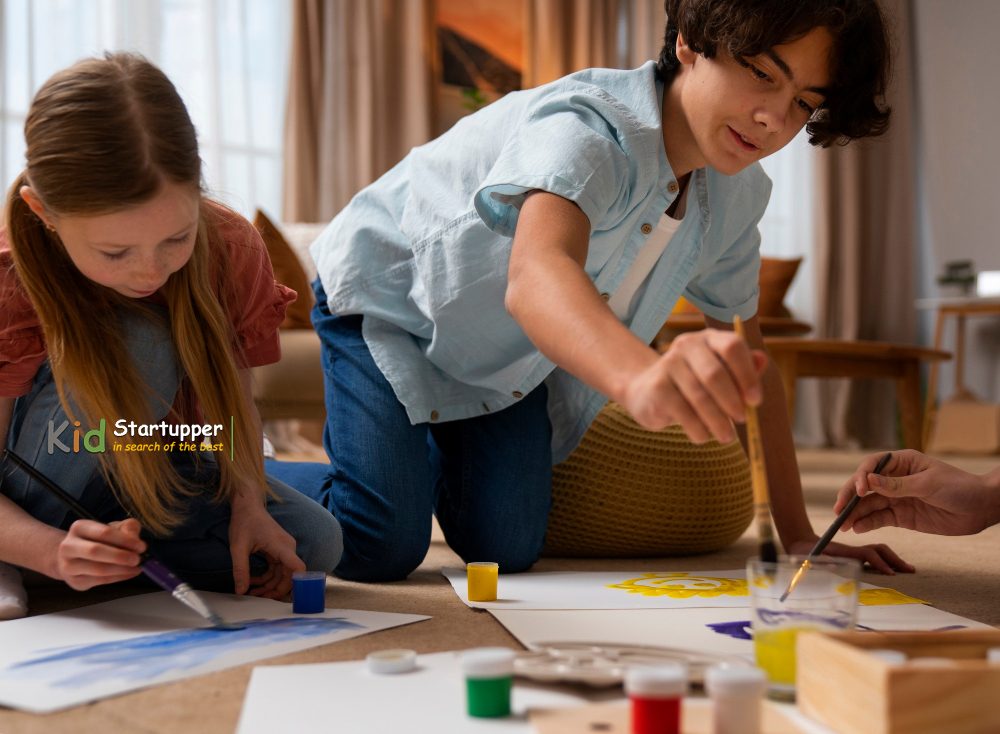
Kids who love drawing have more options than most people realise. Hand-drawn cards, illustrated bookmarks, simple digital designs for posters or social profiles — there's genuine demand for personal, original artwork even at small scale.
Older children comfortable with tools like Canva can design birthday invitations, event flyers or simple logos for family friends. The starting point is almost zero.
What your child builds:
- Confidence that creative skills have real, practical value
- Experience taking a brief and delivering something for someone else
- Pride in a body of work they've actually produced
Parent tip: Suggest they put five pieces together in a folder or simple PDF. Having something to show people makes the next step much easier.
6. Event Organiser for Family or Class
Some children are natural planners. They love lists, logistics and making sure everyone knows what's happening. If that sounds familiar, give them something real to organise — a family game night, a small neighbourhood gathering, a class activity.
What your child builds:
- Project management skills — breaking a goal into steps and tracking what needs to happen
- Communication and coordination with different people
- Adaptability when plans meet reality and need adjusting
Parent tip: Give them a small, real budget to manage. Money decisions make the whole experience feel genuine in a way that pretend planning never does.
7. YouTube Channel, Podcast or Blog
A topic your child knows, cares about or finds genuinely interesting — gaming, cooking, book reviews, science experiments, football tactics, anything. A channel, podcast or blog on a specific subject teaches an enormous amount even when the audience is just friends and family at first.
What your child builds:
- The ability to communicate an idea clearly and consistently to an audience
- Discipline — producing something regularly, not just when inspiration strikes
- How to improve based on what connects with people and what doesn't
Parent tip: Focus on the habit of creating, not the follower count. Early results rarely reflect the real value of what's being built.
8. Tutoring or Teaching Younger Children
A child who is strong in maths, reading, a language, a sport or a musical instrument can teach a younger sibling, cousin or neighbour. Teaching something you know to someone who doesn't is one of the most demanding intellectual activities there is — and one of the most rewarding.
What your child builds:
- Deeper understanding of their own knowledge — you only truly know something when you can explain it
- Patience, empathy and the ability to adapt to how someone else learns
- Real leadership and communication in a genuinely responsible context
Parent tip: Encourage them to spend five minutes preparing before each session. That preparation habit is worth more than any specific teaching technique.
9. A Community or School Project
Is there something in the neighbourhood or school that could be better? A messy corner of a park, a missing reading space, an event everyone would enjoy but nobody organises? Some children are most motivated when the purpose goes beyond themselves.
Community projects teach the same core skills as commercial ones — planning, communication, persuasion, logistics — with the added dimension of genuine impact.
What your child builds:
- The habit of noticing problems and taking initiative to solve them
- Collaboration with people who have different skills and opinions
- A visible, tangible result they can point to and say: I did that
Parent tip: Help them define one specific, achievable goal rather than a broad ambition. Small wins build the confidence that makes bigger ones possible.
10. Inventing a Product That Solves a Real Problem
Ask your child: what's something in your daily life that's annoying, inefficient or simply missing? Then ask: what would fix it?
The product doesn't need to be buildable. A child who describes a solution in detail, draws up how it would work, names it and explains why someone would pay for it has done something genuinely entrepreneurial. The thinking process is the point.
What your child builds:
- The habit of looking at the world as a source of problems worth solving
- Creative and logical thinking working together
- The basic structure behind every business: problem, solution, value
Parent tip: Take the idea seriously. Ask "who else would need this?" and "what would the first step be?" Those two questions open up more thinking than anything else.
What All These Ideas Have in Common
None of them need to succeed to be worthwhile. Most won't go anywhere beyond a weekend or two — and that's completely fine. The value isn't in the outcome. It's in the experience of trying something real, hitting a difficulty, and deciding what to do next.
Children who go through that experience — even once, even in a small way — arrive at the next challenge with something they didn't have before. A sense that they can figure things out. That sense, built early, is one of the most durable advantages a child can have.
Ready to Take It Further?
If one of these ideas sparks something genuine in your child — if they start asking bigger questions or want a more structured way to develop their thinking — it might be time to explore something more.
KidStartupper is a structured 3-year entrepreneurship programme for children aged 10–15. Students build their own business profile, work through lessons on creativity, strategy and Aristotle's First Principles method, and are supported throughout by Mr. Startupper — an AI mentor built specifically for this age group.
It works from home, at your child's own pace, for less than $17 a month. There's a free 7-day trial to start.
See how it works and start your child's free trial →
Frequently Asked Questions
What age are these ideas suitable for?
Most work well for children between 10 and 15. Some — like handmade crafts or the lemonade stand — can work for younger children too, especially with a parent alongside. The key is matching the idea to your child's current interests and confidence.
Does my child need money to get started?
Very little or none for most of these. Crafts might need basic materials. A lemonade stand needs lemons. A game or blog needs nothing but time and imagination. Start small — resources can grow as the idea does.
What if my child tries something and gives up quickly?
Completely normal. Ask them what they'd do differently if they tried again. Even a short attempt teaches something real. At this age, building the habit of trying matters far more than completing every project perfectly.
How do I support my child without taking over?
Ask questions instead of giving answers. Offer help when asked, not before. Let them make decisions — including the ones you'd make differently. The autonomy is a significant part of what makes these experiences valuable.
How is this different from a structured entrepreneurship programme?
These ideas are a great spark — informal, low-pressure, easy to start. A structured programme like KidStartupper provides curriculum, progression and an AI mentor that make the learning systematic and lasting. Think of these ideas as the beginning of something that a programme can take much further.
Conclusion
The best business idea for your child is the one they're actually interested enough to try. It doesn't need to be impressive, original or profitable. It needs to be real — something they actually do, with real decisions and real feedback from the world around them.
Start with one idea from this list. See what happens. Ask what they'd do differently. Then watch what they do with that.
That's how entrepreneurial thinking develops — one small, genuine attempt at a time.