
5 Future Skills Every Child Should Learn Before 2035
In 2016, the World Economic Forum published a report that made a lot of parents and educators uncomfortable. It predicted that 65% of children entering primary school at the time would end up working in jobs that didn't yet exist. A few years later, after generative AI arrived and entire industries began restructuring faster than anyone had anticipated, many analysts revised that estimate upward.
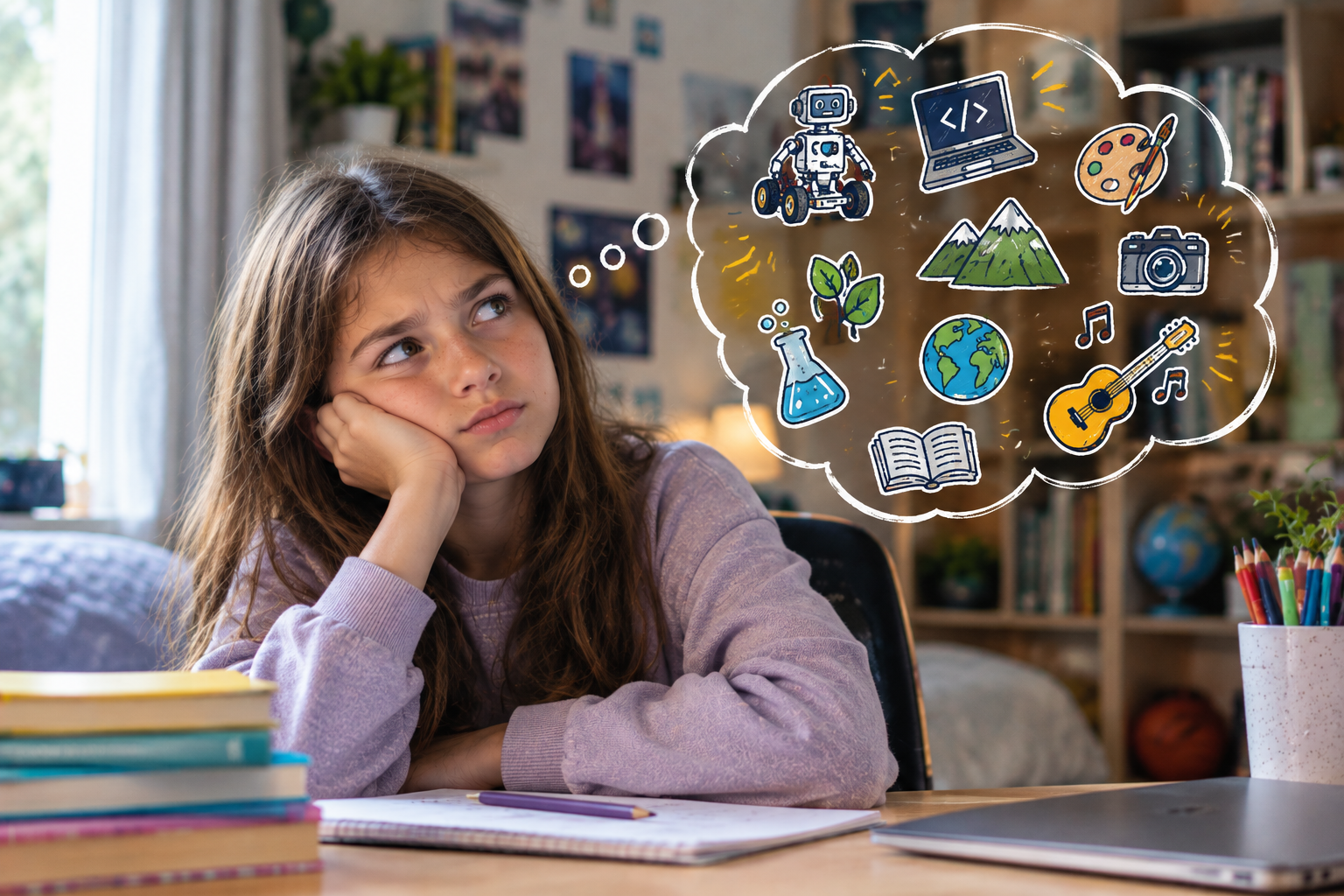
The question this creates for parents is uncomfortable but unavoidable: if we cannot know which jobs our children will have, how do we prepare them for those jobs?
The answer, it turns out, is that we prepare them for the skills beneath the jobs — the human capabilities that remain valuable regardless of what technology does next. And we know, with reasonable confidence, what those skills are. They appear consistently across research from the WEF, McKinsey, OECD and Harvard's Project Zero: creativity, problem solving, collaboration, communication and entrepreneurial thinking.
Here are the five that matter most, why the evidence supports them, and what parents can actually do to help children develop them before 2035.
1. Creative Thinking — The Skill Automation Cannot Replace
When IBM's Deep Blue defeated Garry Kasparov at chess in 1997, many people assumed that human creative thinking was under serious threat. What actually happened was the opposite. As machines took over the predictable, rule-bound parts of intellectual work, the premium on genuinely original human thinking increased significantly.
McKinsey's research on the future of work consistently identifies creativity and original ideation as among the least automatable human capabilities. The reason is structural: AI systems are extraordinarily good at finding patterns in existing data. They are not good at deciding which new question is worth asking, or imagining a solution that has never been tried before. That remains a human advantage — for now, and almost certainly well beyond 2035.
What does creative thinking actually look like in children? It is not limited to art or music. It appears when a child redesigns the way their bedroom is organized because the old arrangement frustrated them. It appears when a group of ten-year-olds, given a budget of five euros and asked to solve a school problem, comes back with three different approaches no adult had considered. It appears every time a child resists the first obvious answer and asks whether there might be a better one.
In my work with children through KidStartupper, I have seen consistently that creativity is not a fixed talent some children have and others don't. It is a habit, and habits are built through practice. Children who are regularly given open-ended problems — problems with no single correct answer — develop creative confidence over time. Children who spend most of their learning life reproducing the right answer on demand develop a different kind of confidence, one that serves them well in structured environments and less well everywhere else.
Parents can build creative thinking at home by prioritizing open-ended over closed-ended challenges. Instead of asking "what is the capital of France," try asking "how would you redesign our kitchen if you had unlimited budget" or "what would you change about your school if you were in charge for a week." The content of the answer matters less than the practice of generating it independently.
2. Problem Solving — Thinking Under Real Conditions
There is a meaningful difference between solving a problem that someone else has already defined for you and identifying that a problem exists in the first place. Schools are generally good at the first. They are much less good at the second — and the second is what the real world mostly requires.
OECD research on adult skills consistently finds that the ability to navigate novel, undefined problems is one of the strongest predictors of economic success across all sectors and education levels. It is also one of the skills most poorly measured by standard academic assessments, which is partly why it receives so little explicit attention in traditional curricula.
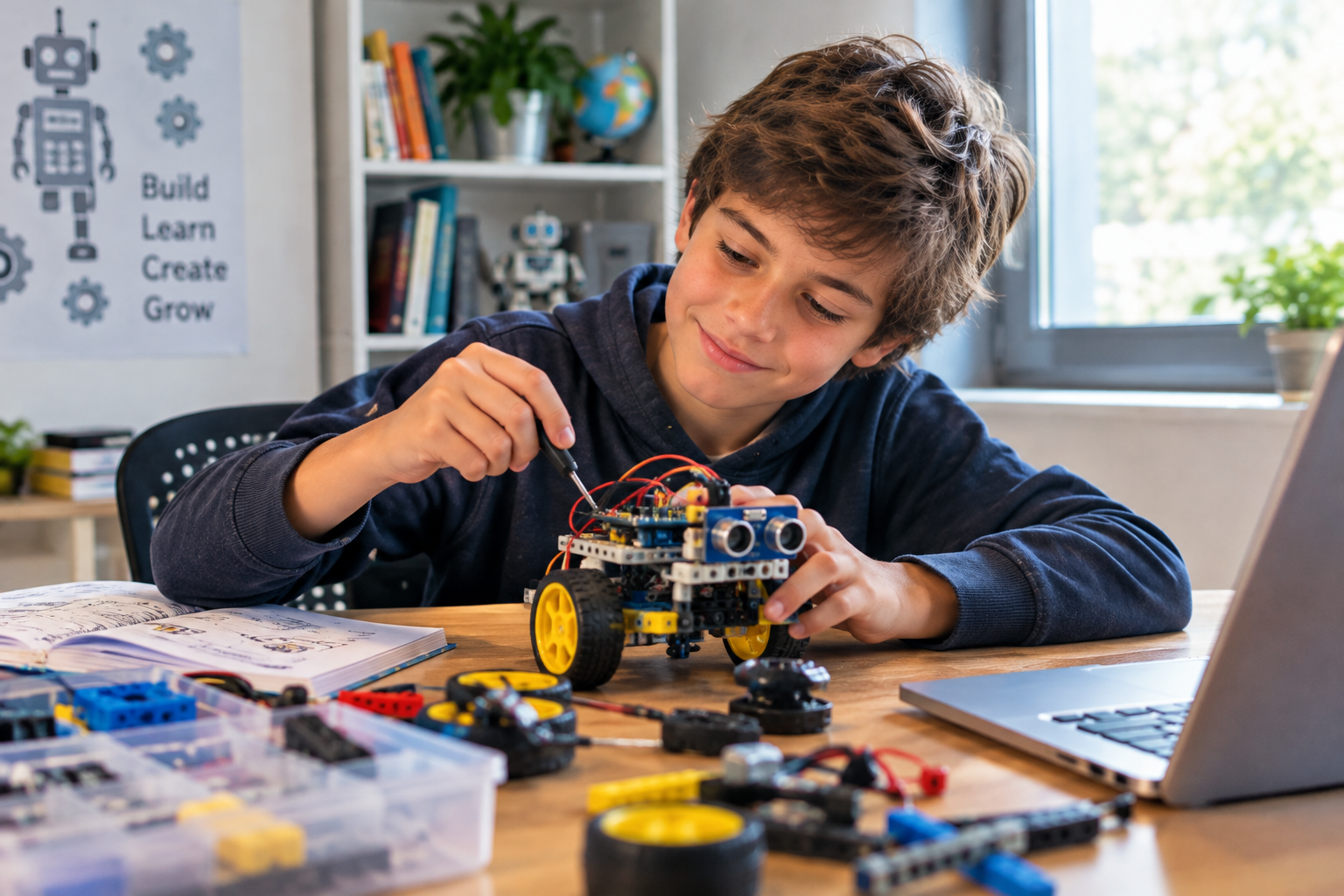
Problem solving develops through experience with real problems — not textbook problems with known solutions, but situations where the path is genuinely unclear and the child has to figure out what to try first. This is uncomfortable for both children and parents. The instinct when a child is stuck is to help them get unstuck quickly. But productive struggle — the experience of wrestling with a difficulty before finding a way through — is precisely where problem-solving capacity develops.
One of the most effective things I have seen parents do is ask three questions instead of providing answers: "What have you tried so far?" "What do you think is causing the problem?" "What would you do differently next time?" These questions do not solve the problem for the child. They teach the child to solve it, which is an entirely different and far more valuable outcome.
Children who develop genuine problem-solving skills also develop emotional resilience as a byproduct. They learn, through direct experience, that difficulty is not a signal to stop but information about what to try next. That learning, established in childhood, shapes how people respond to setbacks for the rest of their lives.
3. Collaboration — Working With People Who Think Differently
The romantic image of the lone genius — the inventor working in isolation who emerges with a world-changing idea — is largely a myth, and an increasingly outdated one. Almost every significant innovation of the past century was produced by teams. The structure of those teams, and the quality of the collaboration within them, turns out to matter enormously.
Google's Project Aristotle, a large-scale internal study of what made teams effective, found that the single most important factor was psychological safety — the degree to which team members felt they could speak up, disagree and take interpersonal risks without being punished. This is not a technical skill. It is a human one, and it develops through practice with real collaboration, starting young.
Children who learn to collaborate effectively develop several capabilities simultaneously: they learn to listen to perspectives different from their own, to disagree constructively rather than defensively, to recognize that other people's strengths can complement their weaknesses, and to subordinate personal preference to group outcome when necessary. None of these come naturally. All of them can be developed with the right experiences.
The key word is "real" collaboration. Putting children in groups and asking them to divide up a worksheet does not develop collaborative skills. Projects where children have to actually coordinate, negotiate and integrate genuinely different contributions — where the outcome depends on how well they work together, not just on how much each person individually knows — are where collaboration develops.
Parents can support collaborative development by paying attention to how their children navigate disagreement with friends, siblings or teammates. The instinct is often to resolve the disagreement for them. Allowing children to work through it themselves — with guidance available if needed, but not immediate intervention — is where the actual learning happens.
4. Communication — The Skill That Makes Every Other Skill Visible
A child can be deeply creative, an excellent problem solver and a skilled collaborator, and still fail to make an impact if they cannot communicate what they know and what they have made. Communication is not just one skill among the five — it is the one that makes all the others visible to the world.
This matters more now than it did a generation ago. The economy increasingly rewards people who can explain complex things simply and persuasively — across presentations, written documents, video, podcasts and collaborative digital platforms. The range of contexts in which communication matters has expanded dramatically, even as the core skill remains fundamentally the same: clarity of thought expressed clearly to another person.
Children often struggle with communication not because they lack ideas, but because they haven't had enough practice translating internal thinking into external expression. The solution is not instruction in public speaking — it is regular low-stakes practice across many different contexts. Explaining a drawing. Describing a project. Arguing for a preference. Telling the story of something that happened. Each of these is communication practice, and each builds the capacity for more demanding communication later.
One thing I consistently notice in children who have worked through KidStartupper's project-based program is that their communication improves dramatically not from being taught how to speak, but from having something real to say. When a child has built a project they care about and is given an opportunity to explain it, the motivation to communicate clearly comes from the content itself. This is a more reliable route to communication skill than any formal instruction.
Parents can support this by creating regular opportunities for children to explain things — their ideas, their projects, their opinions on anything — without judgment. The goal is not polished performance. It is the habit of translating thought into words, regularly and without fear.
5. Entrepreneurial Thinking — The Skill That Ties the Others Together
Entrepreneurial thinking is the most misunderstood of these five skills, because the word "entrepreneurial" makes people think of business. But what we are actually talking about is something broader and more fundamental: the disposition to look at the world and ask "what could be better here, and what could I do about it?"
Children with entrepreneurial thinking do not wait to be told what the problem is. They notice it. They do not wait to be given a method for solving it. They try something. They do not treat failure as evidence that they should stop. They treat it as information about what to try differently. This combination — noticing, initiating and persisting — is what distinguishes people who create things from people who consume things, in every domain and at every level of ambition.
The research on what entrepreneurial education actually does to children is consistent across multiple countries and educational systems. Children who have been through structured entrepreneurial learning programs — not business simulations, but genuine project-based experiences where they identify a real problem and try to solve it — show measurable improvements in initiative, creative confidence, resilience and collaborative skill. The business skills are almost incidental. The mindset shifts are the real outcome.
This is why entrepreneurial thinking belongs on a list of future skills alongside creativity and communication. It is not a career path. It is a relationship with the world — one that treats problems as invitations rather than obstacles, and treats one's own capacity for action as a relevant variable in any situation.
Parents can nurture entrepreneurial thinking by taking children's ideas seriously. Not by immediately telling them why the idea won't work. Not by immediately solving the implementation problem for them. By asking: "That's interesting — what would be the first step in trying that out?" The question signals that the idea is worth pursuing. The child's experience of actually pursuing it is where the thinking develops.
Why These Five Skills — and Why Now
These five skills appear on every credible list of future competencies because they share a common property: they cannot be automated. AI can retrieve information faster than any human. It can perform routine cognitive tasks with greater accuracy and at lower cost. It cannot, at present, genuinely create, genuinely empathize, genuinely collaborate or genuinely take initiative in the way that a well-developed human can.
This does not mean that academic knowledge is irrelevant. Children still need to read well, reason mathematically, understand history and science, and develop the foundational knowledge that makes deeper thinking possible. But knowledge alone — without the capacity to use it creatively, communicate it clearly, and apply it to problems that have never been seen before — is increasingly insufficient.
The children who will thrive by 2035 are not necessarily those with the highest grades. They are those who have learned to think, to make, to collaborate and to keep going when things are difficult. These are not abstract virtues. They are practical capabilities, and they develop through the right kinds of experience, consistently offered, starting now.
How Parents Can Start Today
The single most important thing parents can do is shift from answer-giving to question-asking. When a child comes to you with a problem, resist the urge to solve it. Ask what they think. Ask what they've tried. Ask what they would do if you weren't available to help. This is uncomfortable at first — for the parent as much as the child. But it is precisely where these five skills develop.
Beyond that, look for learning environments that give children genuine projects — not exercises with predetermined outcomes, but open-ended challenges where the path is unclear and the child's thinking actually determines the result. These environments are where creative confidence, problem-solving resilience and collaborative skill are built, because they are the only environments that genuinely require them.
The window between ages 10 and 15 is particularly important. Children in this range are old enough to engage with complex, real-world problems, and young enough that the habits formed now will shape how they approach challenges for the rest of their lives. It is, in the most practical sense, the right time to start.
If you want to explore how structured entrepreneurial learning can help your child develop these five skills through project-based experience, you can learn more about the KidStartupper programme for children aged 10 to 15.
Frequently Asked Questions
What are future skills for children?
Future skills are human capabilities that remain valuable regardless of technological change — creativity, problem solving, collaboration, communication and entrepreneurial thinking. Unlike technical skills tied to specific tools or platforms, these abilities transfer across contexts and careers.
Why 2035 specifically?
2035 is roughly when today's 10-to-15-year-olds will be entering the workforce. It is close enough to plan for and far enough away that the specific jobs are unknowable. Building adaptable human skills now is the most reliable preparation available.
Can these skills be developed at home, or do children need a formal programme?
Both matter. The habits of asking questions, pursuing ideas and working through difficulty develop in everyday family life as much as in formal settings. Structured programmes accelerate the process significantly — but they work best when the same values are reinforced at home.
What is entrepreneurial thinking, and why is it different from business education?
Entrepreneurial thinking is about the disposition to notice problems and take initiative — not about starting a company. Children with entrepreneurial thinking ask "what could I do about this?" rather than waiting for someone to tell them. Business skills are a small subset of this much broader capability.
Are these skills measurable?
Not easily with standard tests, which is part of why they receive less attention in traditional education. But they are visible in how children behave under real conditions — how they approach unfamiliar problems, how they handle setbacks, how they work with others. Parents who pay attention to these behaviours will see them develop over time.
What is the best age to start?
Elements of all five skills can develop from early childhood. The 10-to-15 window is particularly valuable because children at this age can engage with genuinely complex, real-world challenges in ways that younger children cannot — and the habits formed in this period tend to be durable.
Conclusion
The future does not belong to the children who memorized the most. It belongs to those who learned to think, to make, to communicate and to persist. These five skills — creative thinking, problem solving, collaboration, communication and entrepreneurial thinking — are not alternatives to a strong education. They are what a strong education, properly understood, is actually for.
The good news is that none of them require expensive technology or specialist resources. They require the right questions, the right experiences, and the willingness to let children struggle productively with things that matter. That is something every parent can provide — and it is, in the end, the most important investment available.